#solarsystem

Jupiter is the most largest planet in our solarsystem, Jupiter facts,
with a diameter of about 139,820 kilometers (86,881 miles).
It has a mass that is approximately 318 times that of Earth, making it more massive than all the other planets in the solar system combined.
Jupiter is primarily composed of hydrogen and helium, similar to the composition of the sun.
It doesn't have a solid surface; instead, its atmosphere gradually transitions into its dense, gaseous interior.
Jupiter has a thick atmosphere with bands of clouds and high winds.
Prominent features in its atmosphere include the Great Red Spot, a giant storm that has been raging for at least 350 years.
Jupiter has a very strong magnetic field, much stronger than Earth's.
Its magnetic field is responsible for intense radiation belts around the planet.
Jupiter has a large number of moons, with over 80 known as of my last update in January 2022.
The four largest moons, known as the Galilean moons, are Io, Europa, Ganymede, and Callisto.
Jupiter is the fifth planet from the Sun and has an average orbital distance of about 484 million miles (778 million kilometers).
It takes approximately 11.86 Earth years to complete one orbit around the Sun.
Jupiter's rotation is very fast; it completes one rotation on its axis in just under 10 hours.
Jupiter has a faint ring system composed of small, dark particles.
Its ring system is much less prominent than Saturn's.
Several spacecraft have visited Jupiter, including Pioneer 10, Pioneer 11, Voyager 1, Voyager 2, Galileo, and Juno.
Jupiter is often referred to as the "king" of the planets and plays a crucial role in the dynamics of the solar system.
Its immense gravity has helped shape the orbits of other planets and objects in the solar system.
Regards,
Vaan Veli
Santhosh
Follows on Facebook : https://www.facebook.com/vaanveli1
Follows on Instagram : https://www.instagram.com/vaan_veli
Disclaimer:
This channel does not offer financial advice. All information on this channel is offered solely for educational and informational reasons. This channel does not guarantee that you will be able to generate money online using the method presented in the video. Your level of success in achieving the outcomes indicated in the video will involve hard work, aptitude, learning and experience. Before investing or joining any such site, this channel strongly suggested you to conduct thorough investigation.
#jupiter
#jupiterfacts
#jupitermoon
#solarsystem
#solarsystemfacts
#solarsystemformation
#largestplanetinoursolarsystem

Hi All,
The Chicxulub asteroid is a term commonly used to refer to the massive asteroid or comet impact that occurred approximately 66 million years ago. This impact is believed to be the primary cause of the Cretaceous-Paleogene (K-Pg) extinction event, which resulted in the extinction of about 75% of plant and animal species on Earth, including the dinosaurs.
The impact site is located near the town of Chicxulub in Mexico's Yucatan Peninsula. The asteroid or comet that struck Earth was estimated to be about 6 miles (10 kilometers) in diameter. The impact released an enormous amount of energy, equivalent to billions of atomic bombs, causing widespread devastation.
The impact triggered a chain of catastrophic events, including massive earthquakes, tsunamis, and wildfires. It also released an enormous amount of dust, soot, and vaporized rock into the atmosphere, blocking sunlight and causing a global cooling effect. The reduced sunlight led to a significant decrease in photosynthesis, disrupting the food chain and causing the extinction of many plant and animal species.
The Chicxulub impact left a distinct crater, which was discovered in the early 1990s through geological surveys and subsequent drilling. The crater measures approximately 93 miles (150 kilometers) in diameter and is buried beneath layers of sediment.
The study of the Chicxulub impact has provided valuable insights into the dynamics of large asteroid or comet impacts and their potential effects on Earth's ecosystems. It has also contributed to our understanding of the history of life on Earth and the mechanisms of mass extinctions.
The Chicxulub impactor, also known as the Chicxulub asteroid or the K-Pg asteroid, refers to a massive asteroid or comet that is believed to have struck the Earth approximately 66 million years ago. The impact of this asteroid is considered to be a significant event in Earth's history as it is widely associated with the mass extinction event that led to the demise of the dinosaurs and many other species.
Here are some key details about the Chicxulub impactor:
Size and Impact: The Chicxulub impactor is estimated to have been about 6 to 9 miles (10 to 15 kilometers) in diameter. When it struck the Earth, it unleashed an immense amount of energy, equivalent to billions of nuclear bombs.
Location: The impact site is located near the town of Chicxulub in the Yucatan Peninsula of modern-day Mexico. The region is known for a prominent crater, known as the Chicxulub crater, which was discovered in the early 1990s.
Extinction Event: The impact of the Chicxulub asteroid is widely believed to have caused or significantly contributed to the Cretaceous-Paleogene (K-Pg) mass extinction event. This event led to the extinction of approximately 75% of all species on Earth, including non-avian dinosaurs.
Environmental Effects: The impact generated a massive amount of heat, causing widespread wildfires and releasing enormous quantities of dust, ash, and gases into the atmosphere. This resulted in a global climate change event, with a significant drop in temperature and a reduction in sunlight reaching the Earth's surface. These changes severely disrupted ecosystems and led to the extinction of many plant and animal species.
Crater Formation: The impact created a crater that is approximately 93 miles (150 kilometers) in diameter and 12 miles (20 kilometers) in depth. Over time, geological processes and erosion have modified the original structure, but the remnants of the crater are still visible.
Discovery and Confirmation: The presence of a large impact crater in the Yucatan Peninsula was first proposed in the late 1970s. In the early 1990s, scientific drilling in the region provided evidence supporting the hypothesis that the Chicxulub impactor was responsible for the K-Pg mass extinction event.
Regards,
VaanVeli
#asteroid #chicxulubcrater #earth #chicxulub #chicxulubasteroid #chicxulubintamil #chicxulubasteroidintamil #vaanveli #tamil #whatif #asteroidcomparison #asteroidsize #asteroidintamil #craterintamil #dinosaur #dinosaurs #shorts #dinosaurus #dinosaurvideos #dinosaurvideojurassic #dinosaurextinction #chicxulubimpact #impact #thechicxulubimpactor #science #extinction #asteroidimpact #dinosaursintamil #chicxulubimpactsimulation #asteroidhitearth #solarsystem #asteroidbelt #gk #animals #dino

In this video, we'll be discussing all the important Io Moon facts! From its name to its characteristics, this video is packed with information about the Io Moon.
If you're curious about the Io Moon, or want to know more about it, then this video is for you! We'll discuss everything you need to know about this fascinating moon, from its name to its characteristics. Be sure to watch until the end to learn about the amazing things that happen during the Io Moon!
IO Moon of Jupiter, IO Moon in tamil, IO Moon volcano eruption, IO Moon Surface, what is io mooon, IO moon temprature
Discovery: Io was discovered by Galileo Galilei on January 8, 1610, along with three other large moons of Jupiter.
Size: It is the fourth-largest moon of Jupiter and has a diameter of about 3,643 kilometers (2,263 miles).
Composition: Io is primarily composed of silicate rock and iron, similar to the terrestrial planets Mercury, Venus, Earth, and Mars.
Surface: Io has a diverse and geologically active surface, featuring numerous volcanic calderas, mountains, and plains.
Volcanic Activity: Io is the most volcanically active body in the solar system, with hundreds of active volcanoes spewing sulfur and other materials.
Lava Lakes: Some of Io's volcanic eruptions result in lava lakes, large molten pools of lava on its surface.
Ionian Name: Io is named after a priestess of Hera in Greek mythology who became one of Zeus's mortal lovers.
Orbit: Io orbits Jupiter at an average distance of about 422,000 kilometers (262,000 miles).
Orbital Period: It takes approximately 1.77 Earth days for Io to complete one orbit around Jupiter.
Tidal Heating: Io experiences intense tidal heating due to its elliptical orbit, caused by gravitational interactions with Jupiter and the other Galilean moons.
Surface Temperature: Io's surface temperatures can vary widely, with some regions reaching up to 1,600 degrees Celsius (2,900 degrees Fahrenheit).
Atmosphere: Io has a thin atmosphere composed mainly of sulfur dioxide, which freezes onto its surface when the moon is in shadow.
Surface Coloration: The surface of Io displays a variety of colors, including red, orange, yellow, and white, due to different types of materials and their oxidation states.
High Radiation Levels: Io is exposed to high levels of radiation from Jupiter's powerful magnetosphere, making it a challenging environment for spacecraft exploration.
Surface Changes: Observations over time have revealed significant changes in Io's surface features, indicating ongoing geological activity.
Peaks: Some of Io's mountains reach impressive heights, with several exceeding 10 kilometers (6 miles) in height.
Loki Patera: Loki Patera is a massive volcanic depression on Io, possibly a large lava lake or a complex system of interconnected lava lakes.
Surt Volcano: Surt is one of Io's prominent volcanoes, named after a fire giant in Norse mythology.
Prometheus: Prometheus is a large, elongated volcanic feature on Io with a distinctive shape, likely caused by repeated volcanic eruptions.
Voyager Missions: Io was first studied up close by NASA's Voyager 1 and Voyager 2 spacecraft in 1979.
Galileo Orbiter: The Galileo spacecraft, which orbited Jupiter from 1995 to
Regards,
Vaan Veli
Santhosh
Follows on Facebook : https://www.facebook.com/vaanveli1
Follows on Instagram : https://www.instagram.com/vaan_veli
Disclaimer:
This channel does not offer financial advice. All information on this channel is offered solely for educational and informational reasons. This channel does not guarantee that you will be able to generate money online using the method presented in the video. Your level of success in achieving the outcomes indicated in the video will involve hard work, aptitude, learning and experience. Before investing or joining any such site, this channel strongly suggested you to conduct thorough investigation.
#iomoonofjupiter #iomoonintamil #iomoonvolcanoeruption #iomoonsurface #whatisiomooon #iomoontemprature #iomoon #vaanveli #solarsystemmoons #solarsystem

Hi,
1000 வருடங்கள் கழித்து நம் பூமி எப்படி இருக்கும் ?
Technological Advancements: The pace of technological progress is likely to continue, with advancements in fields such as artificial intelligence, biotechnology, space exploration, and renewable energy. This could lead to significant improvements in various aspects of human life, including healthcare, communication, and energy production.
Climate Change and Environmental Impact: Addressing climate change will likely be a major challenge. Efforts to transition to renewable energy sources, sustainable practices, and increased conservation may be crucial to mitigate the effects of climate change. The state of the environment will depend heavily on global cooperation and the success of these efforts.
Population and Demographics: The global population is expected to continue growing, but at a slower rate. Demographic shifts, such as aging populations in many developed countries, may have profound social and economic implications.
Space Exploration: Human exploration of space may become more advanced, with potential colonies on the Moon or Mars. Advancements in propulsion systems and space technologies could enable more ambitious missions to explore other planets and celestial bodies.
Biotechnology and Medicine: Advances in biotechnology could lead to breakthroughs in medical treatments, disease prevention, and possibly even increased human longevity. The ethical implications of these technologies would need careful consideration.
Cultural and Societal Changes: Cultural shifts are challenging to predict, but factors such as globalization, increased connectivity, and changes in political and economic systems could influence societies around the world. The role of technology in shaping culture and communication will likely continue to evolve.
Political Landscape: The geopolitical landscape is highly uncertain. The balance of power among nations may shift, and new political structures or alliances could emerge. International cooperation on global issues will be crucial for addressing challenges such as climate change and resource management.
Energy Sources: There may be a continued shift toward renewable energy sources, such as solar, wind, and nuclear power. Advances in energy storage technology could play a critical role in making renewable energy more practical and widespread.
Regards,
Vaan Veli
Santhosh
Follows on Facebook : https://www.facebook.com/vaanveli1
Follows on Instagram : https://www.instagram.com/vaan_veli
#vaanveli #vaan_veli #universe #solarsystem #earth #tamil #1000yearslaterourearth #theearthin1000years #theworldin1000yearsfromnow #earthevolution #earthpollution #waterpollution #airpollution #deforestation #tree #trees #savetrees #plant #oxygen #treesintamil #moon #mars #moonhome #marshome #space #alien #treeplantation #treesforhome #whattreeplanttohome #saveanimals #1000yearslater #earthfootages #gk

Hi, பூமியில் நீர் எப்படி உருவானது தெரியுமா ?
Saltwater: Approximately 97.5% of the world's water is in the form of saltwater, found in oceans and seas.
Freshwater: The remaining 2.5% of the world's water is freshwater, which is found in various forms, including:
a. Surface Water: This includes water in lakes, rivers, and other surface water bodies. These sources make up only a small fraction of the total freshwater on Earth.
b. Groundwater: Most of the world's freshwater is stored underground in aquifers. Groundwater is a crucial source of drinking water and is also used for irrigation and industrial purposes.
c. Ice: A significant portion of freshwater is stored in the form of ice in glaciers and polar ice caps.
d. Atmosphere: Water vapor in the atmosphere is also considered part of the Earth's freshwater resources, although it is relatively small in comparison to other forms.
Regards,
Vaan Veli
Santhosh
Follows on Facebook : https://www.facebook.com/vaanveli1
Follows on Instagram : https://www.instagram.com/vaan_veli
#vaanveli #vaan_veli #universe #solarsystem #earth #tamil #water #wateronearth #wateronearthintamil #howmuchwaterinourearth #freshwater #saltwater #howmuchsaltwaterinourearth #howwaterarecreated #howwatercameonearth #howwatercametoearth #waterintamil #71%ofwater #howmanypercentageofwaterintheearth #howmanyprecentageoflandinourearth #landvswatercomparison #earthhistory #waterhistory #starborn #howplanetsareformed #intamil

HI,
Composition: The Sun is primarily composed of hydrogen (about 74%) and helium (about 24%), with trace amounts of other elements.
Size: The Sun is an average-sized star, about 1.4 million kilometers (870,000 miles) in diameter. It's so large that about 1.3 million Earths could fit inside it.
Energy Source: The Sun generates energy through a process called nuclear fusion, where hydrogen atoms fuse to form helium. This process releases a tremendous amount of energy in the form of light and heat.
Temperature: The core of the Sun is incredibly hot, with temperatures reaching around 15 million degrees Celsius (27 million degrees Fahrenheit). The surface temperature, known as the photosphere, is cooler at about 5,500 degrees Celsius (9,932 degrees Fahrenheit).
Energy Output: The Sun emits an estimated 3.8 x 10^26 watts of energy, which is equivalent to the energy produced by about 100 billion nuclear bombs exploding every second.
Light Speed: It takes about 8 minutes and 20 seconds for sunlight to travel from the Sun's surface to Earth.
Life Cycle: The Sun is currently in the middle of its main sequence phase, where it has been shining for about 4.6 billion years. It's expected to continue this phase for another 5 billion years or so.
Solar Flares: The Sun occasionally experiences solar flares, which are intense bursts of radiation and energy. These flares can cause disruptions to communication systems and power grids on Earth.
Sunspots: Sunspots are cooler, darker areas on the Sun's surface caused by magnetic activity. They often occur in cycles, with the number of sunspots waxing and waning over an 11-year period.
Solar Wind: The Sun emits a stream of charged particles called solar wind, which constantly flows outward in all directions. This solar wind interacts with Earth's magnetosphere and can create phenomena like the auroras (northern and southern lights).
Gravity: The Sun's enormous mass creates a strong gravitational pull that keeps all the planets in our solar system, including Earth, in orbit around it.
Eclipses: Solar eclipses occur when the Moon passes between the Earth and the Sun, blocking out some or all of the Sun's light. Total solar eclipses, where the Sun is completely obscured, are rare and awe-inspiring events.
Regards,
VaanVeli
#sun #sunfacts #facts #sunfact #sunfactstamil #sunfactsintamil #solarsystem #solarsystemplanets #solarsystemintamil #sooriyan #sooriyaninunmaigal #vaanveli #vaan_veli #thesun #tamil #gk #whatif #top10factsaboutthesun #10sunfacts #factsaboutthesun #spacefacts #factsaboutsun #sunfactsandhistory #whatisthesun #amazingfacts #howhotisthesun #shorts #interestingfacts #thesunfacts #suninformationintamil #oursun #science #allaboutthesun #சூரியன் #சூரியனின்உண்மைகள் #சூரியகுடும்பம்
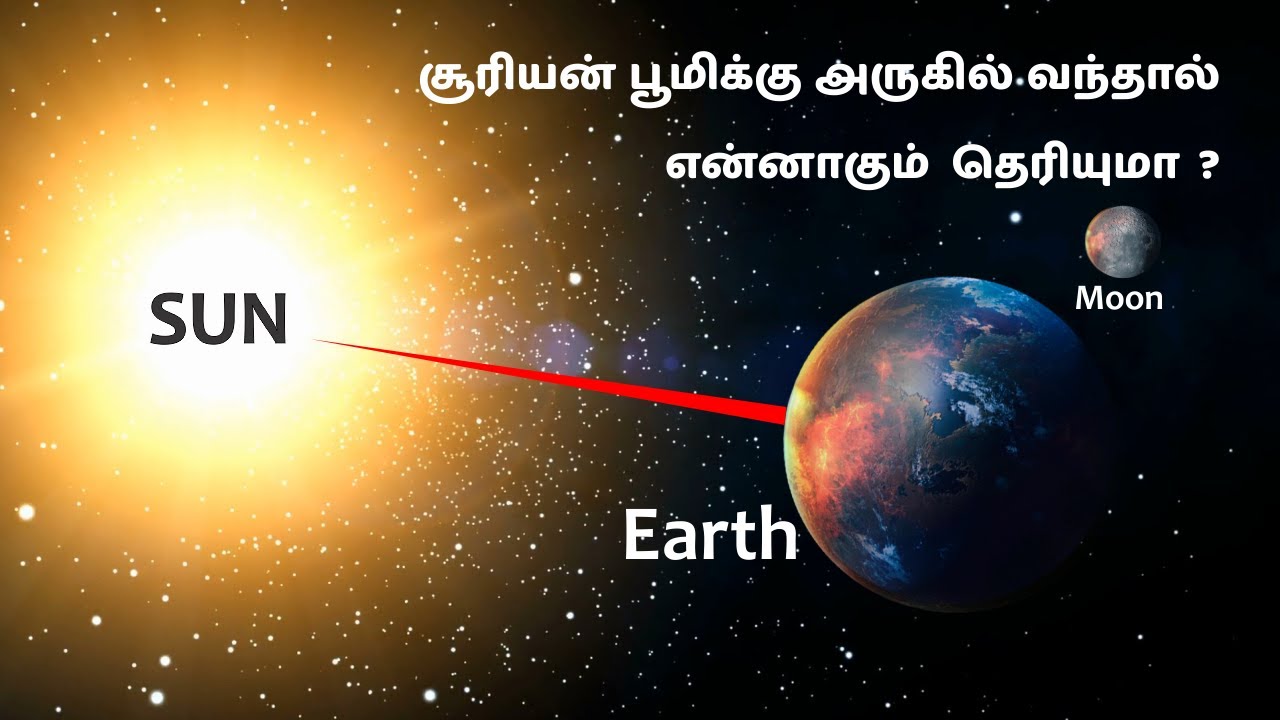
There would be enormous and maybe disastrous effects on our planet and all life on it if the Sun were to move closer to us. However, it is important to make clear that the Sun's distance from Earth is largely steady because of the balance of gravitational forces between the Sun and the planets, including Earth, before we consider the hypothetical scenario. There is almost no likelihood that such an event will occur.
Having said that, let's look at some possible effects of a closer Sun:
Temperature increases: As the Sun approaches Earth, more solar radiation will enter our globe, raising temperatures. This would cause temperatures to significantly rise, resulting in intense heat waves and a surge in the frequency of illnesses and fatalities brought on by the heat. Oceans and the surface of the Earth would warm, affecting habitats and ecosystems.
Rising Sea Levels and Melting Ice Caps: The warmer temperatures would hasten the melting of polar glaciers and ice caps, which would raise the sea level. Flooding would be a possibility in low-lying islands and coastal areas, displacing millions of people and resulting in significant ecological changes.
Global weather patterns would probably shift as a result of a closer Sun since it would probably change atmospheric circulation patterns. While some areas might experience more severe storms, others would endure protracted droughts that have an impact on agriculture and water supplies.
Many plant and animal species have evolved to survive in particular temperature ranges, which has a significant impact on biodiversity. Rapid and large temperature rises have the potential to cause widespread habitat loss and catastrophic extinctions, which would destabilise ecosystems and decrease biodiversity.
Impact on Human civilisation: A closer Sun's effects would be very detrimental to human civilisation. Food shortages, water scarcities, and energy crises would result from the climate and environmental changes, which would also pose a threat to agriculture, water resources, and energy production. To adapt to such extreme changes, significant adaptation efforts would be necessary.
Possible Orbital Changes: The Sun and Earth's gravitational fields are delicately balanced, preserving the planet's stable orbit. A large shift in this equilibrium might potentially modify Earth's orbit, creating new problems and having long-term effects on the climate and habitability of our planet.
Regards,
Vaan Veli
#solarsystem #whatif #sun #solarsystemintamil #whatifsunwasclosertoearth #whatifthesungetsclosertotheearth? #sunfacts #sunfactsintamil #whatifsunenlarge #whatifsunexpand #whatisthesunage #vaanveli #tamil #top10 #science #suntoearthdistance #sundestroyearth #thesun #space #universe #planets #astronomy #spaceexploration #whatifsuncomesclosertoearth #sunfact #thesolarsystem #sunhistory #sunvideo #earthgoingtoend #earthhistory

Hi,
If Jupiter becoming a star would have far-reaching consequences for our solar system and the Earth. The parameters required for Jupiter to become a star, however, are not viable given its current mass and composition.
Jupiter is a gas giant planet made primarily of hydrogen and helium, similar to a small star, but it lacks the mass required to begin nuclear fusion, the process that drives stars. Massive clouds of gas and dust become stars when they collapse under their own gravity and reach a crucial temperature and pressure, allowing nuclear fusion to occur in their centres.
To undergo nuclear fusion and become a star, Jupiter would need to be substantially more massive, roughly 80 times its current mass. Several consequences would result if this occurred:
Additional light and heat: If Jupiter were to become a star, it would emit light and heat in the same way that stars do. However, in comparison to our Sun, it would be faint and considerably cooler.
Changes in the solar system: The arrival of a new star in our solar system would alter its dynamics substantially. The gravitational forces between Jupiter, now a star, and the other planets, including Earth, would create orbital perturbations, potentially leading to orbital alterations and even collisions amongst celestial bodies.
Climate change: The enhanced energy output of a new star in the solar system would have an impact on Earth's climate. However, because Jupiter would still be a minor star, its impact on Earth's temperature would be minimal in comparison to the Sun.
Potential for life: The addition of another star to the solar system may offer additional energy to outer moons such as Europa and Ganymede, increasing the possibilities of life maintaining in those circumstances.
கூடுதல் ஒளி மற்றும் வெப்பம்: வியாழன் ஒரு நட்சத்திரமாக மாறினால், அது ஒரு நட்சத்திரத்தைப் போல ஒளியையும் வெப்பத்தையும் வெளியிடும். இருப்பினும், நமது சூரியனுடன் ஒப்பிடும்போது, அது ஒப்பீட்டளவில் மங்கலாகவும் மிகவும் குளிராகவும் இருக்கும்.
சூரிய குடும்பத்தில் ஏற்படும் மாற்றங்கள்: நமது சூரிய குடும்பத்தில் ஒரு புதிய நட்சத்திரம் இருப்பது அதன் இயக்கவியலை வியத்தகு முறையில் மாற்றிவிடும். வியாழன்-இப்போது-நட்சத்திரம் மற்றும் பூமி உட்பட மற்ற கிரகங்களுக்கு இடையே உள்ள ஈர்ப்பு விசைகள் சுற்றுப்பாதையில் குழப்பங்களை ஏற்படுத்தும், இது சுற்றுப்பாதையில் சாத்தியமான மாற்றங்களுக்கு வழிவகுக்கும் மற்றும் வான உடல்களுக்கு இடையே மோதல்கள் கூட சாத்தியமாகும்.
மாற்றப்பட்ட காலநிலை: சூரிய குடும்பத்தில் ஒரு புதிய நட்சத்திரத்திலிருந்து அதிகரித்த ஆற்றல் வெளியீடு பூமியின் காலநிலையை பாதிக்கும். இருப்பினும், வியாழன் இன்னும் ஒரு நட்சத்திரமாக ஒப்பீட்டளவில் சிறியதாக இருக்கும் என்பதால், சூரியனுடன் ஒப்பிடும்போது பூமியின் காலநிலையில் அதன் தாக்கம் குறைவாக இருக்கும்.
வாழ்க்கைக்கான சாத்தியம்: சூரிய குடும்பத்தில் மற்றொரு நட்சத்திரத்தைச் சேர்ப்பது, யூரோபா மற்றும் கேனிமீட் போன்ற வெளிப்புற நிலவுகளுக்கு அதிக ஆற்றலை வழங்கக்கூடும், இது அந்தச் சூழலில் உயிர்வாழ்வதற்கான வாய்ப்புகளை அதிகரிக்கும்.
Regards,
Vaan Veli
#whatif #jupiter #jupiterstar #jupiterbecameastar #whatifjupiterbecomeastar #jupiterintamil #jupiterplanet #planets #solarsystem #earth #sun #vaanveli #tamil #canjupiterbecomeastar #isjupiterafailedstar #planetjupiter #whatifjupiterbecameastar #jupiterbecomesastar #universe #jupitercouldbeasun #jupiterafailedstar #jupiterasstar #reddwarf #jupiterfacts #space #gravity #வியாழன் #viyaalan #shorts #science #solarsystemfacts #planets #jupitersize

What if the moon disappeared? Would we know what was going on in the world? In this video, we'll explore this question and more.
We'll look at the history of the moon, how it's related to our planet, and how it might be disappearing. We'll also share some theories on what might happen if the moon disappeared. Finally, we'll ask the question: If the moon disappeared, what would happen to our planet? Go ahead and check out the video to find out!
Regards,
Vaan Veli
நிலவு இல்லாத பூமி என்ன ஆகும் தெரியுமா ?
#whatifmoondisappeared #whatif #earth #moon #whatifthemoondisappeared #whatifmoondisappears #earthandmoon #moonfacts #moonfactsintamil #whatifmoondisappearintamil #moontamil #nilavu #moonhistory #historyofthemoon #moonage #moonbrightness #moondistancefromearth #earthvsmoon #space #science #solarsystem #mars #darksideofthemoon #themoon #theuniverse #earthandmoon #whatiftherewasnomoon #moondisappeared #vaanveli #vaanveli #tamil #nila

In this video, we're going to reveal some unbelievable secrets about Pluto. From its size to its atmosphere, we're going to go over everything you need to know about this fascinating planet!
Don't believe the myths about Pluto, learn the truth about this unusual planet in this amazing video! From its size to its atmosphere, we're going to reveal all of the unbelievable secrets about Pluto! Thanks for watching!
Regards,
VaanVeli
Santhosh
#pluto #solarsystem #nasa #plutoplanet #nasapluto #facts #space #science #universe #planet #galaxy #planets #orbit #dwarfplanet #pluto'sheart #plutoice #moonpluto #plutodwarfplanet #plutoplanetintamil #whatif #vaanveli #plutotamil #planetsintamil #solarsystemplanetsintamil #vaanveli #tamil #isplutoaplanet #photoofpluto2022 #latestphotosofpluto #plutoisaplanet #nasarevealspluto #amazingfactsaboutpluto #plutofacts #plutofactsintamil
Hi everyone,
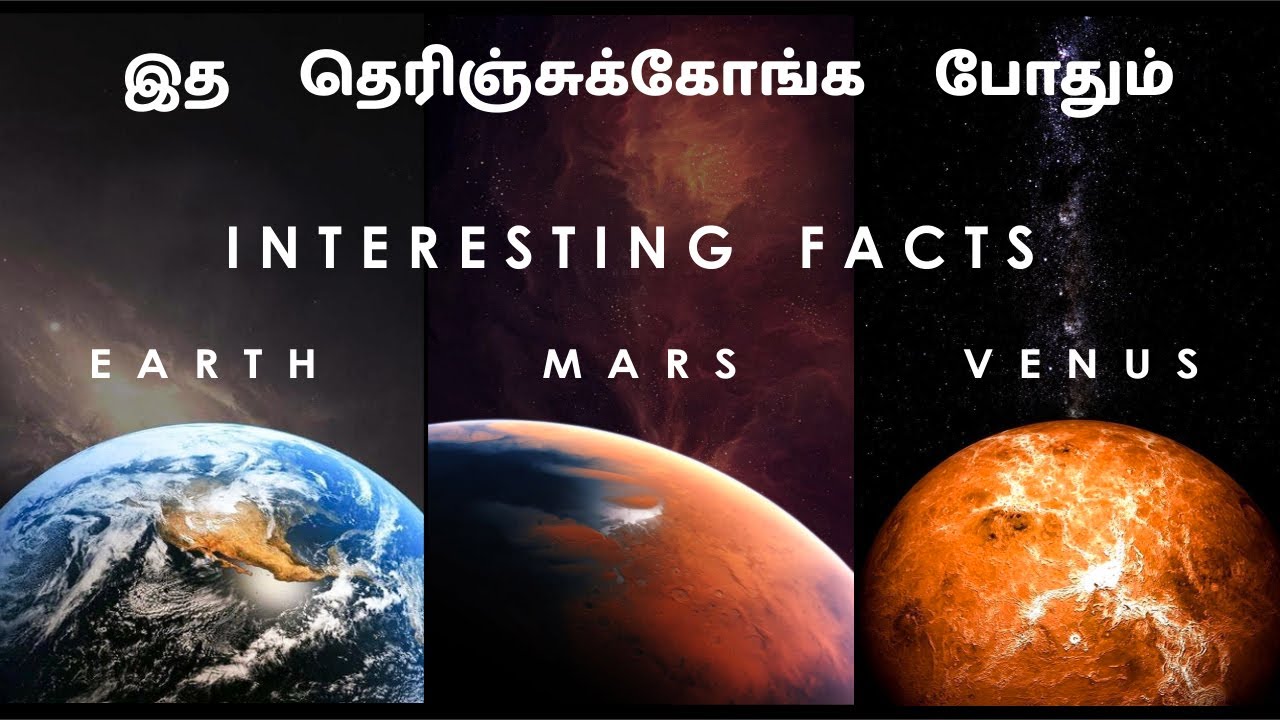
We think we know everything about our home planet, but we couldn’t be more wrong. Scientists have already discovered a lot about the Universe, but they believe there is still much more to learn about our planet. You’ll be amazed when you find out how much you have yet to learn about our home planet, let’s start with 45 unknown earth facts.
Summary:
1. There weren't always several continents
2. Some 300 million years ago, there was just one continent. A massive
supercontinent called Pangaea. And thus, there was just one giant sea,
called Panthalassa.
3. Our solar system is 4.57 billion years old.
4. Researches calculate that the earth is approximately 4.54 billion years old,
that is insanely old.
5. The earth is approximately 93 million miles (150million kilometres) from
the Sun. It makes about 8 minutes and 19 seconds for sunlight to reach our
planet.
6. Earth's gravity isn't uniform
7. Because of imbalance gravity/centrifugal force at the equator coupled with
the speed that the earth is spinning. Our planet is not a perfect sphere. it is
slightly bulging out in the middle.
9. Our poles switch. our planet has settled into a pattern of a pole reversal
about every 2,00,000 to 3,00,000 years.
10.The circumference of the globe is 24,901 miles (40,075 kilometres)
11.The earth isn't just spinning in place, its zipping around the sun at a rate of
67,000miles (107.826 kilometres) per hour.
12. Earth's icy times
13. In the past, sea levels were very different
14.The days are getting longer.
15.At the equator, you would weigh less than if standing at one of the poles.
16.Depending on where you are on the globe, you could be spinning through
the space at just over 1,000 miles per hour.
17.Hudson Bay, Canada, has lower gravity than other regions of the earth.
18.The Pacific Ocean is huge; it covers an area of about 59 million square
miles (155 million square kilometres) and containing more than the half of
the free water on earth.
21.Coral reefs support the most species per unit. Area of any of the planet's
ecosystems, rivalling rain forests.
22.Researchers believe that at one point, we had two moons. our second moon would have been about 750 miles orbited the earth in the past.
23.We always see the same side of the Moon, no matter where we stand on Earth.
24.The moon is not Earth's only companion
25.The lowest point on earth that is ' on land' is the dead sea
26.The driest place on Earth
27.El Aziziya, Libya holds the record for the hottest place on earth. According
to NASA, it hit 136 degrees Fahrenheit (57.8 degrees Celsius) on
September 13, 1922.
28.The lowest temperature ever recorded on earth came from Russia's Vostok station
29.The calm before the storm
30.A single stroke of lightning can heat the air to around 54,000 degrees
31.Our sun has a voracious appetite
32.Only 5% of the universe is visible from Earth.
33.Earth is one of the four terrestrial planets: like Mercury, Venus, and Mars. It is rocky at the surface.
34.In our solar system that are 4 planets known as gas giants: Jupiter, Saturn, Uranus & Neptune.
35. Mercury & Venus are the only 2 planets in our solar system that have no moons.
37.The hottest planet in the solar system is Venus with an average temperature
of 464 degree Celsius
38. The coldest planet in the solar system is Pluto with an average
temperature of -225 degree Celsius.
39.The Sun weighs about 330,000 times more than Earth.
41.Pluto is smaller than the United States
#top10 #facts #amazing #interestingfacts #coolfacts #amazingfacts #interestingfactsabouttheworld #solarsystem #earth #moon #sun #factsaboutspace #factsintamil #factsthatwillshockyou #brightsidevideos #factsaboutearth #factsaboutworld #factsabouttheearth #twomoons #interestingvideos #mysteriousworld #rarefacts #factsyoumustknow #shockingfacts #factsaboutsolarsystem #scientificfacts #brightside #mars #vaanveli #tamil #mysterybrightside #brightsidefacts
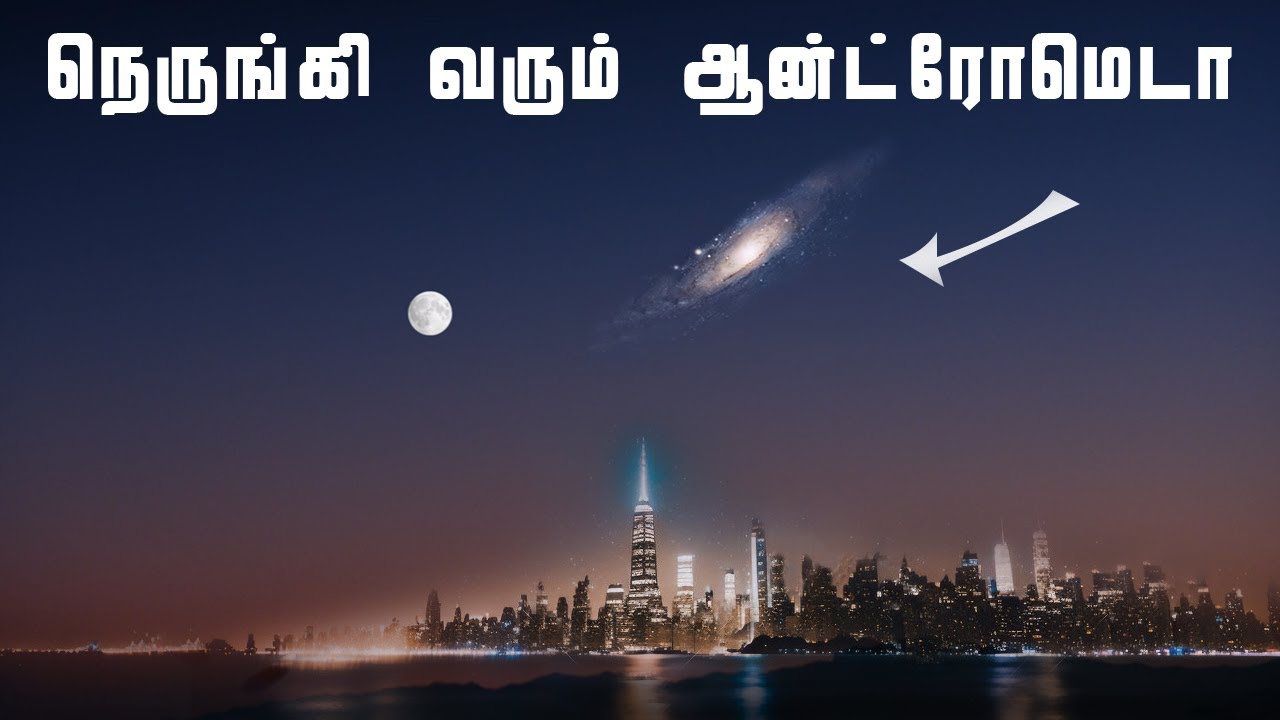
Andromeda galaxy vs Milky way galaxy இரண்டும் ஒன்றுடன் ஒன்று மோதினால் என்ன நடக்கும் தெரியுமா? வீடியோ வ முழுசா பாருங்க தெரிஞ்சுக்கோங்க ,
We'll compare and contrast the Milky Way with the Andromeda galaxy collide in this video. Did you know they're going to clash in 4 billion years? Discover why the impact is significant and what effects it may have on Earth.
This video is an excellent approach to learn about our galaxy and the massive event that is set to occur in 4 billion years. If you're interested in astronomy or space science, don't miss out on this video!
நன்றி
Vaanveli
#milkywayvsandromeda #milkywaycollision #whatreallyhappenswhengalaxiescollide #galacticscollision #galaxycollisionintamil #galaxyintamil #andromedagalaxyintamil #andromedagalaxyfacts #galaxyfacts #spaceintamil #blackhole #supermassiveblackhole #sagittariusa #vaanveli #milkywaywayvsandromedacollision #andromedagalaxy #andromeda #galaxycollision #space #solarsystem #andromedacollision #galaxycollision #galaxytamil
#galaxy #collision #collide
