#mars
Hi,
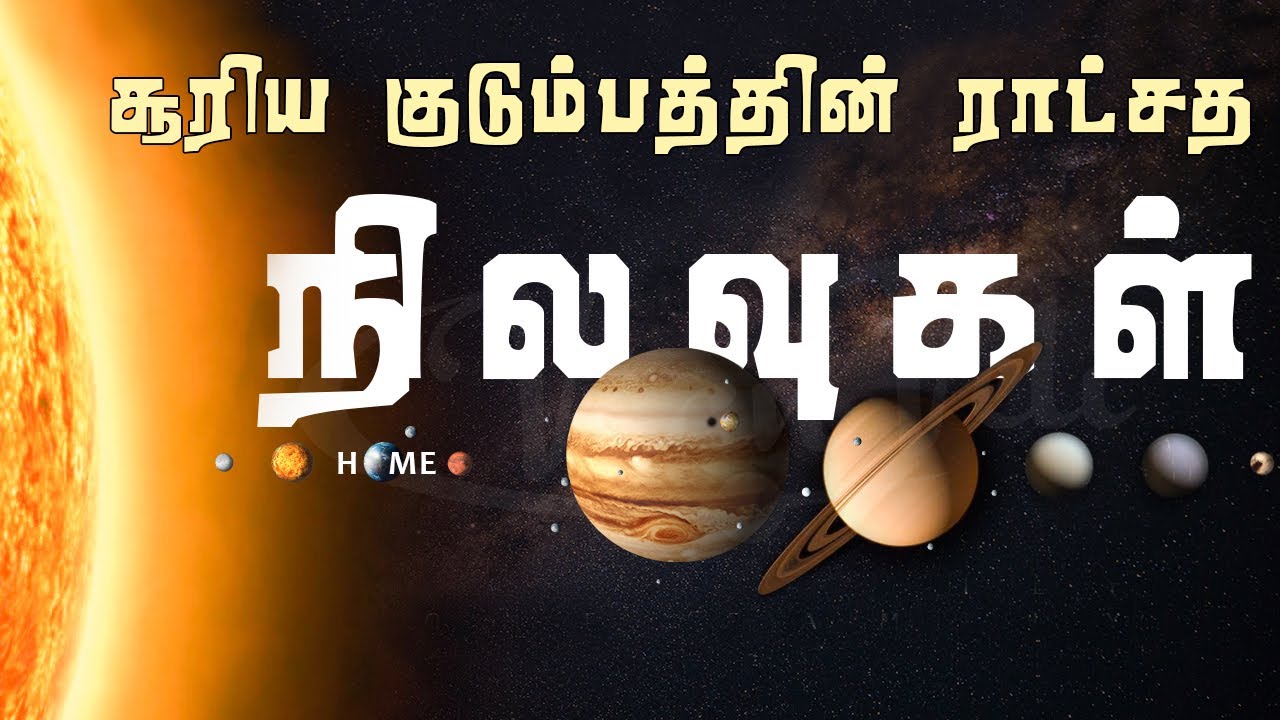
சூரிய குடும்பத்தின் விசித்திரமான 290 நிலவுகள். Solar System Moons
Each moons orbiting a different planet or dwarf planet.
The Moon (Luna) is the Earth's sole natural satellite. It is the Solar System's fifth-largest moon and has played an important part in Earth's history and civilization.
The Moons of Mars (Phobos and Deimos): Mars has two small moons, Phobos and Deimos. They have an irregular shape and are believed to be captured asteroids.
Jupiter has around 80 to 95 known moons, the four largest of which are known as the Galilean moons: Io, Europa, Ganymede, and Callisto. Galileo Galilei discovered them in 1610.
Saturn contains more than 146 known moons, including Titan, the second-largest moon in the Solar System with a thick atmosphere. Enceladus and Mimas are two other noteworthy Saturnian moons.
Moons of Uranus: Uranus has 27 recognised moons. Miranda, Ariel, Umbriel, Titania, and Oberon are notable examples.
Neptune's Moons: Neptune has 14 known moons, including Triton, the Solar System's seventh-largest moon. Triton is uncommon among big moons in that it orbits Neptune in reverse.
Pluto's Moon (Charon): Pluto is a dwarf planet with a very large moon named Charon. Charon, which is roughly half the size of Pluto, is tidally linked to it.
Moons of Dwarf Planets: Other dwarf planets in the Solar System, such as Eris and Haumea, have moons. Eris, for example, has one known moon named Dysnomia.
Some asteroids in the asteroid belt have minor moons or companions. The asteroid Ida, for example, has a moon called Dactyl.
TNOs are Trans-Neptunian Objects. Moons have been discovered around numerous TNOs, including Pluto, Eris, and Makemake.
Regards,
Vaan Veli
Santhosh
Follows on Facebook : https://www.facebook.com/vaanveli1
Follows on Instagram : https://www.instagram.com/vaan_veli
#vaanveli #vaanveli #solarsystemmoons #jupitermoons #saturnmoons #mercury #venus #earth #mars #jupiter #saturn #uranus #neptune #earth #moon #moons #iomoon #ganymede #sun #planetandmoon #earthmoon #chandrayaan3 #enceladusmoon #titanmoon #titaniamoon #pluto #moonfacts #moonhistory #solarsystemmoonsintamil #solarsystemmoonsandplanets #biggestmooninoursolarsystem #howmanymoonsareinoursolarsystem #solarsystem #mars #universe #callisto #space #venus #moonsize #solarsystem
![Solar System in 3D [Facts About Solar System Planets]](https://i.ytimg.com/vi/0QJj4U5PIiU/maxresdefault.jpg)
The Solar System in 3D Visualization: The Solar System is the gravitationally bound system of the Sun and the objects that orbit it. It formed 4.6 billion years ago from the gravitational collapse of a giant interstellar molecular cloud. please check our video and give us your valuable feedback to improve the quality thanks.
Regards,
Vaan veli
#solarsystem #the8planetsinoursolarsystemfacts #neptuneorbit #planetx #moon #sunset #neptune #earth2 #pluto #mercury #saturn #blackhole #mars #milkywaygalaxy #sizecomparison #solarsystemfacts #solarsystemdocumentary #planetsizecomparison #factsaboutspaceandtheuniverse #planetsizescomparisonvideo #solarsystem3d #venus #jupiter #planets #uranus #solar #3dsolarsystem #earthsize #earthtilt #solarplanettilt #saturnrings #planetsin3d #vaanveli #universe #starwars #gk

Dear All,
We shows the sizes of some cities in 3D by Urban area,
What is urban Area : [An urban area, or built-up area, is a human settlement with a high population density and infrastructure of built environment. ]
Volcano comparison: https://youtu.be/kkrtG5X6enk
#countrysizecomparison #citysizecomparison #newyork #comparison #citysizecomparison #citiessizecomparison #biggestcities #comparaciones #sizecomparison #size #countrysizecomparison #largestcitiesintheworld #topcityintheworld #cityurbanarea #citysizebyarea #mostpopulatedcitiesintheworld #citiespopulation #top100populatedcity #citypopulation #population #topcity #worldcitydata #3dcomparison #comparisonvideo #comparison2022 #vaanveli #earth #tamil #city #cities #newyorkcity #newyork #comparisonvideo #sizecomparisons #comparisontamil #tamilcomparison #tamilnadu #earth #solarsystem #volcano #blackhole #mars #moon #milkyway #comparisonintamil #youtubeshorts #youtube

Hi,
1000 வருடங்கள் கழித்து நம் பூமி எப்படி இருக்கும் ?
Technological Advancements: The pace of technological progress is likely to continue, with advancements in fields such as artificial intelligence, biotechnology, space exploration, and renewable energy. This could lead to significant improvements in various aspects of human life, including healthcare, communication, and energy production.
Climate Change and Environmental Impact: Addressing climate change will likely be a major challenge. Efforts to transition to renewable energy sources, sustainable practices, and increased conservation may be crucial to mitigate the effects of climate change. The state of the environment will depend heavily on global cooperation and the success of these efforts.
Population and Demographics: The global population is expected to continue growing, but at a slower rate. Demographic shifts, such as aging populations in many developed countries, may have profound social and economic implications.
Space Exploration: Human exploration of space may become more advanced, with potential colonies on the Moon or Mars. Advancements in propulsion systems and space technologies could enable more ambitious missions to explore other planets and celestial bodies.
Biotechnology and Medicine: Advances in biotechnology could lead to breakthroughs in medical treatments, disease prevention, and possibly even increased human longevity. The ethical implications of these technologies would need careful consideration.
Cultural and Societal Changes: Cultural shifts are challenging to predict, but factors such as globalization, increased connectivity, and changes in political and economic systems could influence societies around the world. The role of technology in shaping culture and communication will likely continue to evolve.
Political Landscape: The geopolitical landscape is highly uncertain. The balance of power among nations may shift, and new political structures or alliances could emerge. International cooperation on global issues will be crucial for addressing challenges such as climate change and resource management.
Energy Sources: There may be a continued shift toward renewable energy sources, such as solar, wind, and nuclear power. Advances in energy storage technology could play a critical role in making renewable energy more practical and widespread.
Regards,
Vaan Veli
Santhosh
Follows on Facebook : https://www.facebook.com/vaanveli1
Follows on Instagram : https://www.instagram.com/vaan_veli
#vaanveli #vaan_veli #universe #solarsystem #earth #tamil #1000yearslaterourearth #theearthin1000years #theworldin1000yearsfromnow #earthevolution #earthpollution #waterpollution #airpollution #deforestation #tree #trees #savetrees #plant #oxygen #treesintamil #moon #mars #moonhome #marshome #space #alien #treeplantation #treesforhome #whattreeplanttohome #saveanimals #1000yearslater #earthfootages #gk

What if the moon disappeared? Would we know what was going on in the world? In this video, we'll explore this question and more.
We'll look at the history of the moon, how it's related to our planet, and how it might be disappearing. We'll also share some theories on what might happen if the moon disappeared. Finally, we'll ask the question: If the moon disappeared, what would happen to our planet? Go ahead and check out the video to find out!
Regards,
Vaan Veli
நிலவு இல்லாத பூமி என்ன ஆகும் தெரியுமா ?
#whatifmoondisappeared #whatif #earth #moon #whatifthemoondisappeared #whatifmoondisappears #earthandmoon #moonfacts #moonfactsintamil #whatifmoondisappearintamil #moontamil #nilavu #moonhistory #historyofthemoon #moonage #moonbrightness #moondistancefromearth #earthvsmoon #space #science #solarsystem #mars #darksideofthemoon #themoon #theuniverse #earthandmoon #whatiftherewasnomoon #moondisappeared #vaanveli #vaanveli #tamil #nila
Hi everyone,
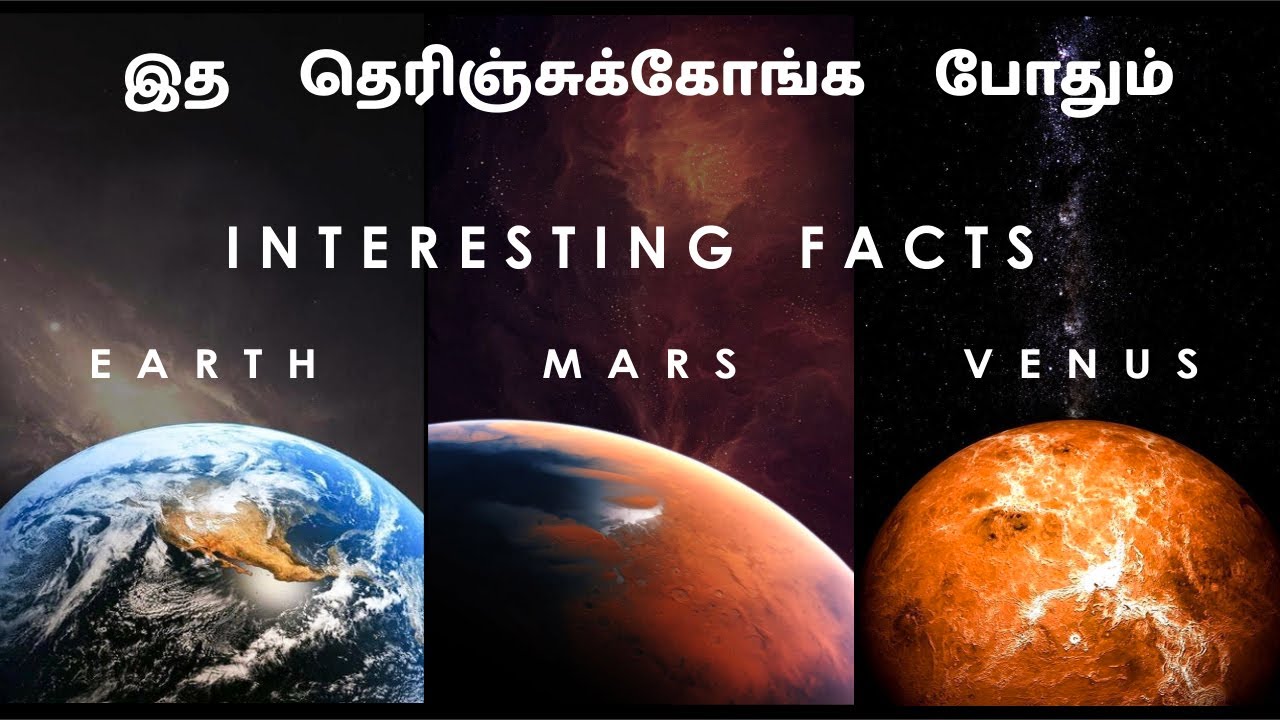
We think we know everything about our home planet, but we couldn’t be more wrong. Scientists have already discovered a lot about the Universe, but they believe there is still much more to learn about our planet. You’ll be amazed when you find out how much you have yet to learn about our home planet, let’s start with 45 unknown earth facts.
Summary:
1. There weren't always several continents
2. Some 300 million years ago, there was just one continent. A massive
supercontinent called Pangaea. And thus, there was just one giant sea,
called Panthalassa.
3. Our solar system is 4.57 billion years old.
4. Researches calculate that the earth is approximately 4.54 billion years old,
that is insanely old.
5. The earth is approximately 93 million miles (150million kilometres) from
the Sun. It makes about 8 minutes and 19 seconds for sunlight to reach our
planet.
6. Earth's gravity isn't uniform
7. Because of imbalance gravity/centrifugal force at the equator coupled with
the speed that the earth is spinning. Our planet is not a perfect sphere. it is
slightly bulging out in the middle.
9. Our poles switch. our planet has settled into a pattern of a pole reversal
about every 2,00,000 to 3,00,000 years.
10.The circumference of the globe is 24,901 miles (40,075 kilometres)
11.The earth isn't just spinning in place, its zipping around the sun at a rate of
67,000miles (107.826 kilometres) per hour.
12. Earth's icy times
13. In the past, sea levels were very different
14.The days are getting longer.
15.At the equator, you would weigh less than if standing at one of the poles.
16.Depending on where you are on the globe, you could be spinning through
the space at just over 1,000 miles per hour.
17.Hudson Bay, Canada, has lower gravity than other regions of the earth.
18.The Pacific Ocean is huge; it covers an area of about 59 million square
miles (155 million square kilometres) and containing more than the half of
the free water on earth.
21.Coral reefs support the most species per unit. Area of any of the planet's
ecosystems, rivalling rain forests.
22.Researchers believe that at one point, we had two moons. our second moon would have been about 750 miles orbited the earth in the past.
23.We always see the same side of the Moon, no matter where we stand on Earth.
24.The moon is not Earth's only companion
25.The lowest point on earth that is ' on land' is the dead sea
26.The driest place on Earth
27.El Aziziya, Libya holds the record for the hottest place on earth. According
to NASA, it hit 136 degrees Fahrenheit (57.8 degrees Celsius) on
September 13, 1922.
28.The lowest temperature ever recorded on earth came from Russia's Vostok station
29.The calm before the storm
30.A single stroke of lightning can heat the air to around 54,000 degrees
31.Our sun has a voracious appetite
32.Only 5% of the universe is visible from Earth.
33.Earth is one of the four terrestrial planets: like Mercury, Venus, and Mars. It is rocky at the surface.
34.In our solar system that are 4 planets known as gas giants: Jupiter, Saturn, Uranus & Neptune.
35. Mercury & Venus are the only 2 planets in our solar system that have no moons.
37.The hottest planet in the solar system is Venus with an average temperature
of 464 degree Celsius
38. The coldest planet in the solar system is Pluto with an average
temperature of -225 degree Celsius.
39.The Sun weighs about 330,000 times more than Earth.
41.Pluto is smaller than the United States
#top10 #facts #amazing #interestingfacts #coolfacts #amazingfacts #interestingfactsabouttheworld #solarsystem #earth #moon #sun #factsaboutspace #factsintamil #factsthatwillshockyou #brightsidevideos #factsaboutearth #factsaboutworld #factsabouttheearth #twomoons #interestingvideos #mysteriousworld #rarefacts #factsyoumustknow #shockingfacts #factsaboutsolarsystem #scientificfacts #brightside #mars #vaanveli #tamil #mysterybrightside #brightsidefacts
