#solarsystem
Hi,
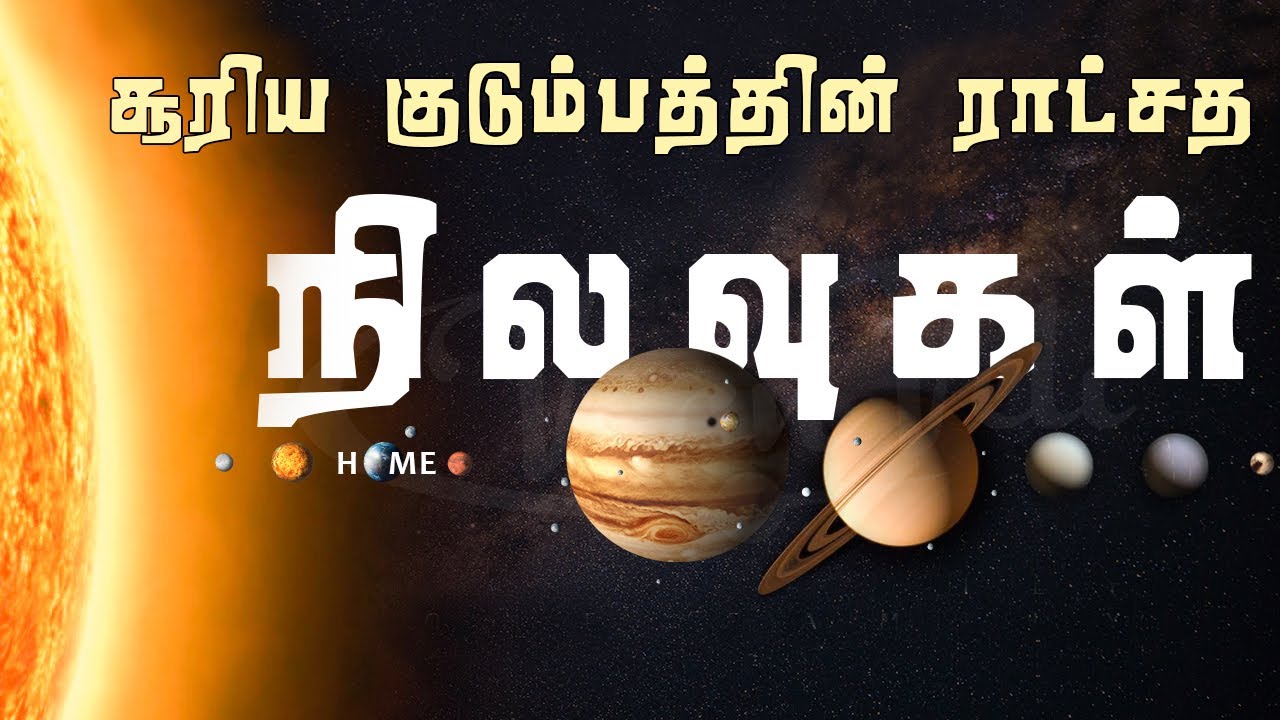
சூரிய குடும்பத்தின் விசித்திரமான 290 நிலவுகள். Solar System Moons
Each moons orbiting a different planet or dwarf planet.
The Moon (Luna) is the Earth's sole natural satellite. It is the Solar System's fifth-largest moon and has played an important part in Earth's history and civilization.
The Moons of Mars (Phobos and Deimos): Mars has two small moons, Phobos and Deimos. They have an irregular shape and are believed to be captured asteroids.
Jupiter has around 80 to 95 known moons, the four largest of which are known as the Galilean moons: Io, Europa, Ganymede, and Callisto. Galileo Galilei discovered them in 1610.
Saturn contains more than 146 known moons, including Titan, the second-largest moon in the Solar System with a thick atmosphere. Enceladus and Mimas are two other noteworthy Saturnian moons.
Moons of Uranus: Uranus has 27 recognised moons. Miranda, Ariel, Umbriel, Titania, and Oberon are notable examples.
Neptune's Moons: Neptune has 14 known moons, including Triton, the Solar System's seventh-largest moon. Triton is uncommon among big moons in that it orbits Neptune in reverse.
Pluto's Moon (Charon): Pluto is a dwarf planet with a very large moon named Charon. Charon, which is roughly half the size of Pluto, is tidally linked to it.
Moons of Dwarf Planets: Other dwarf planets in the Solar System, such as Eris and Haumea, have moons. Eris, for example, has one known moon named Dysnomia.
Some asteroids in the asteroid belt have minor moons or companions. The asteroid Ida, for example, has a moon called Dactyl.
TNOs are Trans-Neptunian Objects. Moons have been discovered around numerous TNOs, including Pluto, Eris, and Makemake.
Regards,
Vaan Veli
Santhosh
Follows on Facebook : https://www.facebook.com/vaanveli1
Follows on Instagram : https://www.instagram.com/vaan_veli
#vaanveli #vaanveli #solarsystemmoons #jupitermoons #saturnmoons #mercury #venus #earth #mars #jupiter #saturn #uranus #neptune #earth #moon #moons #iomoon #ganymede #sun #planetandmoon #earthmoon #chandrayaan3 #enceladusmoon #titanmoon #titaniamoon #pluto #moonfacts #moonhistory #solarsystemmoonsintamil #solarsystemmoonsandplanets #biggestmooninoursolarsystem #howmanymoonsareinoursolarsystem #solarsystem #mars #universe #callisto #space #venus #moonsize #solarsystem

Hi, See the Top 10 Extinct Animals.
Gorgonopsia:
Gorgonopsia is an extinct clade of sabre-toothed therapsids from the Middle to Upper Permian roughly 265 to 252 million years ago. They are characterised by a long and narrow skull, as well as elongated upper and sometimes lower canine teeth and incisors which were likely used as slashing and stabbing weapons.
Dickinsonia:
Dickinsonia is a genus of extinct organism that lived during the late Ediacaran period in what is now Australia, China, Russia and Ukraine, most likely a basal animal. It is one of the best known members of the Ediacaran biota. The individual Dickinsonia typically resembles a bilaterally symmetrical ribbed oval.
Haikouichthys:
Haikouichthys is an extinct genus of craniate that lived 518 million years ago, during the Cambrian explosion of multicellular life
Astraspis :
Astraspis is an extinct genus of primitive jawless fish from the Ordovician of Central North America including the Harding Sandstone of Colorado and Bighorn Mountains of Wyoming. It is also known from Bolivia.
Pneumodesmus newmani:
Pneumodesmus newmani is a species of myriapod that lived during the late Wenlock epoch of the Silurian period around 428 million years ago.
Nothosaurus :
Nothosaurus is an extinct genus of sauropterygian reptile from the Triassic period, approximately 240–210 million years ago, with fossils being distributed from North Africa and Europe to China. It is the best known member of the nothosaur order
Scutosaurus :
Scutosaurus is an extinct genus of pareiasaur parareptiles. Its genus name refers to large plates of armor scattered across its body. It was a large anapsid reptile that, unlike most reptiles, held its legs underneath its body to support its great weight
Dimetrodon :
Dimetrodon is a genus of non-mammalian synapsid that lived during the Cisuralian age of the Early Permian period, around 295–272 million years ago. It is a member of the family Sphenacodontidae.
Jaekelopterus :
Jaekelopterus is a genus of predatory eurypterid, a group of extinct aquatic arthropods. Fossils of Jaekelopterus have been discovered in deposits of Early Devonian age, from the Pragian and Emsian stages.
Titanichthys :
Titanichthys is an extinct genus of giant, aberrant marine placoderm from shallow seas of the Late Devonian of Morocco, Eastern North America, and possibly Europe. Many of the species approached Dunkleosteus in size and build.
Regards,
Vaan Veli
Santhosh
Follows on Facebook : https://www.facebook.com/vaanveli1
Follows on Instagram : https://www.instagram.com/vaan_veli
#vaanveli #vaan_veli #universe #solarsystem #earth #tamil #animals #extinct #extinction #extinctanimals #extinctspecies #extinctspeciesofanimals #extinctioneventsonearth #5extinction #animal #monsteranimals #top10animals #top10extinctanimals #animalsintamil #extinctanimalsintamil #titanichthys #jaekelopterus #dimetrodon #scutosaurus #nothosaurus #pneumodesmusnewmani #astraspis #dickinsonia #haikouichthys #gorgonopsia #predators #lion #tiger #cheetah #snake #crocodile #fish #gk #science

Hi,
பிரமீடை காட்டியது ஏலியனா இல்ல மனிதனா ? The Pyramid vs Aliens
Pyramid Shape: The most distinctive feature of pyramid architecture is the use of a pyramid shape or form in the design of buildings or structures. This shape is characterized by a polygonal base and triangular sides that slope upward to a single point or apex.
Historical Inspiration: Pyramid architecture often draws inspiration from the ancient pyramids of Egypt, particularly the Great Pyramid of Giza. These ancient structures were built as tombs for pharaohs and have a well-known stepped-pyramid design.
Symbolism: Pyramids have symbolic significance in various cultures. In addition to their historical use as tombs, they can represent concepts such as stability, endurance, and ascension.
Modern Interpretations: While ancient pyramids were constructed using massive stone blocks, modern pyramid architecture may use a wide range of materials, including glass, steel, concrete, and more. Architects and designers may incorporate pyramid-like shapes or elements into contemporary buildings for aesthetic or symbolic purposes.
Pyramid Roof: Some buildings have pyramid-shaped roofs or spires, which can give them a distinct appearance. These roofs can be found in a variety of architectural styles, from ancient to modern.
Functionality: Pyramid architecture can be applied to various types of buildings, not just tombs. Modern architects may use pyramid designs for residential homes, commercial buildings, museums, and other structures.
Cultural Variations: Different cultures have their interpretations of pyramid architecture. For example, Mesoamerican civilizations like the Maya and Aztec built pyramidal temples. These structures often have stepped pyramid designs and serve religious or ceremonial purposes.
Sustainability: Pyramid architecture can also be associated with sustainable design principles. The shape of a pyramid can be efficient for natural ventilation and energy conservation, making it a consideration in green building practices.
Regards,
Vaan Veli
Santhosh
Follows on Facebook : https://www.facebook.com/vaanveli1
Follows on Instagram : https://www.instagram.com/vaan_veli
#vaanveli #vaanveli #universe #solarsystem #earth #tamil #pyramid #pyramidvsalien #pyramidfacts #pyramidhistory #pyramidarchitecture #whocreatedpyramidsofegypt #pyramidhight #giza #gizapyramid #pyramidintamil #pyramidvideo #pyramidhistoryintamil #pyramidsize #pyramidvsburjkhalifa #largestpyramid #tallestpyramidintheworld #pyramidtamil #whomadepyramidsinegypt #alien #pyramidmummy #mummyintamil #mummytamil #pyramidegypt #pyramidscience
![Solar System in 3D [Facts About Solar System Planets]](https://i.ytimg.com/vi/0QJj4U5PIiU/maxresdefault.jpg)
The Solar System in 3D Visualization: The Solar System is the gravitationally bound system of the Sun and the objects that orbit it. It formed 4.6 billion years ago from the gravitational collapse of a giant interstellar molecular cloud. please check our video and give us your valuable feedback to improve the quality thanks.
Regards,
Vaan veli
#solarsystem #the8planetsinoursolarsystemfacts #neptuneorbit #planetx #moon #sunset #neptune #earth2 #pluto #mercury #saturn #blackhole #mars #milkywaygalaxy #sizecomparison #solarsystemfacts #solarsystemdocumentary #planetsizecomparison #factsaboutspaceandtheuniverse #planetsizescomparisonvideo #solarsystem3d #venus #jupiter #planets #uranus #solar #3dsolarsystem #earthsize #earthtilt #solarplanettilt #saturnrings #planetsin3d #vaanveli #universe #starwars #gk

1000 வருடத்திற்கு மேல் பூமியில் சூரிய ஒளி இல்லாமல் போனால் என்ன நடக்கும் தெரியுமா ? பூமியில் பெரிய எரி கல்லோ அல்லது பெரிய எரிமலையோ வெடித்தால் என்ன நடக்கும் என்பதை காட்டி உள்ளோம், அனைவரும் பார்த்து தங்களின் கருதுக்களை தெரிவிக்கலாம் நன்றி .
What If There was No Sunlight to Earth?
If there was no sunlight reaching Earth, the consequences would be catastrophic for life as we know it. Sunlight is essential for numerous biological and physical processes on our planet. Here are some of the major impacts:
Loss of Photosynthesis: Sunlight is crucial for photosynthesis, the process by which plants and some bacteria convert light energy into chemical energy to produce food. Without sunlight, photosynthetic organisms would be unable to survive, leading to the collapse of the entire food chain.
Ecosystem Disruption: The extinction of plants would result in the extinction of herbivores that rely on them for sustenance. This, in turn, would affect carnivores and other predators in the ecosystem. The disruption would likely cause a mass extinction event.
Temperature Drop: The Sun's energy is responsible for heating the Earth's surface. Without sunlight, the planet would rapidly cool down. The temperature drop would be drastic, leading to extremely cold conditions, especially in areas away from geothermal heat sources.
Loss of Atmospheric Circulation: Sunlight plays a crucial role in driving atmospheric circulation, which includes the formation of weather patterns and wind currents. Without sunlight, the atmosphere would become stagnant, resulting in the loss of weather systems and wind patterns.
Darkness: Obviously, the absence of sunlight would plunge Earth into darkness. The sky would be devoid of the typical blue color, and daylight-dependent activities would become impossible.
Disruption of the Water Cycle: Sunlight provides the energy required for the evaporation of water, which is an essential component of the water cycle. Without sunlight, the water cycle would slow down significantly, affecting rainfall patterns, freshwater availability, and overall climate stability.
Impact on Human Life: Humans, along with other organisms, depend on sunlight for vitamin D synthesis, which is crucial for bone health. The absence of sunlight would lead to widespread vitamin D deficiencies, resulting in health issues. Additionally, agriculture, which heavily relies on sunlight, would be severely affected, leading to food shortages and famine.
Regards,
VaanVeli
#volcano
#earthquake #earth #planets #extinction #clouds #பூமி #volcano #earthquake #planets #extinction #clouds #universe #galaxy #cloud #disaster #vaanveli #animals #explosion #earthattack #climatecrisis #climate #globalwarming #savetheworld #science #dangeredspecies #savetheplanet #sustainability #dinosaurs #environment #extinction #dinosaur #climatechange #wildlife #nature #extinction #supervolvano #yellowstone #asteroid #whatif #earth #whathappensif #nasa #top5 #space #universe #solarsystem #tamil #extinciondinosaurios #shorts
Hi,
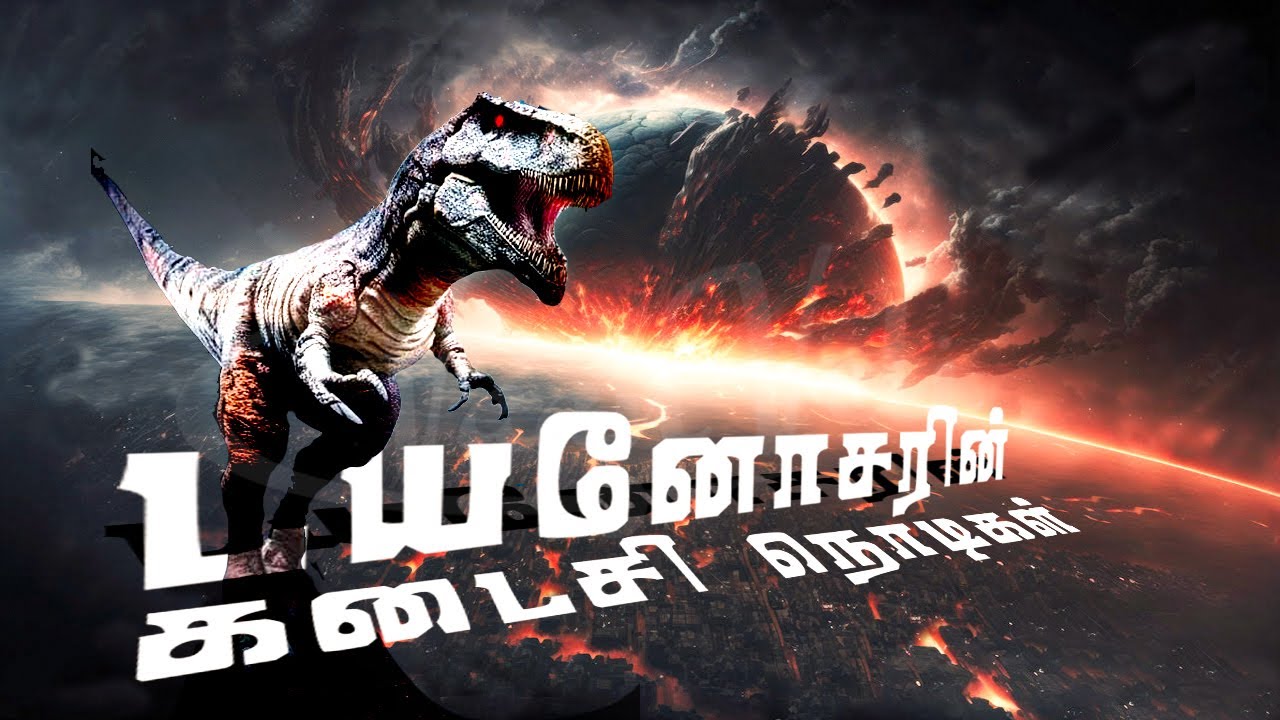
டயனோசர்களின் கடைசி நொடிகள் | Last Moment of Dinosaurs #dinosaur #vaanveli
Impact Event: The most widely accepted theory is that around 66 million years ago, a large asteroid or comet, estimated to be about 6 miles (10 kilometers) in diameter, collided with Earth. This impact event is believed to have occurred in what is now the Yucatán Peninsula in Mexico and created the Chicxulub crater. The energy released in the impact would have caused massive fires, tsunamis, and a "nuclear winter" effect, with debris and soot blocking sunlight for an extended period.
Immediate Consequences: The impact would have caused massive wildfires across the globe, releasing a tremendous amount of soot and gases into the atmosphere. This would have led to a sudden drop in temperatures, making it difficult for many species, including the dinosaurs, to survive.
Climate Change: The impact and subsequent environmental changes caused by the impact led to a drastic cooling of the Earth's climate. This would have disrupted ecosystems, causing a decline in plant life, which, in turn, would have affected herbivorous dinosaurs and the predators that relied on them.
Mass Extinction: The combination of factors, including extreme temperature fluctuations, lack of sunlight, and ecological disruption, likely resulted in a mass extinction event. Many species, including the non-avian dinosaurs, went extinct during this time.
Surviving Species: While the non-avian dinosaurs went extinct, some groups of animals, such as birds, small mammals, and reptiles, managed to survive and eventually evolve into the diverse life forms we see today. Birds are the only living descendants of the dinosaur lineage.
Regards,
Vaan Veli
Santhosh
Follows on Facebook : https://www.facebook.com/vaanveli1
Follows on Instagram : https://www.instagram.com/vaan_veli
#vaanveli #universe #solarsystem #earth #tamil #dinosaur #dinosaurs #dinasourimpact #asteroidimpact #chicxulubcrater #chicxulub #asteroid #dinosaursextinction #dinosaursintamil #dinosaurmovie #dinosaurvideo #dinosaurfootage #realdinosaur #lastmomentofdinosaurs #6thextinction #cretaceous #5massextinctions #largestcreatureintheworld #snake #crocodile #animals #birds #shark #66millionyearsago #6.6croreyearsago #dinosaurlivingperiod #humanevolution #gk
Titanoboa Snake, History of Titanoboa, Titanoboa vs crocodile, Titanoboa vs anaconda, Titanoboa tamil, Titanoboa history in tamil, Titanoboa in tamil
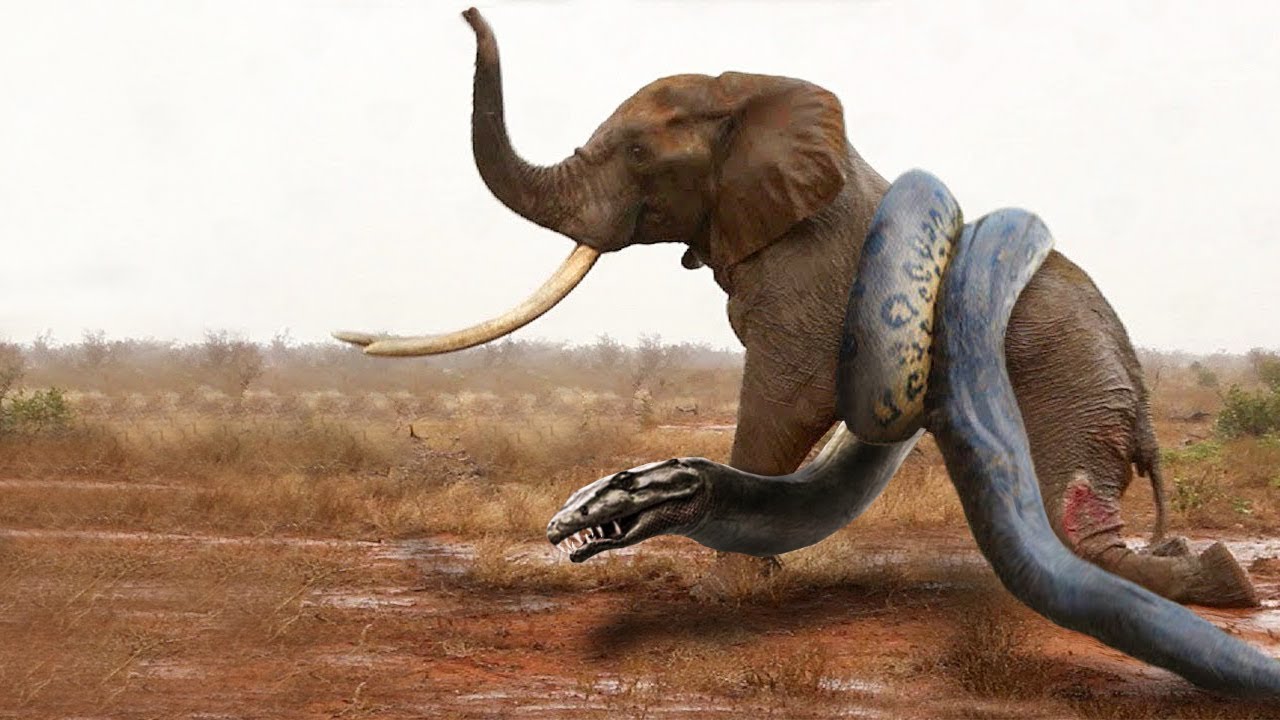
Titanoboa is thought to have been the longest snake ever to exist, with lengths ranging from 40 to 50 feet (12 to 15 meters). This enormous size is due to the warm climate of the period.
Fossil Discovery: Titanoboa fossils were discovered by a team of scientists led by paleontologist Carlos Jaramillo in the Cerrejón Formation of La Guajira, Colombia.
Titanoboa lived during the Paleocene epoch, roughly 60 to 58 million years ago, long after the dinosaurs died out.
The Cerrejón Formation, where Titanoboa fossils were discovered, was originally a tropical jungle. This environment was critical to the snake's survival since it offered the warmth and resources required by such a huge animal.
Impact of environment Change: The size of Titanoboa is thought to have been impacted by the warm environment of the Paleocene era. Cold-blooded species, such as snakes, frequently grow larger in warmer weather.
Constrictor: Like modern boas, Titanoboa was likely a constrictor, subduing its prey by coiling around it and squeezing until the prey suffocated.
Titanoboa's diet would have included huge vertebrates such as fish and other reptiles. Because of its vast size, it could prey on species considerably larger than those generally targeted by current snakes.
Reconstruction: Titanoboa's appearance has been recreated using fossilized vertebrae. Scientists used these fossils to determine its size and construction.
In comparison to current snakes, Titanoboa is substantially larger. The green anaconda is the longest extant snake, reaching lengths of over 20 feet (6 meters).
The discovery of Titanoboa has added to our understanding of ancient ecosystems and the impact of climate change on species evolution. Scientists can piece together the jigsaw of Earth's history and the diversity of life that has existed for millions of years by studying such ancient species.
Regards,
Vaan Veli
Santhosh
Follows on Facebook : https://www.facebook.com/vaanveli1
Follows on Instagram : https://www.instagram.com/vaan_veli
Disclaimer:
This channel does not offer financial advice. All information on this channel is offered solely for educational and informational reasons. This channel does not guarantee that you will be able to generate money online using the method presented in the video. Your level of success in achieving the outcomes indicated in the video will involve hard work, aptitude, learning and experience. Before investing or joining any such site, this channel strongly suggested you to conduct thorough investigation.
#vaanveli #universe #solarsystem #earth #tamil #titanoboa #titanoboaintamil #titanoboasnake #titanoboavsanaconda #titanoboavsdinosaur #titanoboavscrocodile #titanoboasize #titanoboaextinction #titanoboaperiod #titanoboafactsintamil #titanoboafootage #worldslargestsnake #istitanoboastillalive #top10largestsnakesintheworld #snakevideos #snaketamil

இரண்டாவது சனி கிரகம் கண்டுபிடிப்பு | Super Saturn Found J1407B
In this video, we are sharing the exciting news that a super Saturn has been found orbiting around J1407B! we'll be highlighting the discovery of a new Super Saturn-sized planet located near the constellation, The new planet is officially called J1407B
This is an incredible discovery that has astro-philes all over the world excited. If you're curious about what this discovery means, then be sure to watch the video to learn more! Please share this video if you're excited about this new find, and be sure to subscribe for more astronomy news and videos! So sit back and enjoy the ride as we share the latest space news with you!
Regards,
Vaan Veli
#saturn #solarsystem #supersaturn #saturn'srings #saturnsrings #planetsaturn #planets #biggestsaturn #j1407b #whatissupersaturn #supersaturvssaturn #howlargethesupersaturn #supersaturnsizecomparison #supersaturnringsize #sanigiragam #sanikiragam #sani #sanigiraham #சனிகிரகம் #vaanveli #vaanveli #tamil #whatif #gk #top10 #supersaturnfound #supersaturntamil #ringsofsaturn #saturnplanetrealvideo #earth #stars #constellationofstars #universe

இரண்டு சூரியன் கொண்ட ஒரு கிரகம் | Binary Star Planet VHS1256B
VHS 1256 b is located in the constellation Corvus, approximately 40 light-years away. It orbits not one, but two stars that are in close proximity to one another. The planet is roughly four times as far away from its stars as Pluto is from our Sun.
Binary star systems are systems where two stars are in orbit around a common center of mass. These systems can be quite diverse in terms of the types of stars involved, their separation, and other characteristics.
The combination of variations in the brightness of the planet over time and the varied cloud layers in the spectrum suggest to tumultuous weather on VHS 1256 b. "These observations show that the planet's cloud patterns change fairly quickly," Beth Biller of the University of Edinburgh in Scotland remarked. If the researchers took more and longer views of the planet, they would notice that the spectrum shape changes as the locations of the clouds change, indicating that the clouds are swiftly shifting through the planet's atmosphere throughout its 22-hour rotation.
Regards,
Vaan Veli
Santhosh
Follows on Facebook : https://www.facebook.com/vaanveli1
Follows on Instagram : https://www.instagram.com/vaan_veli
#binarystars #binarystarsystem #vhs1256b #vhs1256btamil #binarystarsystemintamil #binaryplanet #universe #thesun #system #earth #sun #solarsystem #star #stars #planets #astronomy #binary #twinstars #binaryandmuitiplestars #starsystem #whatisabinarystar #doublestars #binarystarsystemexplained #howdobinarystarsform #whatarebinarysystem #howdobinarystarsystemswork #multiplestars #doublestar #habitablezone #vaanveli #vaanveli #starintamil #gk #tamil

Dear All,
We shows the sizes of some cities in 3D by Urban area,
What is urban Area : [An urban area, or built-up area, is a human settlement with a high population density and infrastructure of built environment. ]
Volcano comparison: https://youtu.be/kkrtG5X6enk
#countrysizecomparison #citysizecomparison #newyork #comparison #citysizecomparison #citiessizecomparison #biggestcities #comparaciones #sizecomparison #size #countrysizecomparison #largestcitiesintheworld #topcityintheworld #cityurbanarea #citysizebyarea #mostpopulatedcitiesintheworld #citiespopulation #top100populatedcity #citypopulation #population #topcity #worldcitydata #3dcomparison #comparisonvideo #comparison2022 #vaanveli #earth #tamil #city #cities #newyorkcity #newyork #comparisonvideo #sizecomparisons #comparisontamil #tamilcomparison #tamilnadu #earth #solarsystem #volcano #blackhole #mars #moon #milkyway #comparisonintamil #youtubeshorts #youtube

Hi,
பூமியின் தங்கச்சி விடிவெள்ளி,
Venus is the second planet from the Sun and is commonly referred to as Earth's "sister planet" due to its similar size and composition. It is the closest planet in our solar system to Earth.
Venus is quite comparable to Earth in size, with a diameter of around 12,104 kilometres (7,521 miles), making it the second-largest terrestrial planet after Earth.
Extreme Surface Temperature: The surface of Venus is extremely hot, with temperatures reaching over 900 degrees Fahrenheit (475 degrees Celsius). Despite being further from the Sun, this is hotter than the surface of Mercury.
Venus has a thick and dense atmosphere that is mostly made up of carbon dioxide (approximately 96.5%) with traces of sulphur dioxide and nitrogen. This atmosphere has a high greenhouse effect, trapping heat and contributing to the planet's severe temperatures.
Venus revolves on its axis in the opposite direction as the majority of the planets in our solar system, a phenomenon known as retrograde rotation. It rotates slowly, taking approximately 243 Earth days to complete one rotation, thus its day (one full day-night cycle) is actually shorter than its year (approximately 225 Earth days).
No Moons or Rings: Unlike many other planets in our solar system, Venus has no moons or rings.
Volcanic Activity: It is thought that Venus had a geologically active history with substantial volcanic activity. Its surface is covered in numerous of volcanoes, including the colossal Maxwell Montes, Venus's tallest peak.
Extreme Pressure: The pressure on Venus's surface is approximately 92 times that of Earth's surface, which is similar to the pressure found 900 metres (3,000 feet) underwater on Earth.
Venus has no liquid water on its surface because of its high temperatures and dense atmosphere. Any water that existed in the past is likely to have evaporated and escaped into space.
Exploration of Spacecraft: Several spacecraft have been despatched to Venus to examine its surface and atmosphere. In the 1990s, NASA's Magellan mission utilised radar to map the planet's surface in great detail, revealing features such as volcanoes and enormous highland regions.
Future Exploration: Future missions to Venus were planned as of my last information update in September 2021, including NASA's VERITAS (Venus Emissivity, Radio Science, InSAR, Topography, and Spectroscopy) and ESA's EnVision missions. These missions aim to learn more about Venus and its geology.
Regards,
Vaan Veli
Santhosh
Follows on Facebook : https://www.facebook.com/vaanveli1
Follows on Instagram : https://www.instagram.com/vaan_veli
#vaanveli #vaan_veli #universe #solarsystem #earth #tamil #venus #venustamil #venusfacts #venusplanet #solarsystemplanets #venusfactsintamil #venusplanetintamil #twinsister #hottestplanetinsolarsystem #planetvenus #lifeonvenus #space #venussurface #nasa #science #factsaboutvenus #venusphoto #planet #volcanoes #volcano #volcanoonvenus #venustemperature #venusmission #vidivelli #vidivellinatchathiram #velligraham #whatisvidivelli #வீனஸ் #வீனஸ்கிரகம் #graham #twinsisters #whoisthesisterofourearth #earthsister #brightestplanet #brightestplanetinoursolarsystem

Hi,
Star Classification: The Sun is a G-type main-sequence star, often referred to as a G-dwarf star or a yellow dwarf.
Size and Mass: The Sun is about 109 times the diameter of Earth and approximately 333,000 times its mass. It accounts for about 99.86% of the total mass of the entire Solar System.
Energy Source: The Sun's energy comes from nuclear fusion reactions occurring in its core, where hydrogen nuclei fuse to form helium, releasing a tremendous amount of energy in the process.
Light Travel Time: The sunlight we see from the Sun actually left its surface about 8 minutes and 20 seconds ago. This is because light takes time to travel the distance between the Sun and Earth.
Surface Temperature: The Sun's surface, known as the photosphere, has an average temperature of around 5,500 degrees Celsius (9,932 degrees Fahrenheit). However, the Sun's core temperature reaches millions of degrees Celsius due to the fusion reactions taking place there.
Solar Flares and Sunspots: The Sun's surface is not uniformly smooth. It has dark spots called sunspots, caused by the Sun's magnetic activity. Solar flares, which are bursts of energy and radiation, can also occur due to this magnetic activity.
Solar Wind: The Sun constantly emits a stream of charged particles called solar wind. This solar wind affects the space environment of the entire Solar System and interacts with the planets' magnetospheres.
Life Cycle: The Sun is approximately 4.6 billion years old and is roughly middle-aged in terms of its life cycle. It's currently in the phase where it's fusing hydrogen into helium in its core.
Future Evolution: In about 5 billion years, the Sun will exhaust its hydrogen fuel and enter a phase where it expands into a red giant, swallowing up Mercury, Venus, and possibly Earth. Eventually, it will shed its outer layers and become a white dwarf.
Solar Eclipses: Solar eclipses occur when the Moon passes between the Earth and the Sun, blocking out the Sun's light. Total solar eclipses happen when the apparent size of the Moon matches that of the Sun, creating a stunning visual effect.
Composition: The Sun is primarily composed of hydrogen (about 74%) and helium (about 24%). Other elements, such as oxygen, carbon, neon, and iron, make up the remaining percentage of its composition.
Size: The Sun is an average-sized star, classified as a G-type main-sequence star (G2V). Its diameter is about 109 times that of Earth, and it could fit more than 1.3 million Earths inside it.
Energy Source: The Sun generates energy through a process called nuclear fusion, where hydrogen nuclei combine to form helium, releasing an immense amount of energy in the form of light and heat.
Temperature: The temperature at the Sun's core is estimated to be around 15 million degrees Celsius (27 million degrees Fahrenheit). The surface temperature, known as the photosphere, is about 5,500 degrees Celsius (9,932 degrees Fahrenheit).
Light Travel Time: It takes about 8 minutes and 20 seconds for light from the Sun to reach Earth. This means that when we look at the Sun, we are actually seeing it as it appeared over 8 minutes ago.
Sunspots: Sunspots are temporary dark spots that appear on the Sun's surface due to magnetic activity. They are cooler regions compared to the surrounding areas and can vary in size.
Solar Flares and Coronal Mass Ejections (CMEs): The Sun occasionally experiences explosive events known as solar flares and CMEs, releasing bursts of energy and charged particles into space. These phenomena can affect Earth's space environment and cause geomagnetic storms.
Solar Wind: The Sun constantly emits a stream of charged particles called solar wind, which flows outward into space and influences the heliosphere, the region dominated by the Sun's magnetic field.
Lifecycle: The Sun is currently about 4.6 billion years old and is estimated to have a total lifecycle of around 10 billion years. It is currently in the middle stage of its life, where it fuses hydrogen into helium in its core.
Importance to Earth: The Sun is essential for life on Earth. It provides light and heat necessary for maintaining suitable conditions for life. It also drives the Earth's climate, weather, and various natural processes.
Sun's Magnetic Field: The Sun has a complex and dynamic magnetic field that gives rise to various solar phenomena, including sunspots, flares, and CMEs.
Regards,
VaanVeli
Santhosh
#sun #sunfacts #facts #sunfact #sunfactstamil #sunfactsintamil #solarsystem #solarsystemplanets #solarsystemintamil #sooriyan #sooriyaninunmaigal #vaanveli #vaan_veli #thesun #tamil #gk #whatif #top10factsaboutthesun #10sunfacts #factsaboutthesun #spacefacts #factsaboutsun #sunfactsandhistory #whatisthesun #amazingfacts #howhotisthesun #shorts #interestingfacts #thesunfacts #suninformationintamil #oursun #science #allaboutthesun #சூரியன் #சூரியனின்உண்மைகள் #சூரியகுடும்பம்

Hi,
In this video, we're going to talk about Super Earth, a planet that's better than Earth. We'll discuss the advantages of living on Super Earth, and why you should want to live on this planet.
If you're looking for a better planet to live on, then you should check out Super Earth. Super Earth has a lot of advantages over Earth, including a much better environment and a much higher standard of living. In this video, we'll discuss these advantages and why you should want to live on Super Earth!
Regards,
Vaan Veli
Santhosh
Follows on Facebook : https://www.facebook.com/vaanveli1
Follows on Instagram : https://www.instagram.com/vaan_veli
#betterthanourearth
#பூமியைபோன்றகோள்கள்
#பூமி
#betterthanearth
#superearthplanet #superearthnewplanetsfound #nasa #earth #superearth #exoplanet #space #whatif #science #keplerplanet #planet #planets #theuniverse #exoplanets #habitableplanets #earthlikeplanets #earthlikeplanet #exoplanetslikeearth #superearth2.0 #superearthtamil #superearthplanettamil #exoplanettamil #howmanyexoplanetsarethere #aliens #habitablezone #tamil #vaanveli #gk #gktamil #top10superearth #kepler454b #earth2 #betterthanearth #earthtamil #blackhole #moon #solarsystem #volcano #earth2.0
![பிரபஞ்சத்தின் ஆபத்தான கிரகங்கள் [ Dangerous Planets in the Universe ]](https://i.ytimg.com/vi/BPJrTX03g4k/maxresdefault.jpg)
பிரபஞ்சத்தின் ஆபத்தான கிரகங்கள் [ Top Dangerous Planets in the Universe ]
In this video, we're going to be talking about some of the most dangerous planets in the universe!
From Venus to Neptune, these planets are full of dangerous elements and hazards that could potentially kill you if you were to visit them. So if you're thinking of traveling to any of these planets, be sure to research them first!
By the end of this video, you'll know everything you need to know about the dangerous planets in the universe!
Regards,
Vaan Veli
#nasa #facts #space #whatif #jupiter #earth #universe #solarsystem #cosmos #stars #planets #planets #exoplanet #dangerousplanetsdocumentary #venus #corot-7b #gliese436b #planetjensen #gianthd1897 #hd80606b #kelt9b #kepler78b #wasp12b #terribleplanets #topplanetslikeearth #earth2 #dangerousplanets #topplanets #planetlikeearthdiscovered #planetsfacts #gk #planetscience #nasadartmission #nasadart #planetstamil #vaanveli #tamil #scienetamil #blackhole
#vaanveli #adityal1 #sunfacts
Sun Facts 1:
https://youtu.be/ok3U2N1gclU?si=UWtwxEmqlaPY-PeV
Sun Facts 2:
https://youtu.be/YTZ712B7C2g?si=I1_IL8igigv8_IRz
நட்சத்திரத்தின் அணுக்கரு இணைவு :
https://youtu.be/zEztpqIV9bk?si=XWtQzMZuUFQM_SLq
சூரியன் பூமிக்கு அருகில் வந்தால் என்ன ஆகும் ?
https://youtu.be/dvALnR3n3Dc?si=G7_Z9V8vJftxBmo-
அழிவின் விளிம்பில் அடுத்த தலைமுறை :
https://youtu.be/NCWBWYoxzkw?si=pFlUHZQp-dpVWIuG
Follows on Facebook : https://www.facebook.com/vaanveli1
Follows on Instagram : https://www.instagram.com/vaan_veli
Hi,
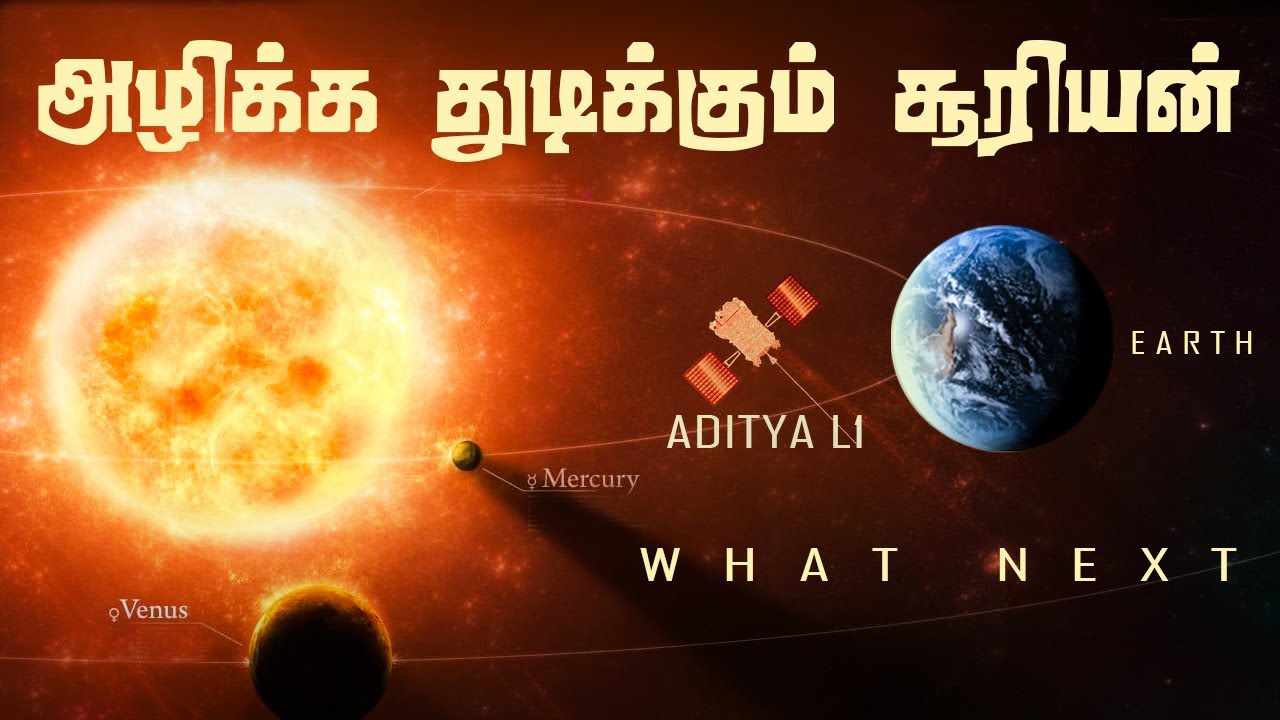
Aditya L1 will be India's first space-based mission to study the Sun. The spacecraft will be positioned in a halo orbit around the Sun-Earth system's Lagrange point 1 (L1), which is approximately 1.5 million kilometres away from Earth. A satellite in halo orbit around the L1 point has the significant benefit of continuously viewing the Sun with no occultation/eclipses. This will give us a better chance of seeing solar activity and its impact on space weather in real time. The spacecraft includes seven payloads that will use electromagnetic, particle, and magnetic field detectors to study the photosphere, chromosphere, and the Sun's outermost layers (the corona). Four payloads directly see the Sun from the exceptional vantage point L1, while the remaining three payloads conduct in-situ particle and field studies at the Lagrange point L1, offering essential scientific studies of the propagatory influence of solar dynamics in the interplanetary medium.
The Aditya L1 payload suites are intended to offer critical information for understanding the problem of coronal heating, coronal mass ejection, pre-flare and flare activities and their characteristics, dynamics of space weather, particle and field propagation, and so on.
Objectives of Science:
The Aditya-L1 mission's primary scientific goals are as follows:
Dynamics of the solar upper atmosphere (chromosphere and corona).
The investigation of chromospheric and coronal heating, the physics of partly ionised plasma, the start of coronal mass ejections, and flares.
Observe the in-situ particle and plasma environment for data on particle dynamics from the Sun.
The solar corona's physics and heating mechanism.
Coronal and coronal loops plasma diagnostics: Temperature, velocity, and density are all variables.
CME evolution, dynamics, and genesis.
Determine the sequence of processes that occur at many levels (chromosphere, base, and extended corona) and lead to solar eruptive events.
Topology of magnetic fields and magnetic field measurements in the solar corona.
Space weather drivers (the genesis, composition, and behaviour of solar wind.
Aditya-L1's instruments are designed to observe the solar atmosphere, specifically the chromosphere and corona. At L1, in-situ instruments will observe the local environment. There are seven payloads on board, four of which perform distant sensing of the Sun and three of which perform in-situ observation.
Regards,
Vaan Veli
Santhosh
#vaan_veli #universe #solarsystem #earth #tamil #adityal1launch #isro #chandrayaan3 #isrolive #isroofficial #adityal1mission #sun #isroadityal1mission #adityal1missionlive #aditya #adityal1 #adityal1isro #isrosunmission #ஆதித்யாL1 #sunfacts #sunmission #adithyal1 #adityal1vssun #sunvsadityal1 #sunflare #sunstorm #sooriyapuyal #volcanoinsun #solarstormintamil #solarvolcanointamil #solar #solarcycloneintamil #adityal1intamil #storm #gk #science #sciencetamil #stormtamil #solarsystemfacts
Hi Everyone,
We have showed types of earth atmosphere and ozone layer benifits in this video, i hope you love it, kindly support us if you like this video thanks .
Regards,
Vaan veli.
#பூமியின்வளிமண்டலம் #earth #earthatmosphere #earthatmospherelayers #ozone #ozonelayer #science #weather #atmosphere #planets #oxygen #layersoftheearth #layersofatmosphere #layersoftheatmosphere #thermosphere #layersofatmospehere #differentlayersofatmosphere #atmosphereexplained #whatisatmosphere #stratosphere #mesosphere #exosphere #troposphere #வளிமண்டலம் #vaanveli #tamil #whatif #gk #solarsystem #ozonelayerhole #whatisozonelayer #ozonelayerintamil #top10
Subscribe செய்யாமல் வீடியோ பார்ப்பவர்கள் : Not subscribed 96.6%
Subscribe செய்து வீடியோ பார்ப்பவர்கள் : Subscribed 3.4%
நீங்கள் எங்களுக்கு கொடுக்கும் ஆதரவினால் மட்டுமே நாங்கள் உங்களுக்கு தொடர்ந்து இன்னும் சிறந்த விடீயோக்களை உற்சாகத்துடன் பதிவிடமுடியும் நன்றி 🙏
The Solar System’s largest planet Jupiter will hang in the skies later this month as it comes closest to Earth in nearly 70 years.
Jupiter will be closer to Earth than usual on September 26.
According to NASA, this will be the nearest the largest planet in the solar system has been to Earth in nearly six decades.
Scientists say Jupiter will appear bigger and brighter because it will “only” be 367 million miles away. That’s almost half the distance the planet is from the Earth at its farthest.
Experts say the best place to get a view of Jupiter on Monday will be a highly elevated spot in a dark and dry area.
Regards,
Vaanveli.
#jupiter #nasa #solarsystem #earth #whatif #planets #moon #thesun #jupitertomorrow #howclosejupitercomestoearth #todayjupiter #jupitertonightinthesky #jupitertoday #jupitertodaylive #jupitertamil #vyalan #vyalantamil #tamil #veenveli #earthtojupiterdistance #videoofjupiter #photosofjupiter #jupitervideo #gk #live #jupiternews #jupiterandearth #earthandjupiter #distance #howtoseejupiterfromearth #howclosejupiter #wheretoseejupiter #science #earth #news #tamilnews

#vaanveli #moonfacts #chandrayaan3
Hi,
இது தெரிஞ்சா நிலவுக்கு போகணும்னு நினைக்கமாட்டீங்க
15 Seconds Challenge on moon:
Because there is no oxygen, you would go unconscious in 15 seconds. Because there is little or no air pressure, your blood and bodily fluids would boil and then freeze.
1. The Moon is the sole natural satellite of Earth.
2. It is roughly one-sixth the size of Earth.
3. On average, the Moon is 238,855 miles (384,400 km) distant from Earth.
4. Because the Moon's gravity is about one-sixth that of Earth's, you would weigh less on the Moon.
5. The Moon possesses an exosphere, which is an extremely thin and tenuous atmosphere that contains trace amounts of helium, neon, and other elements.
6. The Moon orbits Earth in a roughly round orbit.
7. It takes the Moon approximately 27.3 Earth days to orbit our planet.
8. Because the Moon rotates once on its axis in around 27.3 days, we always view the same face from Earth, a phenomenon known as synchronous rotation.
9. The side of the Moon facing away from Earth is referred to as the "far side" or "dark side," despite the fact that it is not literally dark; it is simply obscured from our perspective.
10. The Moon's surface is covered in impact craters caused by billions of meteoroid collisions over billions of years.
The South Pole-Aitken Basin, which is about 1,550 miles (2,500 km) wide, is the Moon's largest crater.
12. Although there is no liquid water on the Moon's surface, there is evidence of water ice in permanently shadowed craters near the pole.
Temperature Extremes: The Moon experiences extreme temperature variations due to its lack of atmosphere. During its daytime, temperatures can reach over 100°C (212°F), while during its nighttime, temperatures can drop below -170°C (-274°F).
Moonquakes: The Moon experiences seismic activity, known as moonquakes. These can be caused by the gravitational interactions with Earth, the cooling and contraction of the Moon's interior, and the residual energy from ancient impacts.
Human Visits: The first human landing on the Moon was by NASA's Apollo 11 mission in 1969, when astronauts Neil Armstrong and Edwin "Buzz" Aldrin became the first humans to walk on the lunar surface.
Future Exploration: There are plans for future lunar exploration, including establishing a sustainable human presence on the Moon as a stepping stone for further space exploration, such as missions to Mars.
These are just a few intriguing facts about our Moon. It continues to be a subject of scientific research and inspiration for humanity's exploration of space.
Lunar Phases Influence Tides: The Moon's gravitational pull causes tides on Earth. When the Moon is at its closest point to Earth (perigee), tides can be especially high, known as spring tides. When the Moon is at its farthest point from Earth (apogee), tides are less extreme, known as neap tides.
Regards,
Vaan Veli
Santhosh
#vaan_veli #vaanveli #universe #solarsystem #earth #tamil #chandrayaan3update #moonfacts #moonfactsintamil #moon #moonhouse #homeonmoon #moondistance #earthvsmoon #nilavu #chandrayaan3 #chandrayaan3live #chandrayaan3tamil #livingonmoon #moonfactstamil #நிலவு #moonhistory #interestingfactsaboutmoon #luna #1lunarday #indianonmoon #chandrayaan3liveupdate #chandrayaan3todayupdate #chandrayaan3status #moonsouthpole #chandrayaan3
Follows on Facebook : https://www.facebook.com/vaanveli1
Follows on Instagram : https://www.instagram.com/vaan_veli

#vaanveli #moonfacts #chandrayaan3
Hi,
நிலவுக்கு குடி போகணும்னு ஆச படறீங்களா ? அப்போ நீங்க மட்டும் இத பாருங்க
what if we build a house in moon?
Buildings on the moon do not need to be as robust because gravity pull is around 6 times less. A ceiling/floor would require 6 times the mass to break than the comparable ceiling/floor on Earth.
Some moon Facts :
Natural Satellite: The Moon is Earth's only natural satellite and is about 1/6th the size of Earth.
Formation: The prevailing theory is that the Moon formed around 4.5 billion years ago when a Mars-sized object collided with a young Earth, and the debris from this collision eventually coalesced to form the Moon.
Phases: The Moon goes through different phases due to its position relative to the Sun and Earth. These phases include new moon, waxing crescent, first quarter, waxing gibbous, full moon, waning gibbous, third quarter, and waning crescent.
Synchronous Rotation: The Moon is in synchronous rotation with Earth, meaning it always shows the same face towards our planet. This side is often referred to as the "near side," while the other side is called the "far side" or "dark side."
Surface Features: The Moon's surface is covered in impact craters, large basins (such as the Imbrium, Serenitatis, and Crisium basins), mountains, valleys, and "seas" or dark, flat areas formed by ancient volcanic activity.
Gravity: The Moon's gravity is about 1/6th of Earth's gravity, which is why astronauts on the Moon can jump higher and objects are much lighter there.
Lunar Maria: The "seas" on the Moon are actually solidified basaltic lava flows from ancient volcanic activity. They were named "maria," which is Latin for "seas," by early astronomers who mistakenly thought they were bodies of water.
Lunar Phases Influence Tides: The Moon's gravitational pull causes tides on Earth. When the Moon is at its closest point to Earth (perigee), tides can be especially high, known as spring tides. When the Moon is at its farthest point from Earth (apogee), tides are less extreme, known as neap tides.
Temperature Extremes: The Moon experiences extreme temperature variations due to its lack of atmosphere. During its daytime, temperatures can reach over 100°C (212°F), while during its nighttime, temperatures can drop below -170°C (-274°F).
Moonquakes: The Moon experiences seismic activity, known as moonquakes. These can be caused by the gravitational interactions with Earth, the cooling and contraction of the Moon's interior, and the residual energy from ancient impacts.
Human Visits: The first human landing on the Moon was by NASA's Apollo 11 mission in 1969, when astronauts Neil Armstrong and Edwin "Buzz" Aldrin became the first humans to walk on the lunar surface.
Future Exploration: There are plans for future lunar exploration, including establishing a sustainable human presence on the Moon as a stepping stone for further space exploration, such as missions to Mars.
These are just a few intriguing facts about our Moon. It continues to be a subject of scientific research and inspiration for humanity's exploration of space.
Regards,
Vaan Veli
Santhosh
Follows on Facebook : https://www.facebook.com/vaanveli1
Follows on Instagram : https://www.instagram.com/vaan_veli
#vaan_veli #vaanveli #universe #solarsystem #earth #tamil #chandrayaan3update #moonfacts #moonfactsintamil #moon #moonhouse #homeonmoon #moondistance #earthvsmoon #nilavu #chandrayaan3 #chandrayaan3live #chandrayaan3tamil #livingonmoon #நிலவுக்குகுடிபோகணும்னுஆசபடறீங்களா #நிலவு #moonhistory #interestingfactsaboutmoon #luna #1lunarday #indianonmoon #chandrayaan3liveupdate #chandrayaan3todayupdate #chandrayaan3status #moonsouthpole #chandrayaan3
In this video we’re going to see about one of the largest planets in the solar system, The Jupiter (King of the Planet).
Jupiter
Jupiter is fifth planet from the Sun and the largest in the Solar System, the most seasoned and most monstrous world in the nearby solar system. Find out about the planet's history, its Extraordinary Red Spot and maritime moons, and what this antiquated world meant for the development of the solar system's different planets.
The Jupiter ring is divided into three parts. The deepest part is called hello. The middle of the ring is the brightest part. The outermost part of a ring is called a gossamer ring. This ring extends up to 225,000 kilometers from the planet and is 2,000-12.500 kilometers thick.
King of Solar System
The King of the planet, Jupiter, a colossal world that scientists believe can help us better understand the origin of the solar system.
Nine automated rocket have visited the gas planet up until this point, two of which entered into outer space (orbit), permitting us to concentrate on its perplexing, emotional environment more than ever.
The mystery of Jupiter
Yet, Jupiter, actually holds numerous secrets, for example, what lies underneath its strange mists and to jump considerably more profound, what is at its center? Go on an outing within the nearby planet groups biggest planet and figure out researchers' thought process is happening down there, it's very bizarre.
Jupiter is the largest planet in our solar system and one of the most interesting. In this video, we'll explore what Jupiter is, what the Jupiter Red Spot is, and how to learn more about it.
Jupiter is a big planet and you can learn a lot about it by reading articles and watching videos. In this video, we'll provide a basic overview of Jupiter and its many strange and interesting features. Be sure to check out the Jupiter Red Spot for yourself and see for yourself just how amazing this planet is!
Regadrs,
Vaan Veli.
#jupiter #jupiterascending #jupitermoon #lifeonjupiter #nasa #viyalankiragam #jupiterintamil #jupiterfactsintamil #aboutjupiter #jupiterfacts #solarsystem #planetjupiter #biggestplanet #space #cosmology #jupitertamil #whatif #tamil #planets #spacescience #jupiterplanet #planetjupiter #intamil #jupiterplanetexplained #explainjupiter #jupitermass #earthvsjupiter #jupiterstar #iomoon #howmanymoonsinjupiter #europa #ganymede ede #callisto #vaanveli #gk
