#5extinction

Hi, See the Top 10 Extinct Animals.
Gorgonopsia:
Gorgonopsia is an extinct clade of sabre-toothed therapsids from the Middle to Upper Permian roughly 265 to 252 million years ago. They are characterised by a long and narrow skull, as well as elongated upper and sometimes lower canine teeth and incisors which were likely used as slashing and stabbing weapons.
Dickinsonia:
Dickinsonia is a genus of extinct organism that lived during the late Ediacaran period in what is now Australia, China, Russia and Ukraine, most likely a basal animal. It is one of the best known members of the Ediacaran biota. The individual Dickinsonia typically resembles a bilaterally symmetrical ribbed oval.
Haikouichthys:
Haikouichthys is an extinct genus of craniate that lived 518 million years ago, during the Cambrian explosion of multicellular life
Astraspis :
Astraspis is an extinct genus of primitive jawless fish from the Ordovician of Central North America including the Harding Sandstone of Colorado and Bighorn Mountains of Wyoming. It is also known from Bolivia.
Pneumodesmus newmani:
Pneumodesmus newmani is a species of myriapod that lived during the late Wenlock epoch of the Silurian period around 428 million years ago.
Nothosaurus :
Nothosaurus is an extinct genus of sauropterygian reptile from the Triassic period, approximately 240–210 million years ago, with fossils being distributed from North Africa and Europe to China. It is the best known member of the nothosaur order
Scutosaurus :
Scutosaurus is an extinct genus of pareiasaur parareptiles. Its genus name refers to large plates of armor scattered across its body. It was a large anapsid reptile that, unlike most reptiles, held its legs underneath its body to support its great weight
Dimetrodon :
Dimetrodon is a genus of non-mammalian synapsid that lived during the Cisuralian age of the Early Permian period, around 295–272 million years ago. It is a member of the family Sphenacodontidae.
Jaekelopterus :
Jaekelopterus is a genus of predatory eurypterid, a group of extinct aquatic arthropods. Fossils of Jaekelopterus have been discovered in deposits of Early Devonian age, from the Pragian and Emsian stages.
Titanichthys :
Titanichthys is an extinct genus of giant, aberrant marine placoderm from shallow seas of the Late Devonian of Morocco, Eastern North America, and possibly Europe. Many of the species approached Dunkleosteus in size and build.
Regards,
Vaan Veli
Santhosh
Follows on Facebook : https://www.facebook.com/vaanveli1
Follows on Instagram : https://www.instagram.com/vaan_veli
#vaanveli #vaan_veli #universe #solarsystem #earth #tamil #animals #extinct #extinction #extinctanimals #extinctspecies #extinctspeciesofanimals #extinctioneventsonearth #5extinction #animal #monsteranimals #top10animals #top10extinctanimals #animalsintamil #extinctanimalsintamil #titanichthys #jaekelopterus #dimetrodon #scutosaurus #nothosaurus #pneumodesmusnewmani #astraspis #dickinsonia #haikouichthys #gorgonopsia #predators #lion #tiger #cheetah #snake #crocodile #fish #gk #science
Top Five Extinctions
Ordovician-silurian Extinction: 440 million years ago.
Devonian Extinction: 365 million years ago.
Permian-triassic Extinction: 250 million years ago.
Triassic-jurassic Extinction: 210 million years ago.
Cretaceous-tertiary Extinction: 65 million Years Ago.
Hi,
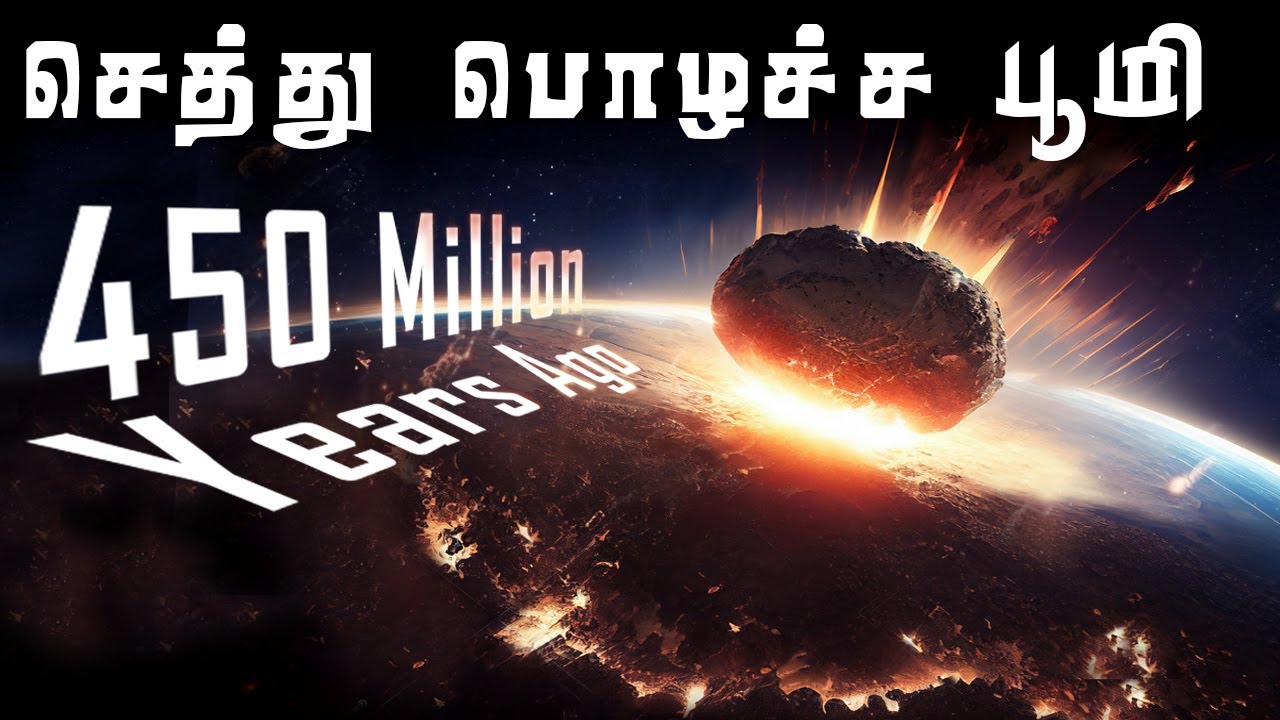
செத்து பொழச்ச பூமி JUST MISS | Dark Side of the Earth | பூமியின் வரலாறு
நம் பூமி உருவானபோ பல பேரழிவுகளை சந்தித்துள்ளது அதே போல் உயிரினங்கள் எப்படி உருவானது மற்றும் ஏற்பட்ட பேரழிவுகளால் உயிரினங்கள் எப்படி அழிந்தது , அனைத்தையும் நாம் இந்த பதிவில் தெரிந்துகொள்ளலாம்
Approximately 485.4 million to 443.8 million years ago. Here are some key points about the Ordovician period:
Sea Life: The Ordovician is known for the diversification of marine life. It saw the proliferation of various marine organisms, including trilobites, brachiopods, cephalopods, and early fish. Some of the first jawed fish appeared during this period.
Mass Extinction: Toward the end of the Ordovician period, there was a significant mass extinction event known as the Ordovician-Silurian extinction event. It is considered one of the Big Five mass extinctions in Earth's history
Continental Drift: During the Ordovician, the continents were positioned differently than they are today due to the process of plate tectonics.
Devonian extinction:
Timing: The Late Devonian extinction occurred over several million years, spanning the later part of the Devonian period. It's not a single, sudden event like some other mass extinctions.
Affected Organisms: The Devonian extinction primarily affected marine life. It had a particularly significant impact on marine organisms like corals, trilobites, brachiopods, and various types of jawless fish. Some groups, however, such as ammonoids, bony fish, and certain types of sharks, survived the extinction relatively unscathed.
Volcanic Activity: Intense volcanic activity could have released greenhouse gases into the atmosphere, leading to global warming and changes in ocean chemistry.
The Permian-Triassic extinction event, also known as the "Great Dying," is one of the most devastating mass extinctions in Earth's history. It occurred approximately 252 million years ago, marking the boundary between the Permian and Triassic periods. Here are key details about this catastrophic event:
Extent of Extinction: The Permian-Triassic extinction event is considered the most severe mass extinction event in Earth's history. It resulted in the loss of an estimated 90-96% of marine species and around 70% of terrestrial vertebrate species. It affected life on both land and in the oceans.
Volcanic Activity: One leading hypothesis is that extensive volcanic eruptions in an area now known as the Siberian Traps released massive amounts of lava and greenhouse gases. This led to significant global warming, acid rain, and changes in ocean chemistry, contributing to the environmental stress.
The Triassic-Jurassic extinction event is one of the five major mass extinctions in Earth's history, occurring approximately 201 million years ago, at the boundary between the Triassic and Jurassic periods. Here are key details about this extinction event:
Causes: The exact causes of the Triassic-Jurassic extinction are still debated among scientists, but several contributing factors have been proposed:
Volcanic Activity: Intense volcanic activity, particularly the eruption of the Central Atlantic Magmatic Province (CAMP), released large volumes of lava and greenhouse gases into the atmosphere. This led to global warming, ocean acidification, and changes in climate patterns.
Cretaceous-tertiary Extinction:
It occurred approximately 66 million years ago at the boundary between the Cretaceous and Tertiary (now known as the Paleogene) periods. Here are key details about this extinction event:
Extent of Extinction: The K-T extinction event resulted in the extinction of an estimated 75% of Earth's species, including many marine and terrestrial organisms. It is perhaps most famously known for causing the extinction of the non-avian dinosaurs.
Effects on Marine Life: Marine ecosystems experienced significant losses during the K-T extinction. Many marine reptiles, ammonites, and other marine species went extinct. Some groups, such as mammals, crocodiles, and some types of fish, survived the event.
நன்றி
Regards,
Vaan Veli
Santhosh
Follows on Facebook : https://www.facebook.com/vaanveli1
Follows on Instagram : https://www.instagram.com/vaan_veli
#பூமிஉருவானவரலாறு #earthhistory #humanhistory #earth #universe #earthtamil #vaanveli #earthhistoryintamil #earthdocumentary #cretaceous #dinosaur #moon #science #climatechange #naturaldisasters #ourplanet #historyofearthtamil #evolution #evolutionofhuman #humanevolutionexplained #vaanveli #ordovicianextinction #devonianextinction #permiantriassicextinction #triassicextinction #cretaceousextinction #5extinctionsofearth #5extinction #5extinctionsintamil
