#jupiter
![Solar System in 3D [Facts About Solar System Planets]](https://i.ytimg.com/vi/0QJj4U5PIiU/maxresdefault.jpg)
The Solar System in 3D Visualization: The Solar System is the gravitationally bound system of the Sun and the objects that orbit it. It formed 4.6 billion years ago from the gravitational collapse of a giant interstellar molecular cloud. please check our video and give us your valuable feedback to improve the quality thanks.
Regards,
Vaan veli
#solarsystem #the8planetsinoursolarsystemfacts #neptuneorbit #planetx #moon #sunset #neptune #earth2 #pluto #mercury #saturn #blackhole #mars #milkywaygalaxy #sizecomparison #solarsystemfacts #solarsystemdocumentary #planetsizecomparison #factsaboutspaceandtheuniverse #planetsizescomparisonvideo #solarsystem3d #venus #jupiter #planets #uranus #solar #3dsolarsystem #earthsize #earthtilt #solarplanettilt #saturnrings #planetsin3d #vaanveli #universe #starwars #gk
![பிரபஞ்சத்தின் ஆபத்தான கிரகங்கள் [ Dangerous Planets in the Universe ]](https://i.ytimg.com/vi/BPJrTX03g4k/maxresdefault.jpg)
பிரபஞ்சத்தின் ஆபத்தான கிரகங்கள் [ Top Dangerous Planets in the Universe ]
In this video, we're going to be talking about some of the most dangerous planets in the universe!
From Venus to Neptune, these planets are full of dangerous elements and hazards that could potentially kill you if you were to visit them. So if you're thinking of traveling to any of these planets, be sure to research them first!
By the end of this video, you'll know everything you need to know about the dangerous planets in the universe!
Regards,
Vaan Veli
#nasa #facts #space #whatif #jupiter #earth #universe #solarsystem #cosmos #stars #planets #planets #exoplanet #dangerousplanetsdocumentary #venus #corot-7b #gliese436b #planetjensen #gianthd1897 #hd80606b #kelt9b #kepler78b #wasp12b #terribleplanets #topplanetslikeearth #earth2 #dangerousplanets #topplanets #planetlikeearthdiscovered #planetsfacts #gk #planetscience #nasadartmission #nasadart #planetstamil #vaanveli #tamil #scienetamil #blackhole
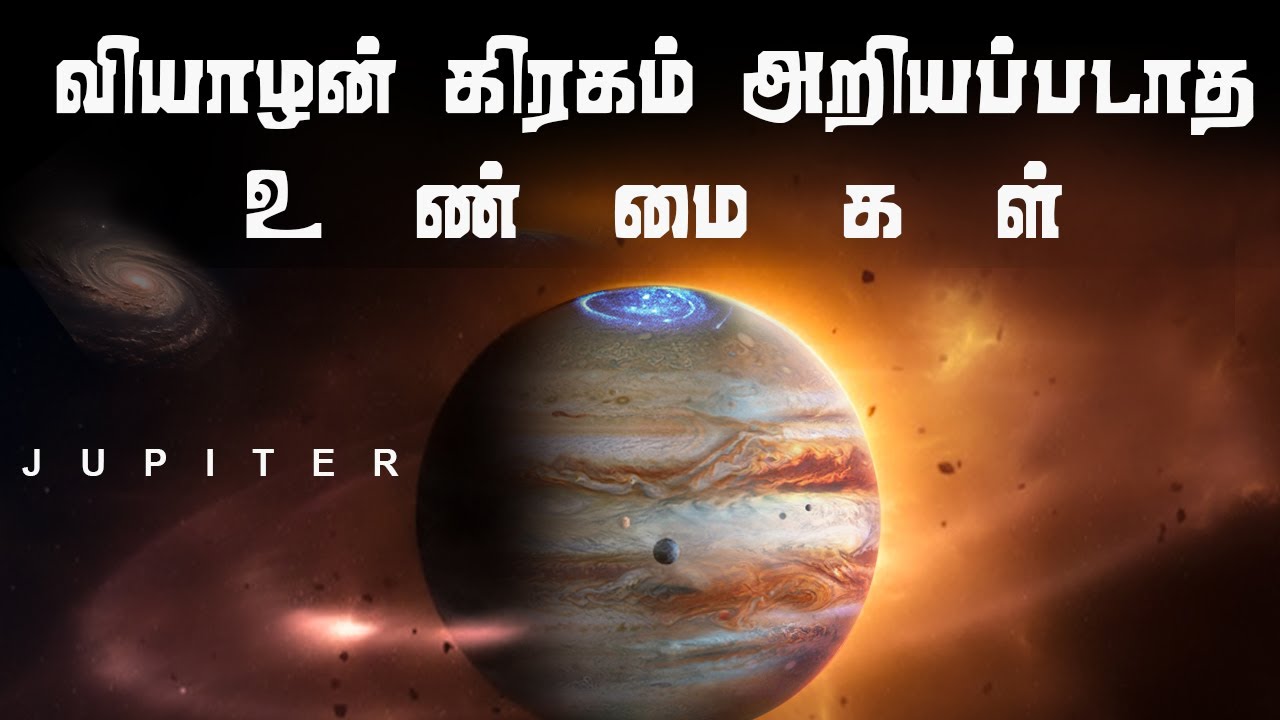
In this video we’re going to see about one of the largest planets in the solar system, The Jupiter (King of the Planet).
Jupiter
Jupiter is fifth planet from the Sun and the largest in the Solar System, the most seasoned and most monstrous world in the nearby solar system. Find out about the planet's history, its Extraordinary Red Spot and maritime moons, and what this antiquated world meant for the development of the solar system's different planets.
The Jupiter ring is divided into three parts. The deepest part is called hello. The middle of the ring is the brightest part. The outermost part of a ring is called a gossamer ring. This ring extends up to 225,000 kilometers from the planet and is 2,000-12.500 kilometers thick.
King of Solar System
The King of the planet, Jupiter, a colossal world that scientists believe can help us better understand the origin of the solar system.
Nine automated rocket have visited the gas planet up until this point, two of which entered into outer space (orbit), permitting us to concentrate on its perplexing, emotional environment more than ever.
The mystery of Jupiter
Yet, Jupiter, actually holds numerous secrets, for example, what lies underneath its strange mists and to jump considerably more profound, what is at its center? Go on an outing within the nearby planet groups biggest planet and figure out researchers' thought process is happening down there, it's very bizarre.
Jupiter is the largest planet in our solar system and one of the most interesting. In this video, we'll explore what Jupiter is, what the Jupiter Red Spot is, and how to learn more about it.
Jupiter is a big planet and you can learn a lot about it by reading articles and watching videos. In this video, we'll provide a basic overview of Jupiter and its many strange and interesting features. Be sure to check out the Jupiter Red Spot for yourself and see for yourself just how amazing this planet is!
Regadrs,
Vaan Veli.
#jupiter #jupiterascending #jupitermoon #lifeonjupiter #nasa #viyalankiragam #jupiterintamil #jupiterfactsintamil #aboutjupiter #jupiterfacts #solarsystem #planetjupiter #biggestplanet #space #cosmology #jupitertamil #whatif #tamil #planets #spacescience #jupiterplanet #planetjupiter #intamil #jupiterplanetexplained #explainjupiter #jupitermass #earthvsjupiter #jupiterstar #iomoon #howmanymoonsinjupiter #europa #ganymede ede #callisto #vaanveli #gk
Subscribe செய்யாமல் வீடியோ பார்ப்பவர்கள் : Not subscribed 96.6%
Subscribe செய்து வீடியோ பார்ப்பவர்கள் : Subscribed 3.4%
நீங்கள் எங்களுக்கு கொடுக்கும் ஆதரவினால் மட்டுமே நாங்கள் உங்களுக்கு தொடர்ந்து இன்னும் சிறந்த விடீயோக்களை உற்சாகத்துடன் பதிவிடமுடியும் நன்றி 🙏
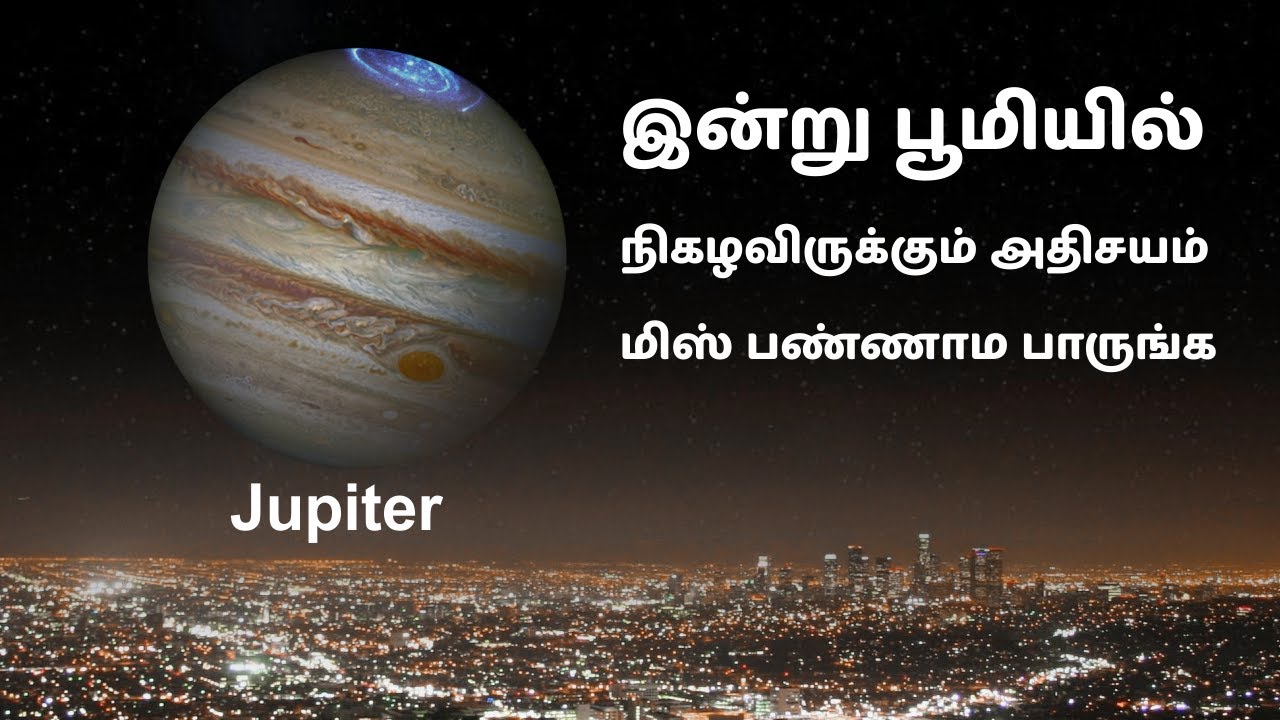
The Solar System’s largest planet Jupiter will hang in the skies later this month as it comes closest to Earth in nearly 70 years.
Jupiter will be closer to Earth than usual on September 26.
According to NASA, this will be the nearest the largest planet in the solar system has been to Earth in nearly six decades.
Scientists say Jupiter will appear bigger and brighter because it will “only” be 367 million miles away. That’s almost half the distance the planet is from the Earth at its farthest.
Experts say the best place to get a view of Jupiter on Monday will be a highly elevated spot in a dark and dry area.
Regards,
Vaanveli.
#jupiter #nasa #solarsystem #earth #whatif #planets #moon #thesun #jupitertomorrow #howclosejupitercomestoearth #todayjupiter #jupitertonightinthesky #jupitertoday #jupitertodaylive #jupitertamil #vyalan #vyalantamil #tamil #veenveli #earthtojupiterdistance #videoofjupiter #photosofjupiter #jupitervideo #gk #live #jupiternews #jupiterandearth #earthandjupiter #distance #howtoseejupiterfromearth #howclosejupiter #wheretoseejupiter #science #earth #news #tamilnews

Jupiter is the most largest planet in our solarsystem, Jupiter facts,
with a diameter of about 139,820 kilometers (86,881 miles).
It has a mass that is approximately 318 times that of Earth, making it more massive than all the other planets in the solar system combined.
Jupiter is primarily composed of hydrogen and helium, similar to the composition of the sun.
It doesn't have a solid surface; instead, its atmosphere gradually transitions into its dense, gaseous interior.
Jupiter has a thick atmosphere with bands of clouds and high winds.
Prominent features in its atmosphere include the Great Red Spot, a giant storm that has been raging for at least 350 years.
Jupiter has a very strong magnetic field, much stronger than Earth's.
Its magnetic field is responsible for intense radiation belts around the planet.
Jupiter has a large number of moons, with over 80 known as of my last update in January 2022.
The four largest moons, known as the Galilean moons, are Io, Europa, Ganymede, and Callisto.
Jupiter is the fifth planet from the Sun and has an average orbital distance of about 484 million miles (778 million kilometers).
It takes approximately 11.86 Earth years to complete one orbit around the Sun.
Jupiter's rotation is very fast; it completes one rotation on its axis in just under 10 hours.
Jupiter has a faint ring system composed of small, dark particles.
Its ring system is much less prominent than Saturn's.
Several spacecraft have visited Jupiter, including Pioneer 10, Pioneer 11, Voyager 1, Voyager 2, Galileo, and Juno.
Jupiter is often referred to as the "king" of the planets and plays a crucial role in the dynamics of the solar system.
Its immense gravity has helped shape the orbits of other planets and objects in the solar system.
Regards,
Vaan Veli
Santhosh
Follows on Facebook : https://www.facebook.com/vaanveli1
Follows on Instagram : https://www.instagram.com/vaan_veli
Disclaimer:
This channel does not offer financial advice. All information on this channel is offered solely for educational and informational reasons. This channel does not guarantee that you will be able to generate money online using the method presented in the video. Your level of success in achieving the outcomes indicated in the video will involve hard work, aptitude, learning and experience. Before investing or joining any such site, this channel strongly suggested you to conduct thorough investigation.
#jupiter
#jupiterfacts
#jupitermoon
#solarsystem
#solarsystemfacts
#solarsystemformation
#largestplanetinoursolarsystem
Hi,
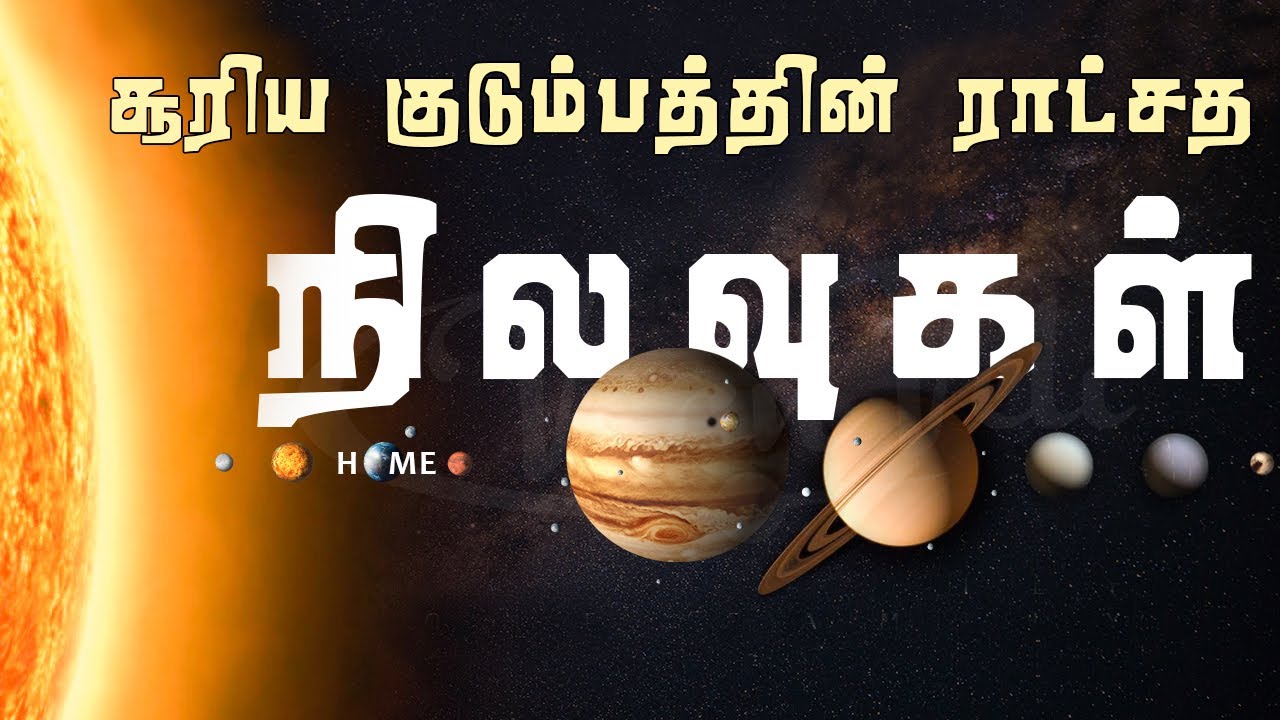
சூரிய குடும்பத்தின் விசித்திரமான 290 நிலவுகள். Solar System Moons
Each moons orbiting a different planet or dwarf planet.
The Moon (Luna) is the Earth's sole natural satellite. It is the Solar System's fifth-largest moon and has played an important part in Earth's history and civilization.
The Moons of Mars (Phobos and Deimos): Mars has two small moons, Phobos and Deimos. They have an irregular shape and are believed to be captured asteroids.
Jupiter has around 80 to 95 known moons, the four largest of which are known as the Galilean moons: Io, Europa, Ganymede, and Callisto. Galileo Galilei discovered them in 1610.
Saturn contains more than 146 known moons, including Titan, the second-largest moon in the Solar System with a thick atmosphere. Enceladus and Mimas are two other noteworthy Saturnian moons.
Moons of Uranus: Uranus has 27 recognised moons. Miranda, Ariel, Umbriel, Titania, and Oberon are notable examples.
Neptune's Moons: Neptune has 14 known moons, including Triton, the Solar System's seventh-largest moon. Triton is uncommon among big moons in that it orbits Neptune in reverse.
Pluto's Moon (Charon): Pluto is a dwarf planet with a very large moon named Charon. Charon, which is roughly half the size of Pluto, is tidally linked to it.
Moons of Dwarf Planets: Other dwarf planets in the Solar System, such as Eris and Haumea, have moons. Eris, for example, has one known moon named Dysnomia.
Some asteroids in the asteroid belt have minor moons or companions. The asteroid Ida, for example, has a moon called Dactyl.
TNOs are Trans-Neptunian Objects. Moons have been discovered around numerous TNOs, including Pluto, Eris, and Makemake.
Regards,
Vaan Veli
Santhosh
Follows on Facebook : https://www.facebook.com/vaanveli1
Follows on Instagram : https://www.instagram.com/vaan_veli
#vaanveli #vaanveli #solarsystemmoons #jupitermoons #saturnmoons #mercury #venus #earth #mars #jupiter #saturn #uranus #neptune #earth #moon #moons #iomoon #ganymede #sun #planetandmoon #earthmoon #chandrayaan3 #enceladusmoon #titanmoon #titaniamoon #pluto #moonfacts #moonhistory #solarsystemmoonsintamil #solarsystemmoonsandplanets #biggestmooninoursolarsystem #howmanymoonsareinoursolarsystem #solarsystem #mars #universe #callisto #space #venus #moonsize #solarsystem

Hi,
If Jupiter becoming a star would have far-reaching consequences for our solar system and the Earth. The parameters required for Jupiter to become a star, however, are not viable given its current mass and composition.
Jupiter is a gas giant planet made primarily of hydrogen and helium, similar to a small star, but it lacks the mass required to begin nuclear fusion, the process that drives stars. Massive clouds of gas and dust become stars when they collapse under their own gravity and reach a crucial temperature and pressure, allowing nuclear fusion to occur in their centres.
To undergo nuclear fusion and become a star, Jupiter would need to be substantially more massive, roughly 80 times its current mass. Several consequences would result if this occurred:
Additional light and heat: If Jupiter were to become a star, it would emit light and heat in the same way that stars do. However, in comparison to our Sun, it would be faint and considerably cooler.
Changes in the solar system: The arrival of a new star in our solar system would alter its dynamics substantially. The gravitational forces between Jupiter, now a star, and the other planets, including Earth, would create orbital perturbations, potentially leading to orbital alterations and even collisions amongst celestial bodies.
Climate change: The enhanced energy output of a new star in the solar system would have an impact on Earth's climate. However, because Jupiter would still be a minor star, its impact on Earth's temperature would be minimal in comparison to the Sun.
Potential for life: The addition of another star to the solar system may offer additional energy to outer moons such as Europa and Ganymede, increasing the possibilities of life maintaining in those circumstances.
கூடுதல் ஒளி மற்றும் வெப்பம்: வியாழன் ஒரு நட்சத்திரமாக மாறினால், அது ஒரு நட்சத்திரத்தைப் போல ஒளியையும் வெப்பத்தையும் வெளியிடும். இருப்பினும், நமது சூரியனுடன் ஒப்பிடும்போது, அது ஒப்பீட்டளவில் மங்கலாகவும் மிகவும் குளிராகவும் இருக்கும்.
சூரிய குடும்பத்தில் ஏற்படும் மாற்றங்கள்: நமது சூரிய குடும்பத்தில் ஒரு புதிய நட்சத்திரம் இருப்பது அதன் இயக்கவியலை வியத்தகு முறையில் மாற்றிவிடும். வியாழன்-இப்போது-நட்சத்திரம் மற்றும் பூமி உட்பட மற்ற கிரகங்களுக்கு இடையே உள்ள ஈர்ப்பு விசைகள் சுற்றுப்பாதையில் குழப்பங்களை ஏற்படுத்தும், இது சுற்றுப்பாதையில் சாத்தியமான மாற்றங்களுக்கு வழிவகுக்கும் மற்றும் வான உடல்களுக்கு இடையே மோதல்கள் கூட சாத்தியமாகும்.
மாற்றப்பட்ட காலநிலை: சூரிய குடும்பத்தில் ஒரு புதிய நட்சத்திரத்திலிருந்து அதிகரித்த ஆற்றல் வெளியீடு பூமியின் காலநிலையை பாதிக்கும். இருப்பினும், வியாழன் இன்னும் ஒரு நட்சத்திரமாக ஒப்பீட்டளவில் சிறியதாக இருக்கும் என்பதால், சூரியனுடன் ஒப்பிடும்போது பூமியின் காலநிலையில் அதன் தாக்கம் குறைவாக இருக்கும்.
வாழ்க்கைக்கான சாத்தியம்: சூரிய குடும்பத்தில் மற்றொரு நட்சத்திரத்தைச் சேர்ப்பது, யூரோபா மற்றும் கேனிமீட் போன்ற வெளிப்புற நிலவுகளுக்கு அதிக ஆற்றலை வழங்கக்கூடும், இது அந்தச் சூழலில் உயிர்வாழ்வதற்கான வாய்ப்புகளை அதிகரிக்கும்.
Regards,
Vaan Veli
#whatif #jupiter #jupiterstar #jupiterbecameastar #whatifjupiterbecomeastar #jupiterintamil #jupiterplanet #planets #solarsystem #earth #sun #vaanveli #tamil #canjupiterbecomeastar #isjupiterafailedstar #planetjupiter #whatifjupiterbecameastar #jupiterbecomesastar #universe #jupitercouldbeasun #jupiterafailedstar #jupiterasstar #reddwarf #jupiterfacts #space #gravity #வியாழன் #viyaalan #shorts #science #solarsystemfacts #planets #jupitersize
