#chandrayaan3

Luna 25 crashed what really happened, Details in the video. The robotic Luna-25 spacecraft appeared to have “ceased its existence” after a failed orbital adjustment, the space agency Roscosmos said, Russia's first moon mission in 47 years failed after its Luna-25 spacecraft spun out of control and smashed into moon on August 20. Russia's state space corporation, Roskosmos, said it had lost contact with the craft shortly after a problem occurred as the craft was shunted into pre-landing orbit today.
Russia’s first moon mission in decades fails as Luna-25 crashes into lunar surface; all eyes on Chandrayaan-3 now
ussia’s Luna-25 has crashed on the Moon’s surface, the country’s space agency said Sunday, leaving India’s Chandrayaan-3 on course to become the first spacecraft to land near the lunar south pole.
On Sunday morning, Chandrayaan-3 moved into its pre-landing orbit of 25 km x 134 km from the lunar surface, in preparation for its scheduled landing on Wednesday. It is from this orbit that the spacecraft would begin its descent at around 5.45 pm IST on Wednesday. The touchdown is expected to happen after 15 minutes.
Luna-25 was scheduled to make a soft landing on the Moon’s surface on Monday, August 21, two days ahead of Chandrayaan-3. Both of them were supposed to land in the region around the lunar south pole. But the Russian spacecraft developed problems on Saturday as it tried to move into the pre-landing orbit
Regards,
Vaan Veli
Santhosh
Follows on Facebook : https://www.facebook.com/vaanveli1
Follows on Instagram : https://www.instagram.com/vaan_veli
#lunacrash #lunacrashexplained #lunacrashed #lunacrash #lunacrashlive #lunacrashedvideo #lunacrashedonmoon #whylunacrashed #luna25 #luna25crash #chandrayaan3 #chandrayaan3live #chandrayaan3update #isrochandrayaan3 #isro #luna25launch #luna25update #lunecrashintamil #luna25crashintamil #lunewhycrash #luna25hit #lune25collide #luna25collideonmoon #luna25vschandrayaan3live #chandrayaan3currentlocation #vaanveli #luna
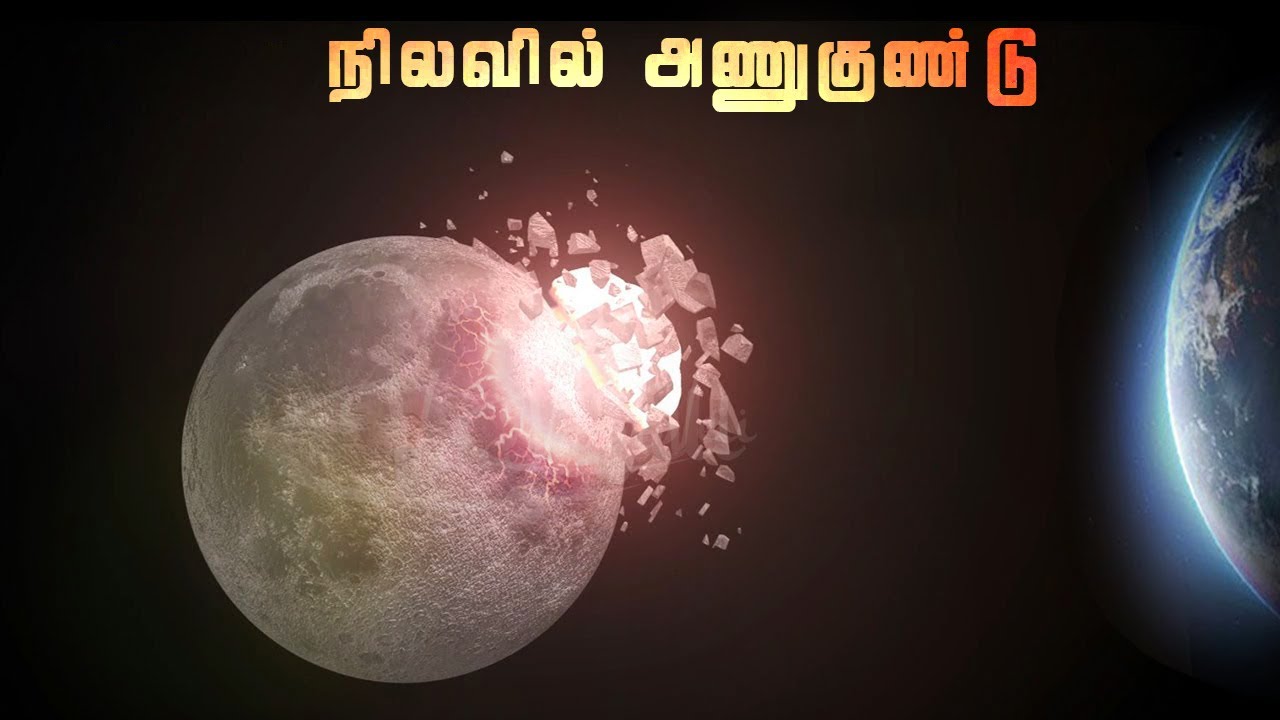
What if we nuke the moon ?
Nuking the moon would have significant and far-reaching consequences, both for the moon itself and for Earth. However, it's important to note that such an action would be highly unethical, potentially illegal, and would likely face strong international condemnation. Nonetheless, let's explore the hypothetical scenario and its potential implications.
Moon's Surface: Detonating a nuclear bomb on the moon would create an enormous explosion and release a tremendous amount of energy. The immediate impact would be the vaporization and destruction of a large portion of the moon's surface, leading to a crater and potentially ejecting debris into space.
Lunar Environment: The moon has no atmosphere to disperse or dampen the effects of the explosion. As a result, the shockwave and radiation from the nuclear blast would propagate freely across the lunar surface. This could significantly alter the moon's geology, cause seismic activity, and potentially destabilize its structure.
Earth's View: If a nuclear explosion occurred on the moon, it would likely be visible from Earth. The brightness and size of the explosion would depend on the magnitude of the bomb used, but it could potentially be seen with the naked eye. This event would be a spectacle, but also a cause for concern and potential panic among people on Earth.
Debris and Impact: The explosion would create a cloud of debris consisting of moon rock, dust, and radioactive particles. Some of this debris could potentially be ejected towards Earth, posing a risk to satellites, space missions, and even to the planet's atmosphere if a significant amount were to re-enter.
Scientific and Astronomical Impacts: The moon is a valuable object of scientific study and exploration. Destroying or significantly altering it would hinder our ability to gather knowledge about its geological history, impact cratering, and lunar evolution. Additionally, the moon's gravitational influence on Earth helps stabilize our planet's rotation and tides. Altering its mass and structure could have unpredictable effects on Earth's stability.
International and Legal Consequences: The Outer Space Treaty, ratified by many nations, prohibits the placement of nuclear weapons or any other weapons of mass destruction in space. Detonating a nuclear bomb on the moon would likely violate this treaty, resulting in severe diplomatic repercussions and potential legal action against the responsible party.
It's crucial to emphasize that these potential consequences are speculative since no one has ever attempted such an action. However, the overall implications would likely be significant, negative, and extend far beyond the immediate effects on the moon.
Regards,
VaanVeli.
Santhosh
Follows on Facebook : https://www.facebook.com/vaanveli1
Follows on Instagram : https://www.instagram.com/vaan_veli
#nuke #whatif #nuclearbomb #moon #nukemoon #whatifnukethemoon #whathappensifwenukethemoon #couldnukingthemoonbetheendofus #thedarksideofnukingthemoon #nukingthemoon #tzarbomba #zarbomba #worldslargestnuclearbomb #nuclearattack #nuclearvideo #moonvideo #moonvsnuclear #nuclearmoon #moonfall #moonblast #mooncollision #blast #earth #vaanveli #vaanveli #shorts #whatifwenukethemoonintamil #tamil #nucleartamil #moontamil #gk #chandrayaan3
#vaanveli #adityal1 #sunfacts
Sun Facts 1:
https://youtu.be/ok3U2N1gclU?si=UWtwxEmqlaPY-PeV
Sun Facts 2:
https://youtu.be/YTZ712B7C2g?si=I1_IL8igigv8_IRz
நட்சத்திரத்தின் அணுக்கரு இணைவு :
https://youtu.be/zEztpqIV9bk?si=XWtQzMZuUFQM_SLq
சூரியன் பூமிக்கு அருகில் வந்தால் என்ன ஆகும் ?
https://youtu.be/dvALnR3n3Dc?si=G7_Z9V8vJftxBmo-
அழிவின் விளிம்பில் அடுத்த தலைமுறை :
https://youtu.be/NCWBWYoxzkw?si=pFlUHZQp-dpVWIuG
Follows on Facebook : https://www.facebook.com/vaanveli1
Follows on Instagram : https://www.instagram.com/vaan_veli
Hi,
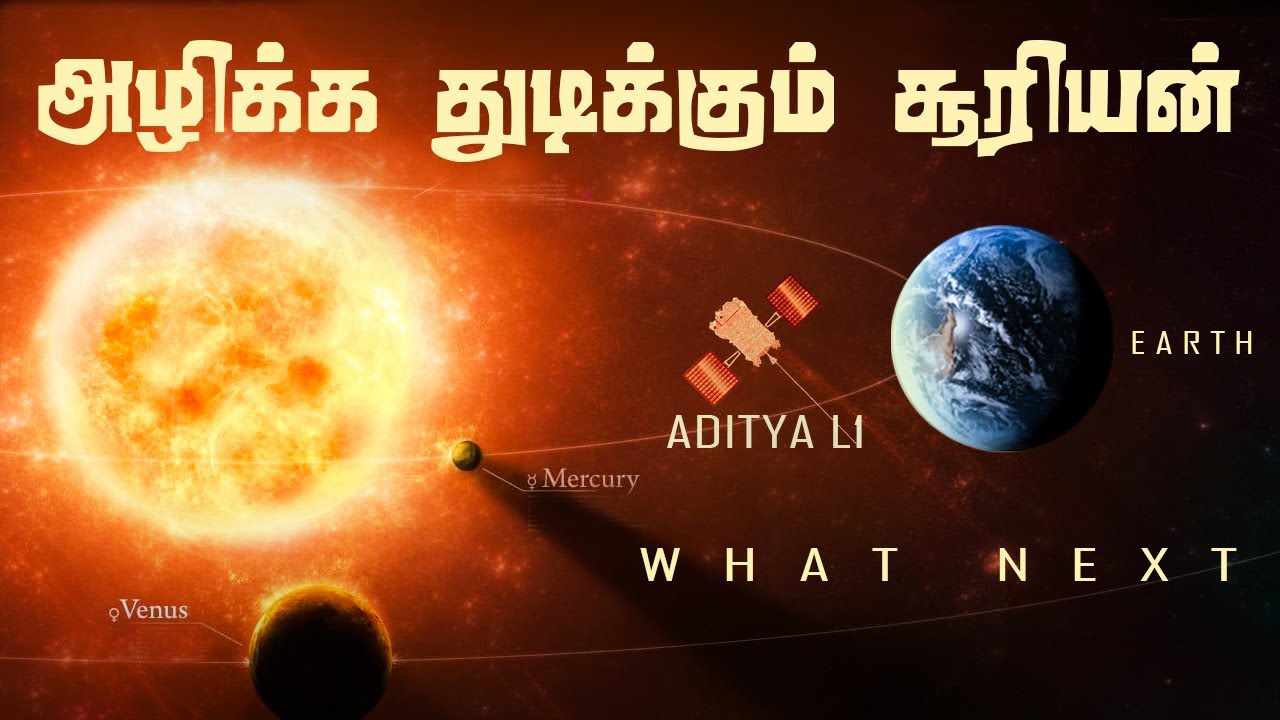
Aditya L1 will be India's first space-based mission to study the Sun. The spacecraft will be positioned in a halo orbit around the Sun-Earth system's Lagrange point 1 (L1), which is approximately 1.5 million kilometres away from Earth. A satellite in halo orbit around the L1 point has the significant benefit of continuously viewing the Sun with no occultation/eclipses. This will give us a better chance of seeing solar activity and its impact on space weather in real time. The spacecraft includes seven payloads that will use electromagnetic, particle, and magnetic field detectors to study the photosphere, chromosphere, and the Sun's outermost layers (the corona). Four payloads directly see the Sun from the exceptional vantage point L1, while the remaining three payloads conduct in-situ particle and field studies at the Lagrange point L1, offering essential scientific studies of the propagatory influence of solar dynamics in the interplanetary medium.
The Aditya L1 payload suites are intended to offer critical information for understanding the problem of coronal heating, coronal mass ejection, pre-flare and flare activities and their characteristics, dynamics of space weather, particle and field propagation, and so on.
Objectives of Science:
The Aditya-L1 mission's primary scientific goals are as follows:
Dynamics of the solar upper atmosphere (chromosphere and corona).
The investigation of chromospheric and coronal heating, the physics of partly ionised plasma, the start of coronal mass ejections, and flares.
Observe the in-situ particle and plasma environment for data on particle dynamics from the Sun.
The solar corona's physics and heating mechanism.
Coronal and coronal loops plasma diagnostics: Temperature, velocity, and density are all variables.
CME evolution, dynamics, and genesis.
Determine the sequence of processes that occur at many levels (chromosphere, base, and extended corona) and lead to solar eruptive events.
Topology of magnetic fields and magnetic field measurements in the solar corona.
Space weather drivers (the genesis, composition, and behaviour of solar wind.
Aditya-L1's instruments are designed to observe the solar atmosphere, specifically the chromosphere and corona. At L1, in-situ instruments will observe the local environment. There are seven payloads on board, four of which perform distant sensing of the Sun and three of which perform in-situ observation.
Regards,
Vaan Veli
Santhosh
#vaan_veli #universe #solarsystem #earth #tamil #adityal1launch #isro #chandrayaan3 #isrolive #isroofficial #adityal1mission #sun #isroadityal1mission #adityal1missionlive #aditya #adityal1 #adityal1isro #isrosunmission #ஆதித்யாL1 #sunfacts #sunmission #adithyal1 #adityal1vssun #sunvsadityal1 #sunflare #sunstorm #sooriyapuyal #volcanoinsun #solarstormintamil #solarvolcanointamil #solar #solarcycloneintamil #adityal1intamil #storm #gk #science #sciencetamil #stormtamil #solarsystemfacts

#vaanveli #moonfacts #chandrayaan3
Hi,
இது தெரிஞ்சா நிலவுக்கு போகணும்னு நினைக்கமாட்டீங்க
15 Seconds Challenge on moon:
Because there is no oxygen, you would go unconscious in 15 seconds. Because there is little or no air pressure, your blood and bodily fluids would boil and then freeze.
1. The Moon is the sole natural satellite of Earth.
2. It is roughly one-sixth the size of Earth.
3. On average, the Moon is 238,855 miles (384,400 km) distant from Earth.
4. Because the Moon's gravity is about one-sixth that of Earth's, you would weigh less on the Moon.
5. The Moon possesses an exosphere, which is an extremely thin and tenuous atmosphere that contains trace amounts of helium, neon, and other elements.
6. The Moon orbits Earth in a roughly round orbit.
7. It takes the Moon approximately 27.3 Earth days to orbit our planet.
8. Because the Moon rotates once on its axis in around 27.3 days, we always view the same face from Earth, a phenomenon known as synchronous rotation.
9. The side of the Moon facing away from Earth is referred to as the "far side" or "dark side," despite the fact that it is not literally dark; it is simply obscured from our perspective.
10. The Moon's surface is covered in impact craters caused by billions of meteoroid collisions over billions of years.
The South Pole-Aitken Basin, which is about 1,550 miles (2,500 km) wide, is the Moon's largest crater.
12. Although there is no liquid water on the Moon's surface, there is evidence of water ice in permanently shadowed craters near the pole.
Temperature Extremes: The Moon experiences extreme temperature variations due to its lack of atmosphere. During its daytime, temperatures can reach over 100°C (212°F), while during its nighttime, temperatures can drop below -170°C (-274°F).
Moonquakes: The Moon experiences seismic activity, known as moonquakes. These can be caused by the gravitational interactions with Earth, the cooling and contraction of the Moon's interior, and the residual energy from ancient impacts.
Human Visits: The first human landing on the Moon was by NASA's Apollo 11 mission in 1969, when astronauts Neil Armstrong and Edwin "Buzz" Aldrin became the first humans to walk on the lunar surface.
Future Exploration: There are plans for future lunar exploration, including establishing a sustainable human presence on the Moon as a stepping stone for further space exploration, such as missions to Mars.
These are just a few intriguing facts about our Moon. It continues to be a subject of scientific research and inspiration for humanity's exploration of space.
Lunar Phases Influence Tides: The Moon's gravitational pull causes tides on Earth. When the Moon is at its closest point to Earth (perigee), tides can be especially high, known as spring tides. When the Moon is at its farthest point from Earth (apogee), tides are less extreme, known as neap tides.
Regards,
Vaan Veli
Santhosh
#vaan_veli #vaanveli #universe #solarsystem #earth #tamil #chandrayaan3update #moonfacts #moonfactsintamil #moon #moonhouse #homeonmoon #moondistance #earthvsmoon #nilavu #chandrayaan3 #chandrayaan3live #chandrayaan3tamil #livingonmoon #moonfactstamil #நிலவு #moonhistory #interestingfactsaboutmoon #luna #1lunarday #indianonmoon #chandrayaan3liveupdate #chandrayaan3todayupdate #chandrayaan3status #moonsouthpole #chandrayaan3
Follows on Facebook : https://www.facebook.com/vaanveli1
Follows on Instagram : https://www.instagram.com/vaan_veli

சந்திரயான் 3 சந்திக்கப்போகும் மிக பெரிய சவால் | மிக முக்கியமான கட்டம் இன்று
Chandrayaan-3:
Chandrayaan-3 is the third lunar exploration mission by the Indian Space Research Organisation (ISRO). It is a follow-up to Chandrayaan-2, which consisted of an orbiter, lander (Vikram), and rover (Pragyan). However, the Vikram lander failed to make a soft landing on the Moon's surface. Chandrayaan-3 is intended to rectify this by focusing solely on the lander and rover components, aiming to achieve a successful landing.
Regards,
VaanVeli
#chandrayaan3 #chandrayaan #chandrayaan3update #chandrayaan3status #chandrayaan3live #chandrayaan3liveupdate #chandrayaan3currentupdate #chandrayaan3tamil #chandrayaan3intamil #சந்திரயான்3 #சந்திரயான் #chandrayaan3vsluna25 #chandrayaanvsluna #moon #moonmission #chandrayaan3mission #chandrayaan3livestatus #chandrayaan3today #chandrayaan3news #chandrayaan3todaynews #chandrayaan3video #chandrayaan3rover #chandrayaan3lander #vaanveli #gk #chandrayaan3livelocation #chandrayaan3mission #chandrayaan3landing #chandrayaan3landingtime
#chandrayaannews #லூனா #luna25 #luna25vschandrayaan3 #lunar #luna25mission #lunacurrentlocation

#vaanveli #moonfacts #chandrayaan3
Hi,
நிலவுக்கு குடி போகணும்னு ஆச படறீங்களா ? அப்போ நீங்க மட்டும் இத பாருங்க
what if we build a house in moon?
Buildings on the moon do not need to be as robust because gravity pull is around 6 times less. A ceiling/floor would require 6 times the mass to break than the comparable ceiling/floor on Earth.
Some moon Facts :
Natural Satellite: The Moon is Earth's only natural satellite and is about 1/6th the size of Earth.
Formation: The prevailing theory is that the Moon formed around 4.5 billion years ago when a Mars-sized object collided with a young Earth, and the debris from this collision eventually coalesced to form the Moon.
Phases: The Moon goes through different phases due to its position relative to the Sun and Earth. These phases include new moon, waxing crescent, first quarter, waxing gibbous, full moon, waning gibbous, third quarter, and waning crescent.
Synchronous Rotation: The Moon is in synchronous rotation with Earth, meaning it always shows the same face towards our planet. This side is often referred to as the "near side," while the other side is called the "far side" or "dark side."
Surface Features: The Moon's surface is covered in impact craters, large basins (such as the Imbrium, Serenitatis, and Crisium basins), mountains, valleys, and "seas" or dark, flat areas formed by ancient volcanic activity.
Gravity: The Moon's gravity is about 1/6th of Earth's gravity, which is why astronauts on the Moon can jump higher and objects are much lighter there.
Lunar Maria: The "seas" on the Moon are actually solidified basaltic lava flows from ancient volcanic activity. They were named "maria," which is Latin for "seas," by early astronomers who mistakenly thought they were bodies of water.
Lunar Phases Influence Tides: The Moon's gravitational pull causes tides on Earth. When the Moon is at its closest point to Earth (perigee), tides can be especially high, known as spring tides. When the Moon is at its farthest point from Earth (apogee), tides are less extreme, known as neap tides.
Temperature Extremes: The Moon experiences extreme temperature variations due to its lack of atmosphere. During its daytime, temperatures can reach over 100°C (212°F), while during its nighttime, temperatures can drop below -170°C (-274°F).
Moonquakes: The Moon experiences seismic activity, known as moonquakes. These can be caused by the gravitational interactions with Earth, the cooling and contraction of the Moon's interior, and the residual energy from ancient impacts.
Human Visits: The first human landing on the Moon was by NASA's Apollo 11 mission in 1969, when astronauts Neil Armstrong and Edwin "Buzz" Aldrin became the first humans to walk on the lunar surface.
Future Exploration: There are plans for future lunar exploration, including establishing a sustainable human presence on the Moon as a stepping stone for further space exploration, such as missions to Mars.
These are just a few intriguing facts about our Moon. It continues to be a subject of scientific research and inspiration for humanity's exploration of space.
Regards,
Vaan Veli
Santhosh
Follows on Facebook : https://www.facebook.com/vaanveli1
Follows on Instagram : https://www.instagram.com/vaan_veli
#vaan_veli #vaanveli #universe #solarsystem #earth #tamil #chandrayaan3update #moonfacts #moonfactsintamil #moon #moonhouse #homeonmoon #moondistance #earthvsmoon #nilavu #chandrayaan3 #chandrayaan3live #chandrayaan3tamil #livingonmoon #நிலவுக்குகுடிபோகணும்னுஆசபடறீங்களா #நிலவு #moonhistory #interestingfactsaboutmoon #luna #1lunarday #indianonmoon #chandrayaan3liveupdate #chandrayaan3todayupdate #chandrayaan3status #moonsouthpole #chandrayaan3

Chandrayaan 3 vs Luna 25 , சந்திரயான் 3 மீது ரஷ்யா விண்கலம் லூனா 25 மோதுமா ?
Chandrayaan-3:
Chandrayaan-3 is the third lunar exploration mission by the Indian Space Research Organisation (ISRO). It is a follow-up to Chandrayaan-2, which consisted of an orbiter, lander (Vikram), and rover (Pragyan). However, the Vikram lander failed to make a soft landing on the Moon's surface. Chandrayaan-3 is intended to rectify this by focusing solely on the lander and rover components, aiming to achieve a successful landing.
Luna 25:
Luna 25 is part of Russia's Luna-Glob program, which aims to explore the Moon. Luna 25, also known as the Luna-25 lander, is the first mission of this program. It is designed to be a robotic lander that will study the Moon's south pole region, particularly focusing on the permanently shadowed areas where water ice could potentially exist. The spacecraft is intended to study the lunar surface, analyze the composition of the regolith (surface material), and conduct various scientific experiments.
Regards,
VaanVeli
#chandrayaan3 #chandrayaan3mission #chandrayaan3tamil #chandrayaan3 #chandrayaanlive #chandrayaanupdate #chandrayaantodaylive #chandrayaan3updates #chandrayaan3latestnews #missionmoonisro #chandrayaan3moonmission #chandrayaan3mission #russiavinakalam #luna25 #russialune25 #luna25vschandrayaan3 #chandrayaan3vsluna25tamil #chandrayaan3vsluna25 #chandrayaan3vsrussia #indiavsrussia #chandrayaan3status #vaanveli #vaanveli #luna25tamil
#luna #luna24 #chandrayaan #chandrayaan_3 #chandrayaanmission # chandrayaan3vsluna 25
Hi,
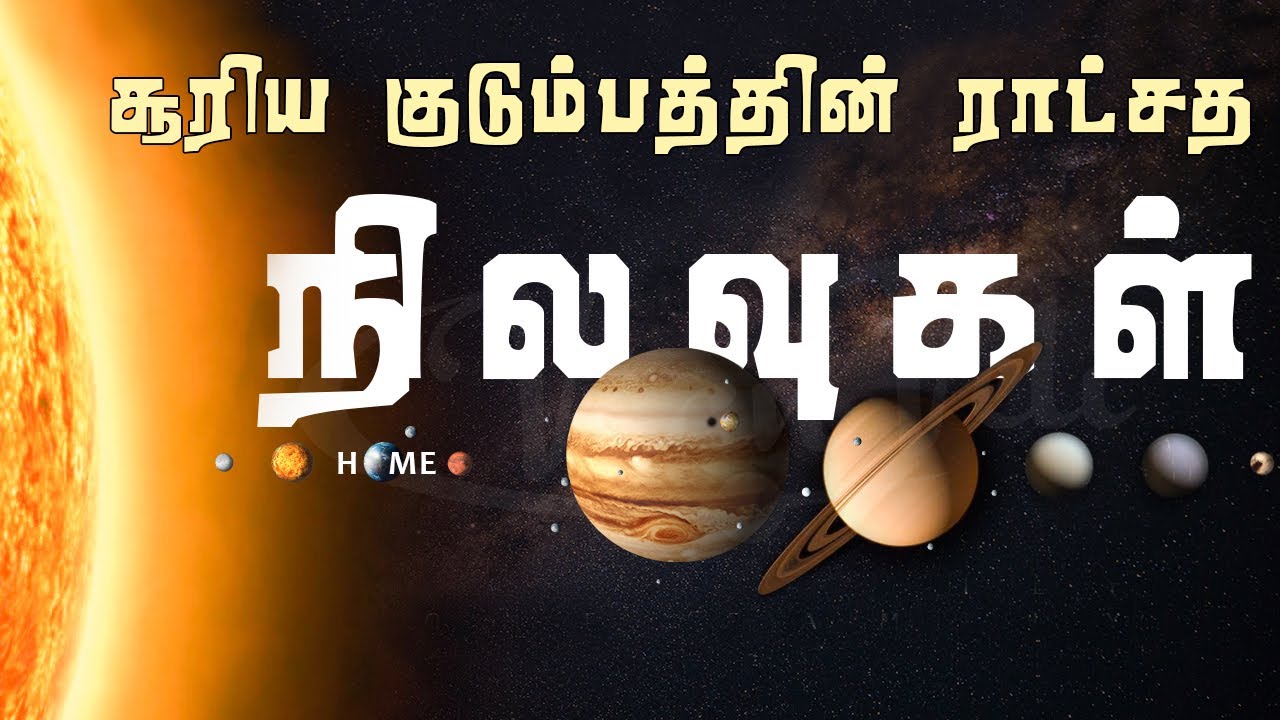
சூரிய குடும்பத்தின் விசித்திரமான 290 நிலவுகள். Solar System Moons
Each moons orbiting a different planet or dwarf planet.
The Moon (Luna) is the Earth's sole natural satellite. It is the Solar System's fifth-largest moon and has played an important part in Earth's history and civilization.
The Moons of Mars (Phobos and Deimos): Mars has two small moons, Phobos and Deimos. They have an irregular shape and are believed to be captured asteroids.
Jupiter has around 80 to 95 known moons, the four largest of which are known as the Galilean moons: Io, Europa, Ganymede, and Callisto. Galileo Galilei discovered them in 1610.
Saturn contains more than 146 known moons, including Titan, the second-largest moon in the Solar System with a thick atmosphere. Enceladus and Mimas are two other noteworthy Saturnian moons.
Moons of Uranus: Uranus has 27 recognised moons. Miranda, Ariel, Umbriel, Titania, and Oberon are notable examples.
Neptune's Moons: Neptune has 14 known moons, including Triton, the Solar System's seventh-largest moon. Triton is uncommon among big moons in that it orbits Neptune in reverse.
Pluto's Moon (Charon): Pluto is a dwarf planet with a very large moon named Charon. Charon, which is roughly half the size of Pluto, is tidally linked to it.
Moons of Dwarf Planets: Other dwarf planets in the Solar System, such as Eris and Haumea, have moons. Eris, for example, has one known moon named Dysnomia.
Some asteroids in the asteroid belt have minor moons or companions. The asteroid Ida, for example, has a moon called Dactyl.
TNOs are Trans-Neptunian Objects. Moons have been discovered around numerous TNOs, including Pluto, Eris, and Makemake.
Regards,
Vaan Veli
Santhosh
Follows on Facebook : https://www.facebook.com/vaanveli1
Follows on Instagram : https://www.instagram.com/vaan_veli
#vaanveli #vaanveli #solarsystemmoons #jupitermoons #saturnmoons #mercury #venus #earth #mars #jupiter #saturn #uranus #neptune #earth #moon #moons #iomoon #ganymede #sun #planetandmoon #earthmoon #chandrayaan3 #enceladusmoon #titanmoon #titaniamoon #pluto #moonfacts #moonhistory #solarsystemmoonsintamil #solarsystemmoonsandplanets #biggestmooninoursolarsystem #howmanymoonsareinoursolarsystem #solarsystem #mars #universe #callisto #space #venus #moonsize #solarsystem
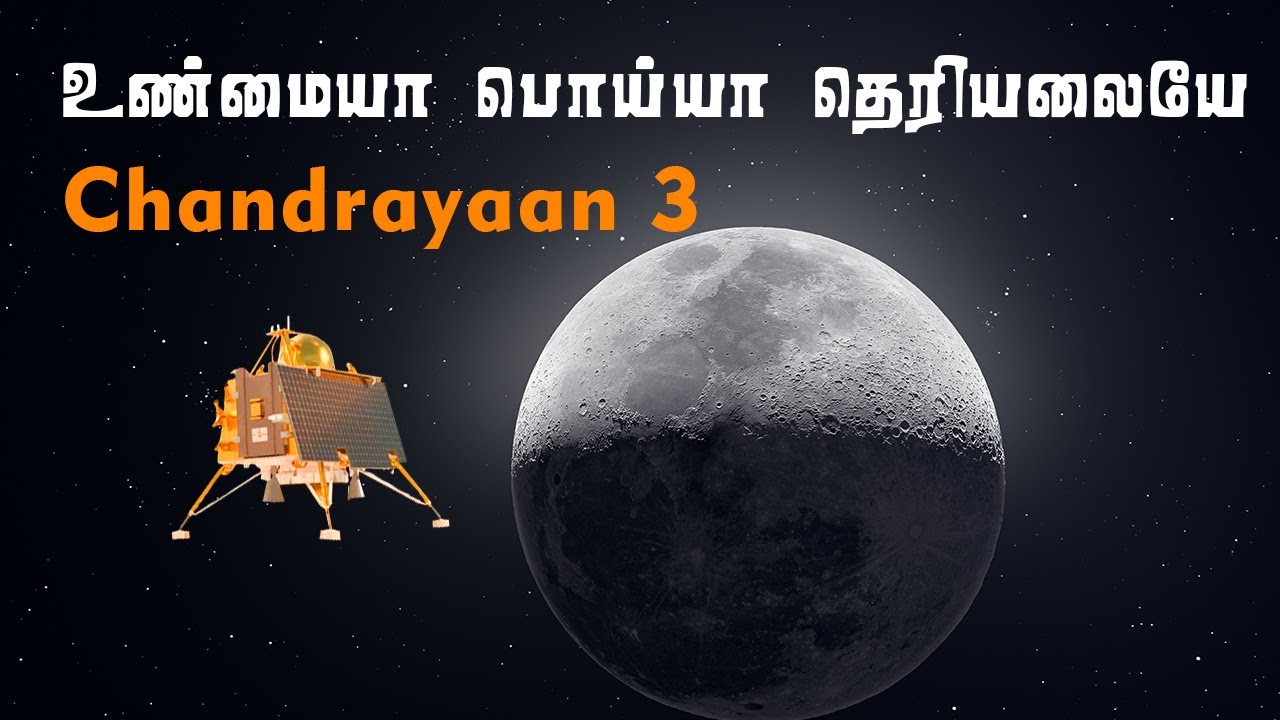
இந்திய முத்திரையை பாதிக்கப்போகும் சந்திரயான் 3
The Vikram lander module of Chandrayaan-3 successfully conducted a deboosting manoeuvre on Friday in the critical Moon mission, which launched from Earth on July 14 and is now preparing for its much-anticipated soft landing attempt, tentatively slated for August 23.
After a 40-day trip, Chandrayaan-3 is slated to touchdown on the lunar surface around August 23. (AP)
After a 40-day trip, Chandrayaan-3 is slated to touchdown on the lunar surface around August 23. (AP)
The second deboosting operation will take place on August 20, gradually lowering the module up to 100 kilometres in lunar orbit, from which a soft landing will be attempted. This operation, if successful, will open the way for the Vikram Lander and Pragyan rover to begin their mission, which is planned to last one lunar day (14 Earth days). During this time, they will be gathering various scientific data.
Meanwhile, the propulsion module that carried both the lander and the rover will remain in orbit around the Moon, serving as a communication relay.
Chandrayaan-3 is India's attempt at a soft landing on the lunar surface, nearly four years after the Chandrayaan-2 mission encountered difficulties and fell short of its intended goal in September 2019.
#isrochandrayaan3mission #chandrayaan3news #chandrayaan3launch #chandrayaan3 #chandrayaan3update #chandrayaan3mission #isrochandrayaan3 #chandrayaan3latestnews #chandrayaan3moonmission #isromoonmissionchandrayaan3 #chandrayaan3isro #chandrayaan3live #chandrayaan3launchdate #chandrayaan3vsluna25 #isro #chandrayaan3intamil #luna25 #chandrayaan3livetracking #chandrayaan #chandrayaan3animation #chandrayaan3status #vaanveli #tamil

சந்திரயான் 3 ஐ முந்தும் ரஷ்யா விண்கலம் | ரஷ்யா விண்கலம் பற்றிய சில அறிய தகவல்கள்
Chandrayaan 3 vs Luna 25 சந்திரயான் 3 மீது ரஷ்யா விண்கலம் லூனா 25 மோதுமா ?
The Indian Space Research Organisation (ISRO)'s Chandrayaan-3 is the organization's third lunar exploration project. It is a successor to Chandrayaan-2, which featured a lander (Vikram), orbiter, and rover (Pragyan). The Vikram lander, however, was unable to land softly on the Moon's surface. By concentrating just on the lander and rover components of Chandrayaan-3, it is hoped to address this issue and attempt a successful landing.
Luna 25: The Russian Luna-Glob programme, which aspires to investigate the Moon, includes Luna 25. Luna 25, also referred to as the Luna-25 Lander, is the program's initial mission. It is intended to be a robotic lander that will examine the area around the Moon's south pole, paying particular attention to the areas that are always in shadow and may contain water ice. The mission of the spacecraft is to examine the lunar surface, determine the make-up of the regolith (surface material), and carry out numerous scientific investigations.
Regards,
VaanVeli
#chandrayaan3 #chandrayaan3mission #chandrayaan3tamil #chandrayaan3 #chandrayaanlive #chandrayaanupdate #chandrayaantodaylive #chandrayaan3updates #chandrayaan3latestnews #missionmoonisro #chandrayaan3moonmission #chandrayaan3mission #russiavinakalam #luna25 #russialune25 #luna25vschandrayaan3 #chandrayaan3vsluna25tamil #chandrayaan3vsluna25 #chandrayaan3vsrussia #indiavsrussia #chandrayaan3status #vaanveli #vaanveli #luna25tamil
#luna #luna24 #chandrayaan #chandrayaan_3 #chandrayaanmission #chandrayaan3vsluna25 #luna25live #luna25mission #luna25vschandrayaan3 #luna25mission #luna25vschandrayaan3 #luna25livefootage #luna25livevideo
