#isro

Luna 25 crashed what really happened, Details in the video. The robotic Luna-25 spacecraft appeared to have “ceased its existence” after a failed orbital adjustment, the space agency Roscosmos said, Russia's first moon mission in 47 years failed after its Luna-25 spacecraft spun out of control and smashed into moon on August 20. Russia's state space corporation, Roskosmos, said it had lost contact with the craft shortly after a problem occurred as the craft was shunted into pre-landing orbit today.
Russia’s first moon mission in decades fails as Luna-25 crashes into lunar surface; all eyes on Chandrayaan-3 now
ussia’s Luna-25 has crashed on the Moon’s surface, the country’s space agency said Sunday, leaving India’s Chandrayaan-3 on course to become the first spacecraft to land near the lunar south pole.
On Sunday morning, Chandrayaan-3 moved into its pre-landing orbit of 25 km x 134 km from the lunar surface, in preparation for its scheduled landing on Wednesday. It is from this orbit that the spacecraft would begin its descent at around 5.45 pm IST on Wednesday. The touchdown is expected to happen after 15 minutes.
Luna-25 was scheduled to make a soft landing on the Moon’s surface on Monday, August 21, two days ahead of Chandrayaan-3. Both of them were supposed to land in the region around the lunar south pole. But the Russian spacecraft developed problems on Saturday as it tried to move into the pre-landing orbit
Regards,
Vaan Veli
Santhosh
Follows on Facebook : https://www.facebook.com/vaanveli1
Follows on Instagram : https://www.instagram.com/vaan_veli
#lunacrash #lunacrashexplained #lunacrashed #lunacrash #lunacrashlive #lunacrashedvideo #lunacrashedonmoon #whylunacrashed #luna25 #luna25crash #chandrayaan3 #chandrayaan3live #chandrayaan3update #isrochandrayaan3 #isro #luna25launch #luna25update #lunecrashintamil #luna25crashintamil #lunewhycrash #luna25hit #lune25collide #luna25collideonmoon #luna25vschandrayaan3live #chandrayaan3currentlocation #vaanveli #luna
#vaanveli #adityal1 #sunfacts
Sun Facts 1:
https://youtu.be/ok3U2N1gclU?si=UWtwxEmqlaPY-PeV
Sun Facts 2:
https://youtu.be/YTZ712B7C2g?si=I1_IL8igigv8_IRz
நட்சத்திரத்தின் அணுக்கரு இணைவு :
https://youtu.be/zEztpqIV9bk?si=XWtQzMZuUFQM_SLq
சூரியன் பூமிக்கு அருகில் வந்தால் என்ன ஆகும் ?
https://youtu.be/dvALnR3n3Dc?si=G7_Z9V8vJftxBmo-
அழிவின் விளிம்பில் அடுத்த தலைமுறை :
https://youtu.be/NCWBWYoxzkw?si=pFlUHZQp-dpVWIuG
Follows on Facebook : https://www.facebook.com/vaanveli1
Follows on Instagram : https://www.instagram.com/vaan_veli
Hi,
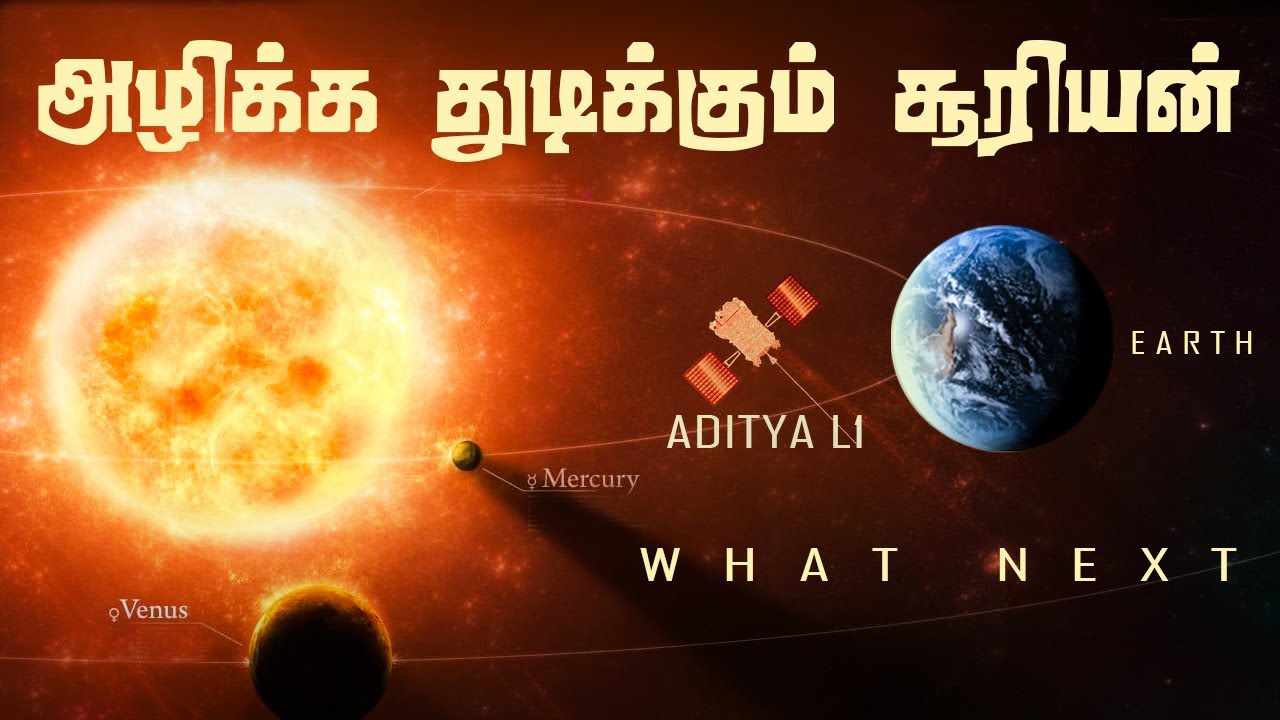
Aditya L1 will be India's first space-based mission to study the Sun. The spacecraft will be positioned in a halo orbit around the Sun-Earth system's Lagrange point 1 (L1), which is approximately 1.5 million kilometres away from Earth. A satellite in halo orbit around the L1 point has the significant benefit of continuously viewing the Sun with no occultation/eclipses. This will give us a better chance of seeing solar activity and its impact on space weather in real time. The spacecraft includes seven payloads that will use electromagnetic, particle, and magnetic field detectors to study the photosphere, chromosphere, and the Sun's outermost layers (the corona). Four payloads directly see the Sun from the exceptional vantage point L1, while the remaining three payloads conduct in-situ particle and field studies at the Lagrange point L1, offering essential scientific studies of the propagatory influence of solar dynamics in the interplanetary medium.
The Aditya L1 payload suites are intended to offer critical information for understanding the problem of coronal heating, coronal mass ejection, pre-flare and flare activities and their characteristics, dynamics of space weather, particle and field propagation, and so on.
Objectives of Science:
The Aditya-L1 mission's primary scientific goals are as follows:
Dynamics of the solar upper atmosphere (chromosphere and corona).
The investigation of chromospheric and coronal heating, the physics of partly ionised plasma, the start of coronal mass ejections, and flares.
Observe the in-situ particle and plasma environment for data on particle dynamics from the Sun.
The solar corona's physics and heating mechanism.
Coronal and coronal loops plasma diagnostics: Temperature, velocity, and density are all variables.
CME evolution, dynamics, and genesis.
Determine the sequence of processes that occur at many levels (chromosphere, base, and extended corona) and lead to solar eruptive events.
Topology of magnetic fields and magnetic field measurements in the solar corona.
Space weather drivers (the genesis, composition, and behaviour of solar wind.
Aditya-L1's instruments are designed to observe the solar atmosphere, specifically the chromosphere and corona. At L1, in-situ instruments will observe the local environment. There are seven payloads on board, four of which perform distant sensing of the Sun and three of which perform in-situ observation.
Regards,
Vaan Veli
Santhosh
#vaan_veli #universe #solarsystem #earth #tamil #adityal1launch #isro #chandrayaan3 #isrolive #isroofficial #adityal1mission #sun #isroadityal1mission #adityal1missionlive #aditya #adityal1 #adityal1isro #isrosunmission #ஆதித்யாL1 #sunfacts #sunmission #adithyal1 #adityal1vssun #sunvsadityal1 #sunflare #sunstorm #sooriyapuyal #volcanoinsun #solarstormintamil #solarvolcanointamil #solar #solarcycloneintamil #adityal1intamil #storm #gk #science #sciencetamil #stormtamil #solarsystemfacts
இந்திய முத்திரையை பாதிக்கப்போகும் சந்திரயான் 3
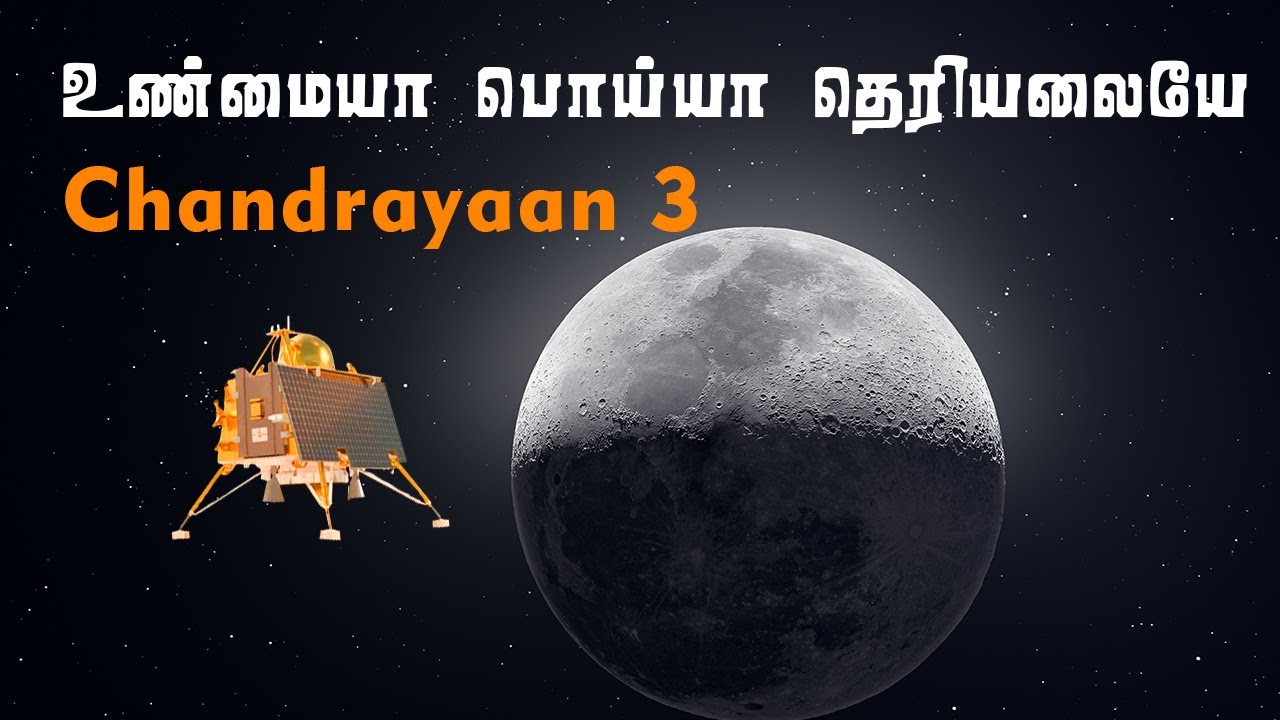
The Vikram lander module of Chandrayaan-3 successfully conducted a deboosting manoeuvre on Friday in the critical Moon mission, which launched from Earth on July 14 and is now preparing for its much-anticipated soft landing attempt, tentatively slated for August 23.
After a 40-day trip, Chandrayaan-3 is slated to touchdown on the lunar surface around August 23. (AP)
After a 40-day trip, Chandrayaan-3 is slated to touchdown on the lunar surface around August 23. (AP)
The second deboosting operation will take place on August 20, gradually lowering the module up to 100 kilometres in lunar orbit, from which a soft landing will be attempted. This operation, if successful, will open the way for the Vikram Lander and Pragyan rover to begin their mission, which is planned to last one lunar day (14 Earth days). During this time, they will be gathering various scientific data.
Meanwhile, the propulsion module that carried both the lander and the rover will remain in orbit around the Moon, serving as a communication relay.
Chandrayaan-3 is India's attempt at a soft landing on the lunar surface, nearly four years after the Chandrayaan-2 mission encountered difficulties and fell short of its intended goal in September 2019.
#isrochandrayaan3mission #chandrayaan3news #chandrayaan3launch #chandrayaan3 #chandrayaan3update #chandrayaan3mission #isrochandrayaan3 #chandrayaan3latestnews #chandrayaan3moonmission #isromoonmissionchandrayaan3 #chandrayaan3isro #chandrayaan3live #chandrayaan3launchdate #chandrayaan3vsluna25 #isro #chandrayaan3intamil #luna25 #chandrayaan3livetracking #chandrayaan #chandrayaan3animation #chandrayaan3status #vaanveli #tamil
