#adithyal1
#vaanveli #adityal1 #sunfacts
Sun Facts 1:
https://youtu.be/ok3U2N1gclU?si=UWtwxEmqlaPY-PeV
Sun Facts 2:
https://youtu.be/YTZ712B7C2g?si=I1_IL8igigv8_IRz
நட்சத்திரத்தின் அணுக்கரு இணைவு :
https://youtu.be/zEztpqIV9bk?si=XWtQzMZuUFQM_SLq
சூரியன் பூமிக்கு அருகில் வந்தால் என்ன ஆகும் ?
https://youtu.be/dvALnR3n3Dc?si=G7_Z9V8vJftxBmo-
அழிவின் விளிம்பில் அடுத்த தலைமுறை :
https://youtu.be/NCWBWYoxzkw?si=pFlUHZQp-dpVWIuG
Follows on Facebook : https://www.facebook.com/vaanveli1
Follows on Instagram : https://www.instagram.com/vaan_veli
Hi,
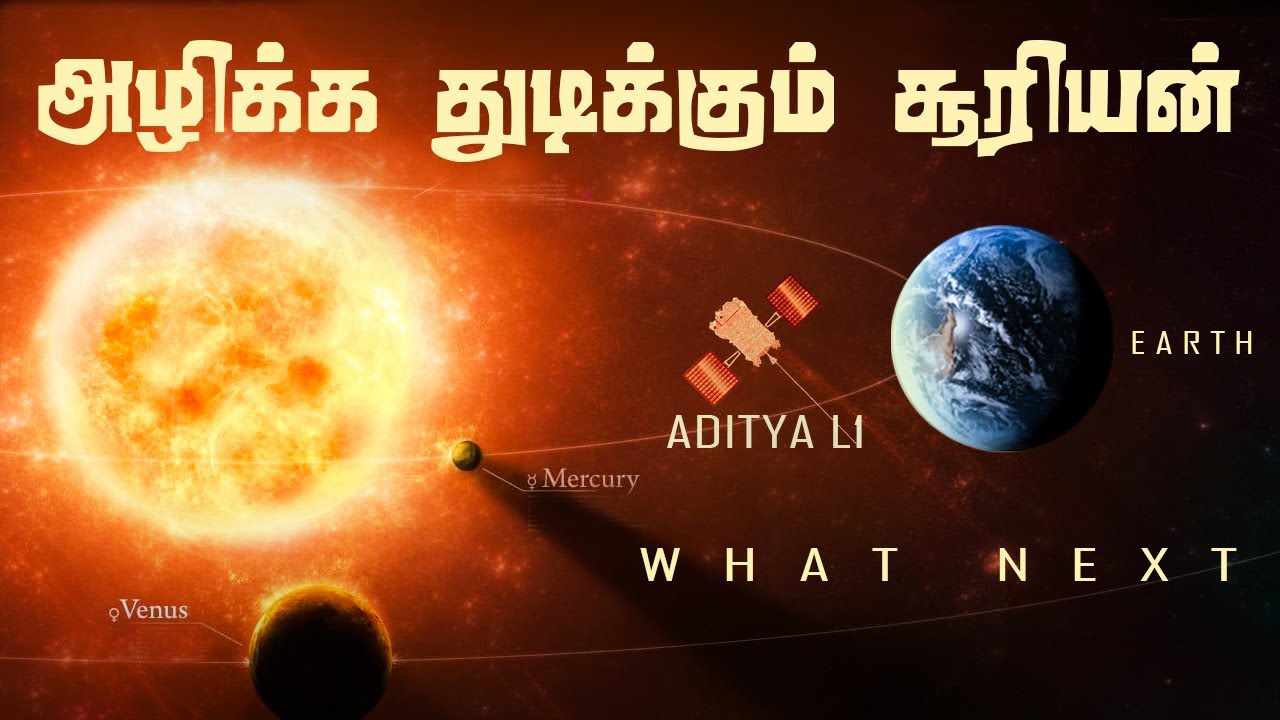
Aditya L1 will be India's first space-based mission to study the Sun. The spacecraft will be positioned in a halo orbit around the Sun-Earth system's Lagrange point 1 (L1), which is approximately 1.5 million kilometres away from Earth. A satellite in halo orbit around the L1 point has the significant benefit of continuously viewing the Sun with no occultation/eclipses. This will give us a better chance of seeing solar activity and its impact on space weather in real time. The spacecraft includes seven payloads that will use electromagnetic, particle, and magnetic field detectors to study the photosphere, chromosphere, and the Sun's outermost layers (the corona). Four payloads directly see the Sun from the exceptional vantage point L1, while the remaining three payloads conduct in-situ particle and field studies at the Lagrange point L1, offering essential scientific studies of the propagatory influence of solar dynamics in the interplanetary medium.
The Aditya L1 payload suites are intended to offer critical information for understanding the problem of coronal heating, coronal mass ejection, pre-flare and flare activities and their characteristics, dynamics of space weather, particle and field propagation, and so on.
Objectives of Science:
The Aditya-L1 mission's primary scientific goals are as follows:
Dynamics of the solar upper atmosphere (chromosphere and corona).
The investigation of chromospheric and coronal heating, the physics of partly ionised plasma, the start of coronal mass ejections, and flares.
Observe the in-situ particle and plasma environment for data on particle dynamics from the Sun.
The solar corona's physics and heating mechanism.
Coronal and coronal loops plasma diagnostics: Temperature, velocity, and density are all variables.
CME evolution, dynamics, and genesis.
Determine the sequence of processes that occur at many levels (chromosphere, base, and extended corona) and lead to solar eruptive events.
Topology of magnetic fields and magnetic field measurements in the solar corona.
Space weather drivers (the genesis, composition, and behaviour of solar wind.
Aditya-L1's instruments are designed to observe the solar atmosphere, specifically the chromosphere and corona. At L1, in-situ instruments will observe the local environment. There are seven payloads on board, four of which perform distant sensing of the Sun and three of which perform in-situ observation.
Regards,
Vaan Veli
Santhosh
#vaan_veli #universe #solarsystem #earth #tamil #adityal1launch #isro #chandrayaan3 #isrolive #isroofficial #adityal1mission #sun #isroadityal1mission #adityal1missionlive #aditya #adityal1 #adityal1isro #isrosunmission #ஆதித்யாL1 #sunfacts #sunmission #adithyal1 #adityal1vssun #sunvsadityal1 #sunflare #sunstorm #sooriyapuyal #volcanoinsun #solarstormintamil #solarvolcanointamil #solar #solarcycloneintamil #adityal1intamil #storm #gk #science #sciencetamil #stormtamil #solarsystemfacts
