Top videos
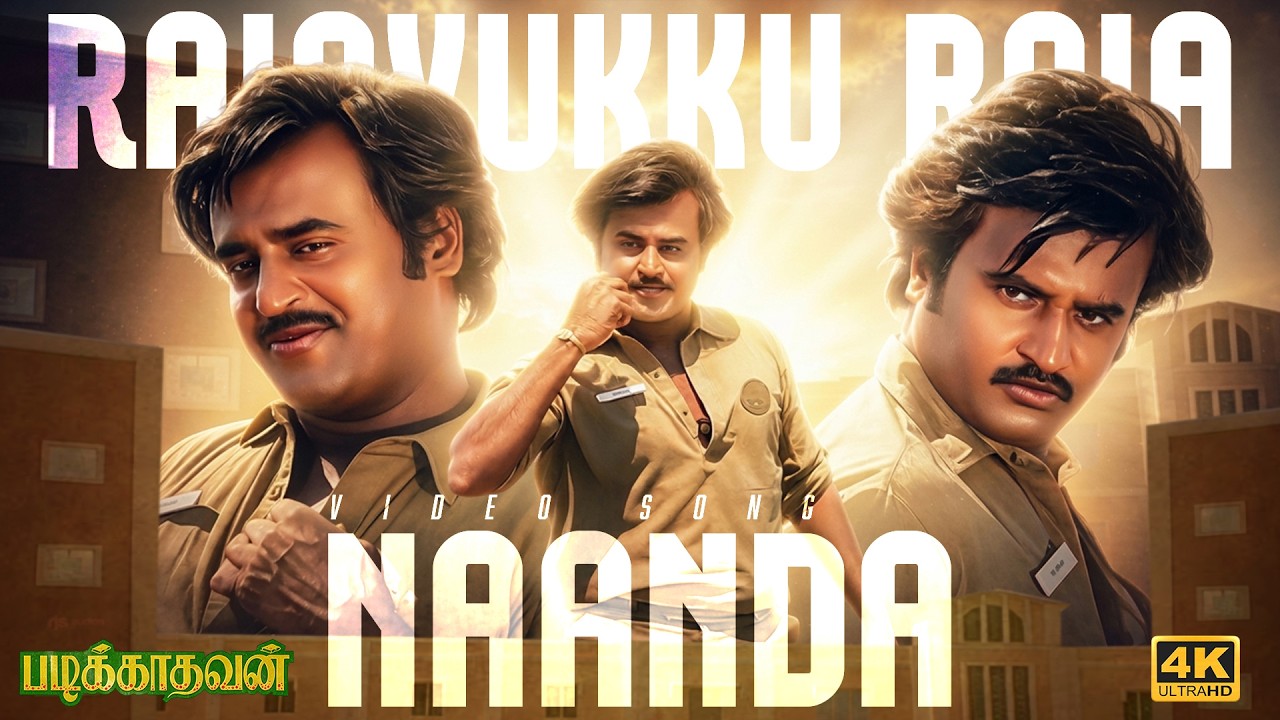
🎬 **Rajavukku Raja – Padikathavan (1985) 4K Video Song | S. P. Balasubrahmanyam | Ilaiyaraaja**
📝 **YouTube Description**
🎶 **Rajavukku Raja** is a powerful Tamil mass song from the blockbuster movie **Padikathavan (1985)**.
🎤 Energetically sung by the legendary **S. P. Balasubrahmanyam (SPB)**, this iconic track is celebrated for its powerful vocals, inspiring spirit, and unforgettable energy.
🎼 Music composed by **Isaignani Ilaiyaraaja** delivers a dynamic and memorable soundtrack that perfectly complements the film's mass appeal.
✍️ Lyrics written by legendary **Vaali** beautifully convey confidence, determination, and the triumph of the common man through impactful and meaningful verses.
🎬 Featured in **Padikathavan (1985)**, starring **Rajinikanth**, **Sivaji Ganesan**, **Ambika**, and **Nagesh**, this evergreen hit remains one of the most loved songs in Tamil cinema.
✨ Experience this iconic Tamil classic in stunning **4K HD** quality.
👍 **Like | 🔁 Share | 🔔 Subscribe** for more Rajinikanth hits, Ilaiyaraaja classics & evergreen Tamil video songs.
🔖 **Hashtags**
#RajavukkuRaja
#Padikathavan
#Rajinikanth
#SPBalasubrahmanyam
#SPB
#Ilaiyaraaja
#Vaali
#80sTamilSongs
#EvergreenTamilSongs
#TamilCinema
🔑 **Keywords (Comma-Separated)**
Rajavukku Raja song, Rajavukku Raja video song, Padikathavan songs, Padikathavan movie songs, Padikathavan 1985 songs, Rajinikanth songs, Rajinikanth mass songs, SP Balasubrahmanyam songs, SPB songs, Ilaiyaraaja hits, Ilaiyaraaja songs, Vaali lyrics, Tamil mass songs, Tamil motivational songs, evergreen Tamil songs, 80s Tamil songs, classic Tamil songs, 4K Tamil video songs, HD Tamil songs, Padikathavan video songs
Lyrics:
பாடகர் : எஸ்.பி. பாலசுப்ரமணியம்
இசையமைப்பாளர் : இளையராஜா
ஆண் : ராஜாவுக்கு ராஜா
நான்டா எனக்கு மந்திரிங்க
யாரும் இல்ல அதனால்
ராஜாவுக்கு ராஜா நான்டா
எனக்கு மந்திரிங்க யாரும்
இல்ல
ஆண் : அடுத்தவனை
கெடுத்ததில்ல வயித்தில
தான் அடிச்சதில்ல
அடுத்தவனை கெடுத்ததில்ல
வயித்தில தான் அடிச்சதில்ல
ஆண் : உழைப்ப நம்பி
பொழச்சிருக்கிறேன் நான்
உண்மையாக ஊருக்குள்ள
ராஜாவுக்கு ராஜா நான்டா
எனக்கு மந்திரிங்க யாரும்
இல்ல
ஆண் : படிக்காத முட்டாள்னு
பல பேரு சொன்னானுங்க
அதனால குத்தம் என்ன
அண்ணாச்சி படிச்சாலும்
வேல வெட்டி கிடைக்காத
தேசத்தில அறிவாளி ஆனா
மட்டும் என்னாச்சி
ஆண் : தப்பு தண்டா
பண்ணாம தண்ட சோறு
தின்னாம என் போல
போராடு இன்பம் வரும்
பின்னோடு
ஆண் : நல்லா தான் கையும்
காலும் வச்சானே என்னாடும்
பாடு படு மச்சானே அப்பவும்
சொல்லுவேன் இப்போவும்
சொல்லுவேன் எப்போவும்
நான் ஒரு உத்தம புத்திரன்
ஆண் : ராஜாவுக்கு ராஜா
நான்டா எனக்கு மந்திரிங்க
யாரும் இல்ல அடுத்தவனை
கெடுத்ததில்ல அடுத்தவனை
கெடுத்ததில்ல வயித்தில
தான் அடிச்சதில்ல
ஆண் : உழைப்ப நம்பி
பொழச்சிருக்கிறேன் நான்
உண்மையாக ஊருக்குள்ள
ராஜாவுக்கு ராஜா நான்டா
டோய் எனக்கு மந்திரிங்க
யாரும் இல்ல யே யே
யே ஹே
குழு : ...............................
ஆண் : தாயாட்டும் அன்பு
வெச்ச தம்பின்னு ஆச
வெச்ச நாயாட்டம் வந்து
நிப்பேன் பின்னாடி எவனாச்சும்
வம்பிழுத்தா என் மேல கைய
வெச்சா எமனாட்டம்
நின்னுடுவேன் முன்னாடி
ஆண் : வில்லனுக்கு வில்லன்
தான் வீரனுக்கு வீரன் தான்
டோய் சண்டையின்னு
வந்தாக்கா தோள் தட்டும்
சூரன்தான்
ஆண் : ஏழைங்க கண்ணீர்
சிந்த கூடாது ஆத்தாடி நம்ம
நெஞ்சம் தாங்காது கண்ணுல
ஈரமும் நெஞ்சுல பாரமும்
உள்ளவன் யாருக்கும்
நல்லது பண்ணுவேன்
ஆண் : ராஜாவுக்கு ராஜா
நான்டா எனக்கு மந்திரிங்க
யாரும் இல்ல அடுத்தவனை
கெடுத்ததில்ல அடுத்தவனை
கெடுத்ததில்ல வயித்தில
தான் அடிச்சதில்ல
ஆண் : உழைப்ப நம்பி
பொழச்சிருக்கிறேன்
ஹாஹாஹாஹா நான்
உண்மையாக ஊருக்குள்ள
டோய்
ஆண் : { ராஜாவுக்கு ராஜா
நான்டா எனக்கு மந்திரிங்க
யாரும் இல்ல } (2)

Watch Vishwanath and Sons TEASER | Suriya, Mamitha Baiju | Venky Atluri | S Naga Vamsi | GV Prakash Kumar
A story of dreams, emotions, and unexpected love unfolds. ❤️
Presenting the world of Sanjay Vishwanath.😎
#vishwanathandsons ~ The biggest family entertainer of 2026, arrives in cinemas this July. 🤩
Vishwanath & Sons is our upcoming Telugu-Tamil feature film starring Suriya, Mamitha Baiju, Radhika Sarathkumar and Raveena Tandon in key roles. Written and directed by Venky Atluri, the film is produced by Suryadevara Naga Vamsi and Sai Soujanya under the banners of Sithara Entertainments and Fortune Four Cinemas and presented by Srikara Studios. The film features music composed by G. V. Prakash Kumar, cinematography by Nimish Ravi, editing by Navin Nooli and production design by Banglan.
Starring: Suriya, Mamitha Baiju, Radhika Sarathkumar, Raveena Tandon
Technical Crew:
Written and Directed by Venky Atluri
Producers: Suryadevara Naga Vamsi & Sai Soujanya
Banners: Sithara Entertainments & Fortune Four Cinemas & Srikara Studios
Music: G.V. Prakash Kumar
Director of Photography: Nimish Ravi
Editor: Navin Nooli
Production Designer: Banglan
Executive Producer: Yalamanchili Gopala Krishna (Nani)
Line Producer: Karumanchi Uma Maheshwara Rao
Art Directors: Shiva Kamesh D, Jithu Sebastian
Fight Master: VVenkat
Choreography: Sekhar VJ, Vijay Binni
Dialogue Writer: K.N.Vijayakumar
Chief Co-Directors: Srivatsava
Co-Director: Anji Chodapaneedi
VFX Supervisor: Vasudeva Rao Mojjada
Publicity Designer: Kabilan
Digital Marketing: Sandeep Kulkarni
P.R.O: J Yuvraaj
DI: Nube Studios
Colorist: Vyshak Shiva
Dolby Atmos MIX: T. Uday Kumar
Teaser Cut: Balaram Krishnan, Vishnu ramagiri, Nikhil Nadella
Chief Associate Editor: Balaram Krishnan
Associate Editor: Srinivas Nadiminti
Direction Department: Vijayakumar, Balaiya D Rajsekhar, Ramarao Alubelli, Ram Sandeep Varma Jampana, Ramesh Aguri, Naveen Eadara, Sai Charan Vandavasu, Risha Cherukuri, Siva Sankar, Anish Devanpally, Kalal Venky Goud
DOP Team: Anson Titus, Hemil Sugunan, Abhijith Shabu, Nikhila Lalkumar, Hari Babu, Praveen
Costume Designers: Archana Rao, Sandhya Sabbavarapu
Motion Gfx: Sabari Ramiro
Production Controller: Rudraraju Seshadri
Audio On: Aditya Music
Tamilnadu Release by: Think Studios
► Subscribe: http://youtube.com/SitharaEntertainments
► Like: https://facebook.com/SitharaEntertainments
► Follow: http://instagram.com/SitharaEntertainments
► Follow: https://twitter.com/SitharaEnts

The Wild Soul of the Everglades National Park | Wildlife Documentary
Watch 'Saguaro - The Unexpected Beauty of America's Forgotten National Park' here: https://youtu.be/sV_6cvXPE34
The Everglades are a network of wetlands and forests fed by a river flowing 0.25 miles per day out of Lake Okeechobee, southwest into Florida Bay. The park is the most significant breeding ground for tropical wading birds in North America and contains the largest mangrove ecosystem in the Western Hemisphere. Thirty-six threatened or protected species inhabit the park, including the Florida panther, the American crocodile, and the West Indian manatee, along with 350 species of birds, 300 species of fresh and saltwater fish, 40 species of mammals, and 50 species of reptiles. The majority of South Florida's fresh water, which is stored in the Biscayne Aquifer, is recharged in the park.
Most national parks preserve unique geographic features. Everglades National Park was the first created to protect a fragile ecosystem.
▬▬▬▬▬▬▬▬▬
Subscribe to Free Documentary - Nature Channel for free: http://bit.ly/2mFDC3Q
Facebook: https://bit.ly/2QfRxbG
Twitter: https://bit.ly/2QlwRiI
#Nature #Everglades #nationalparks
▬▬▬▬▬▬▬▬▬
Free Documentary NATURE is passionate about sharing the beauty and diversity of our world through high-quality documentaries available for free on YouTube. Filmmakers from around the world, equipped with the latest camera technology, bring you visuals and narratives that explore the wonders of our planet. From the depths of the oceans to the heights of the skies, each film invites you to experience stories and imagery that celebrate the richness of life around us. Join us on this journey of discovery and connection, as we uncover the remarkable tales that make our Earth truly special.

🦁 Simmasanam – Full Movie in HD (2000) 🦁
Simmasanam is a powerful Tamil action–family drama starring Vijayakanth in a dual-action-packed role, supported by Khushbu, Manthra, and Radhika Chaudhari. Directed by Eswaran, the film deals with family honour, betrayal, and the emotional bond between brothers.
With a strong screenplay, impactful dialogues, and memorable music by S. A. Rajkumar, the film is a favourite among Vijayakanth fans.
⭐ Movie Details
🎬 Director: Eswaran
✍️ Writer: Eswaran
🧑💼 Producers: Tamil Fathima, Thangamma Fathima
🌟 Cast
Vijayakanth
Khushbu Sundar
Manthra
Radhika Chaudhari
🎥 Cinematography: Rajarajan
✂️ Edited by: G. Jayachandran
🎶 Music: S. A. Rajkumar
🏢 Production Company: Tamilannai Cine Creation
📅 Release Date: 4 August 2000
⏱️ Running Time: 145 minutes
🌐 Language: Tamil
🇮🇳 Country: India
🎭 Genre: Action | Drama | Family
💬 Synopsis
Simmasanam follows an emotional and gripping storyline where Vijayakanth plays a bold and righteous character fighting for truth, justice, and family pride. Packed with twists, confrontations, and strong performances, the movie is a complete commercial entertainer delivering both action and family sentiment.
👉 Subscribe 🔔 to RJS Cinemas for more Tamil HD Movies, Vijayakanth Classics & Action Dramas!
👍 Like | 💬 Comment | ↗️ Share with your friends!
📌 Hashtags
#Simmasanam #Vijayakanth #Khushbu #SARajkumar #TamilFullMovie #2000TamilMovie #TamilActionDrama #Manthra #TamilClassicMovie #RJSCinemas #RJSPrime

Wild Assassins – Deadly Pack Tactics | Free Documentary Nature
Watch 'Wild Assassins – Camouflage' here: https://youtu.be/JJhffoW2Gak
An up-close and personal look at some of the deadliest animals in the wildlife kingdom. This series showcases the methods, tactics, and weapons animals use to find their next meal, or to avoid becoming one.
▬▬▬▬▬▬▬▬▬
Subscribe to Free Documentary - Nature Channel for free: http://bit.ly/2mFDC3Q
Facebook: https://bit.ly/2QfRxbG
Twitter: https://bit.ly/2QlwRiI
▬▬▬▬▬▬▬▬▬
#FreeDocumentaryNature #Documentary #wildlife #wilderness
▬▬▬▬▬▬▬▬▬
Free Documentary is dedicated to bringy you high-class documentaries on YouTube for free with the latest camera equipment used by renown filmmakers working for renown production studios. You will see fascinating shots from the deep seas and up in the air, capturing great stories and pictures from everything our amazing planet has to offer.
Enjoy stories about nature, wildlife, culture, people, history and more to come.

O Butterfly (Male Sad Version) – Meera 4K 60FPS HD Video Song | S. P. Balasubrahmanyam | Ilaiyaraaja
🎬 O Butterfly (Male Sad Version) – Meera 4K Video Song | S. P. Balasubrahmanyam | Ilaiyaraaja
📝 YouTube Description
🎶 O Butterfly (Male Sad Version) is a heart-touching Tamil melody from the classic movie Meera.
🎤 Sung soulfully by legendary S. P. Balasubrahmanyam, the song beautifully expresses the pain of love, longing, and separation through his emotional vocals.
🎼 Music composed by Isaignani Ilaiyaraaja gives the track a timeless melody that continues to move generations of Tamil music lovers.
✍️ Lyrics written by legendary Vaali poetically capture the emotions of unfulfilled love and heartfelt memories.
🎬 Featured in the classic Tamil film Meera, this emotional version remains one of the most cherished sad melodies in Tamil cinema.
✨ A timeless Tamil classic filled with love, longing, and Ilaiyaraaja's unforgettable musical brilliance.
👍 Like | 🔁 Share | 🔔 Subscribe for more Tamil melody & evergreen video songs.
🔖 Hashtags (Tags)
#OButterfly
#Meera
#SPBalasubrahmanyam
#Ilaiyaraaja
#Vaali
#TamilSadSongs
#TamilMelodySongs
#EvergreenTamilSongs
#90sTamilSongs
#TamilCinema
🔑 Keywords (Comma-Separated)
O Butterfly male sad version, O Butterfly sad song, O Butterfly Meera song, Meera songs, Meera movie songs, SP Balasubrahmanyam songs, Ilaiyaraaja melody songs, Vaali lyrics songs, Tamil sad songs, Tamil melody songs, evergreen Tamil songs, Tamil love failure songs, emotional Tamil songs, 90s Tamil songs, Ilaiyaraaja hits, SPB hits, classic Tamil songs, 4K Tamil songs, HD Tamil video songs, Tamil cinema songs

London Tamil Full Movie 4K HD | Comedy Drama | Prashanth | Pandiarajan | Vadivelu | Ankitha | Mumtaj
🎥 London | Tamil Full Movie HD | Comedy Drama Entertainer
Starring: Prashanth | Pandiarajan | Vadivelu | Ankitha | Mumtaj
Music: Vidyasagar
✨ London (2005) is a Tamil comedy-drama film directed by Sundar C. and produced by Subha Sandeep.
The film stars Prashanth and Pandiarajan in lead roles, while Vadivelu, Ankitha, Mumtaj, Vijayakumar, and Srividya play important supporting roles. A remake of the Malayalam hit Kakkakuyil, the movie is known for its hilarious comedy, entertaining screenplay, and memorable performances.
Released on 11 March 2005, London became a commercial success and remains a favorite among fans of family comedy entertainers.
⭐ Movie Details
🎬 Director: Sundar C.
✍️ Dialogues: Badri
📖 Story: Priyadarshan
🧑💼 Producer: Subha Sandeep
🌟 Starring:
Prashanth | Pandiarajan | Vadivelu | Ankitha | Mumtaj | Vijayakumar | Srividya
🎥 Cinematography: K. S. Shiva
✂️ Editing: P. Sai Suresh
🎼 Music: Vidyasagar
🏢 Production Companies:
Inspired Movies | Spice Team Entertainments
📅 Release Date: 11 March 2005
🌐 Language: Tamil
🇮🇳 Country: India
💬 Synopsis
Shiva travels to London in search of a job but soon finds himself caught in a series of unexpected events involving a bank robbery, hidden money, mistaken identities, and hilarious misunderstandings. Along with his friend Kathir, he embarks on a chaotic adventure filled with comedy, romance, and family emotions.
📌 Hashtags
#LondonMovie #Prashanth #VadiveluComedy #TamilFullMovie #SundarC #ComedyMovie #Vidyasagar #TamilCinema
🔑 Keywords
london tamil full movie, london movie prashanth, vadivelu comedy london movie, sundar c comedy movie, london 2005 tamil movie, prashanth full movie hd, tamil comedy drama movie, vidyasagar songs, london movie tamil hd, family entertainer tamil

Song Line : Poonkatte Poyi Chollamo Thekkan
Film Name : Shyama
Director : Joshiy
Lyrics : Shibu Chakravarthy
Music : Raghu Kumar
Singers : KS Chithra, Unni Menon
Starring : Nadia Moidu&Mukesh
Cinematography : Jayanan Vincent
Editor : K. Sankunni
Production Company : Jubilee Productions
Release Date : 23 January 1986
|| ANTIPIRACY WARNING ||
NOTE : This content is Copyrighted to SPEED AUDIO VIDEO DUBAI . Any unauthorized reproduction, redistribution or re-upload is strictly prohibited. Legal action will be taken against those who violate the copyright of the same.
For enquiries contact: Speed Audio and Video P.O Box 67703, Sharjah, United Arab Emirates. Email: [email protected] ©Speed Audio & Video Sharjah, UAE.

Song Line : Mathaappoove
Movie Name : Balram v/s Tharadas (2006)
Director : IV Sasi
Lyricst : Gireesh Puthenchery
Musician : Jassie Gift
Playback Singers : Afsal, Anwar Sadath, Jassie Gift, Rimi Tomy
Starring : Mammootty,Katrina Kaif
|| ANTIPIRACY WARNING ||
NOTE : This content is Copyrighted to SPEED AUDIO VIDEO DUBAI . Any unauthorized reproduction, redistribution or re-upload is strictly prohibited. Legal action will be taken against those who violate the copyright of the same.
For enquiries contact: Speed Audio and Video P.O Box 67703, Sharjah, United Arab Emirates. Email: [email protected] ©Speed Audio & Video Sharjah, UAE.

Watch Piragu on Sun NXT
#Piragu #PiraguMovie #SunNXT #Vadivelu

Song Line : Ethaanithethaanee Kaattu
Movie Name : Thank You (2013)
Movie Director : VK Prakash
Lyrics : Rafeeq Ahamed
Music : Bijibal
Starring : Jayasurya,sethu
|| ANTIPIRACY WARNING ||
NOTE : This content is Copyrighted to SPEED AUDIO VIDEO DUBAI . Any unauthorized reproduction, redistribution or re-upload is strictly prohibited. Legal action will be taken against those who violate the copyright of the same.
For enquiries contact: Speed Audio and Video P.O Box 67703, Sharjah, United Arab Emirates. Email: [email protected] ©Speed Audio & Video Sharjah, UAE.
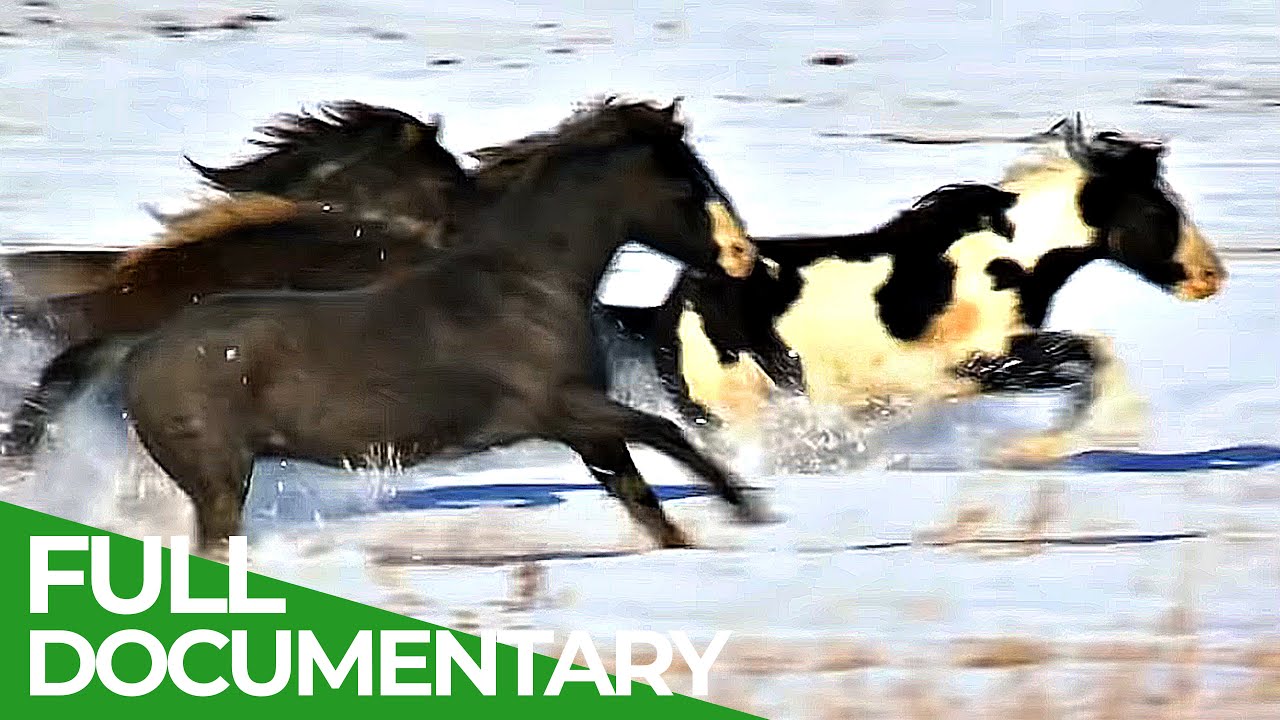
8000 Miles to Alaska: A Journey Along the World's Longest Border | Free Documentary Nature
Watch 'Newfoundland - On the Shores of Canada's Most Spectacular Coast' here: https://youtu.be/MILZMf_LOJY
What is America? Just a huge, spacious and naturally wild country - or is it still a project? And who are the Americans? A torn nation of people without roots and history - or more than all of this? What unites, what divides, what characterises and what changes them? How different are their daily lives, even now, in the icy cold, snowbound winter - depending on whether they live on Maine's remote outer islands, or in arctic Deadhorse, near the Great Lakes or in the prairies of the mid-West, in the Blackfoot reservation in the Rocky Mountains, or on board a yacht from Seattle?
To discover America's characteristics and their transition - always with a view to the people and how they perceive "home" - Klaus Scherer travels through his host country on a route hitherto neglected by previous reporters: along the north border. Thus, a program event is created, whose highly visual landscape and nature photographs, along with personal experiences, connect with those we meet, visit and accompany along the way - from the dwarf school on Monehegan Island, to the head gaffer of the Niagara Falls; from wolf and bear monitors in Idaho, to the ice fishers at the Arctic Circle.
▬▬▬▬▬▬▬▬▬
Subscribe to Free Documentary - Nature Channel for free: http://bit.ly/2mFDC3Q
Facebook: https://bit.ly/2QfRxbG
Twitter: https://bit.ly/2QlwRiI
▬▬▬▬▬▬▬▬▬
#FreeDocumentaryNature #Documentary #Nature
▬▬▬▬▬▬▬▬▬
Free Documentary Nature aims to provide high-quality documentaries on YouTube for free, utilizing the best practices in nature documentary filmmaking and collaborating with renowned filmmakers and production studios. You will see stunning shots from the depths of the oceans and from above, telling captivating stories and showcasing the incredible diversity of our planet.
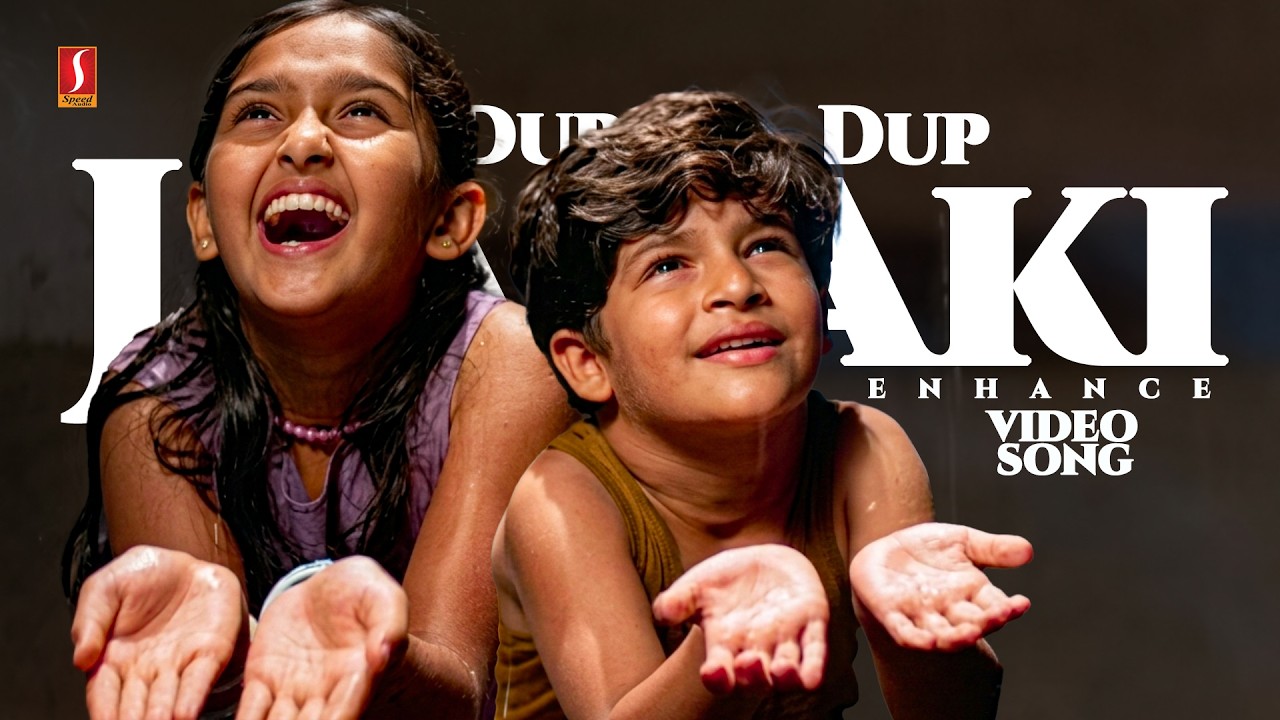
Song Line : Dup Dup Janaki
Movie Name : Kaazhcha
Director : Blessy
Lyricst : Kaithapram
Musician : Mohan Sithara
Playback Singers : Mobina Mohan, Priya R Pai
Starring : Sanusha,Yash Malaviya
Release Date : 27 August 2004
|| ANTIPIRACY WARNING ||
NOTE : This content is Copyrighted to SPEED AUDIO VIDEO DUBAI . Any unauthorized reproduction, redistribution or re-upload is strictly prohibited. Legal action will be taken against those who violate the copyright of the same.
For enquiries contact: Speed Audio and Video P.O Box 67703, Sharjah, United Arab Emirates. Email: [email protected] ©Speed Audio & Video Sharjah, UAE.

Grand Canyon - The Jaw-Dropping Beauty of America's National Park | Wildlife Documentary
Watch 'Great Smoky Mountains - A Fairytale World from Once Upon A Time' here: https://youtu.be/QRjBlFLb324
Few natural wonders on Earth are as awe-inspiring as the Grand Canyon. Over millions of years, the Colorado River has carved a gorge up to 1,600 meters deep and nearly 30 kilometers wide at its broadest point. To preserve this landscape, the US government designated it a national monument in 1908, followed by the establishment of Grand Canyon National Park in 1919. In 1979, UNESCO officially named the Grand Canyon a World Heritage Site.
▬▬▬▬▬▬▬▬▬
Subscribe to Free Documentary - Nature Channel for free: http://bit.ly/2mFDC3Q
Facebook: https://bit.ly/2QfRxbG
Twitter: https://bit.ly/2QlwRiI
▬▬▬▬▬▬▬▬▬
#FreeDocumentaryNature #Documentary #GrandCanyon
▬▬▬▬▬▬▬▬▬
Free Documentary Nature aims to provide high-quality documentaries on YouTube for free, utilizing the best practices in nature documentary filmmaking and collaborating with renowned filmmakers and production studios. You will see stunning shots from the depths of the oceans and from above, telling captivating stories and showcasing the incredible diversity of our planet.

👍 CAN WE HIT 5K LIKES ON THIS VIDEO?
👍 LIKE THIS VIDEO & SUBSCRIBE MY CHANNEL!
💘Click Here To Subscribe: https://bit.ly/2QlxQzX
---------------------------------------------------------------------------------
🔔 DON'T FORGET TO TURN ON NOFICATIONS
I must state that in NO way, shape or form am I intending to infringe rights of the copyright holder. Content used is strictly for research/reviewing purposes and to help educate. All under the Fair Use law.
---------------------------------------------------------------------------------
"Copyright Disclaimer Under Section 107 of the Copyright Act 1976, allowance is made for "fair use" for purposes such as criticism, comment, news reporting, teaching, scholarship, and research. Fair use is a use permitted by copyright statute that might otherwise be infringing. Non-profit, educational or personal use tips the balance in fair of fair use."
#MoonBall #football #soccer #epicreaction
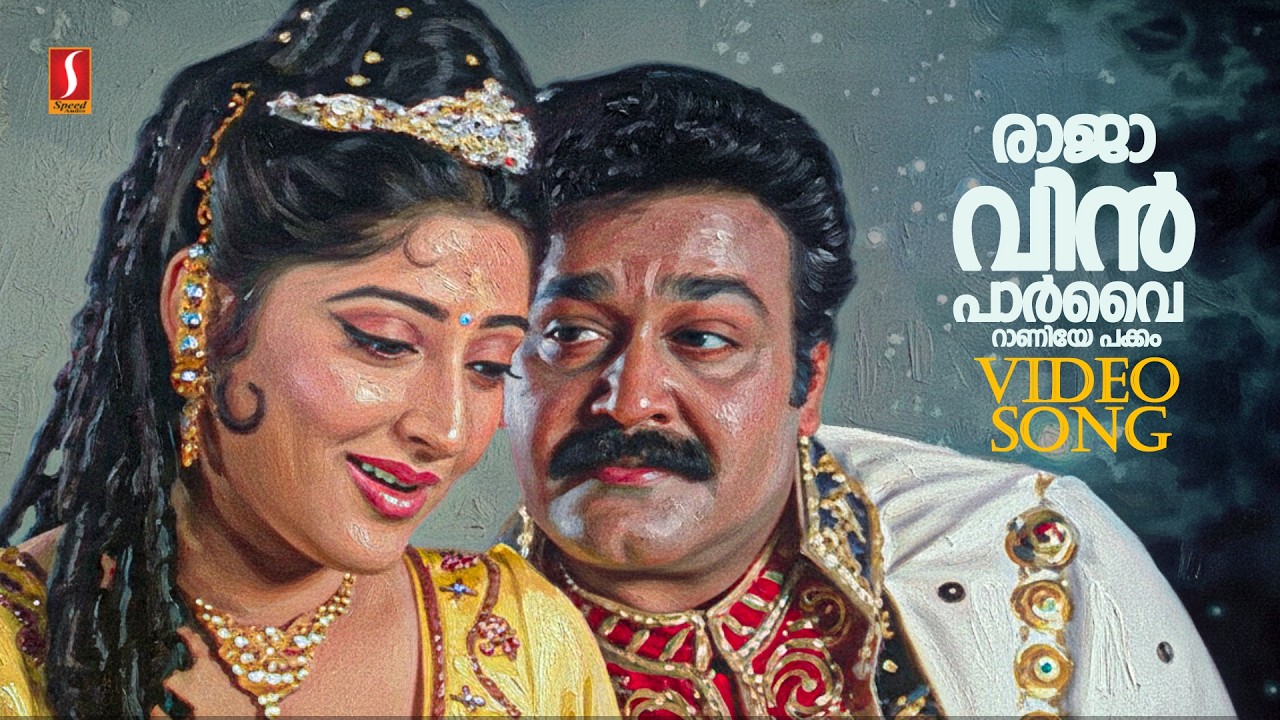
Song Line : Raajaavin Paarvai
Movie Name : Vaamanapuram Bus Route
Movie Director : Sonu Sisupal
Lyrics : Kannadasan
Music : KV Mahadevan
Singers : KS Chithra, SP Balasubrahmanyam
Starring : Mohanlal,Lakshmi Gopalaswamy
Released on 23-01-2004
|| ANTIPIRACY WARNING ||
NOTE : This content is Copyrighted to SPEED AUDIO VIDEO DUBAI . Any unauthorized reproduction, redistribution or re-upload is strictly prohibited. Legal action will be taken against those who violate the copyright of the same.
For enquiries contact: Speed Audio and Video P.O Box 67703, Sharjah, United Arab Emirates. Email: [email protected] ©Speed Audio & Video Sharjah, UAE.
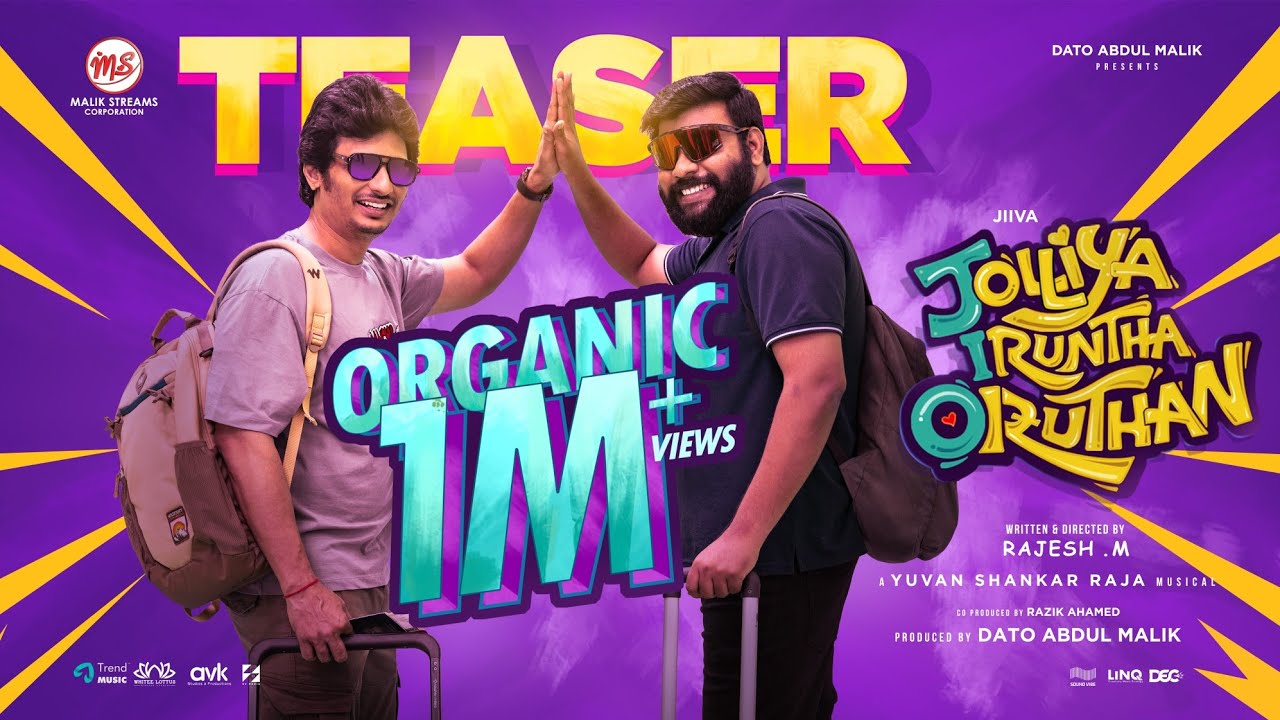
Get ready for a fun-filled entertainment! Watch #jolliyairunthaoruthan #jio teaser. Music by #yuvanshankarraja & Directed by Rajesh M.
#jiiva #ivana #sudhakar #u1 #u1music #trendmusic #rajesh
crew Details
Writer & Director: Rajesh M
Producer: Dato Abdul Malik
Co-Producer: Razik Ahamad
Production House: Malik Streams Corporation
Executive Producers: V. Guru Ramesh, M.P. Gopi
Production Executive: Udhayakumar Balaji
Chief Co-Director: I. Rajasekar
Co-Director: Sarath P Sagar
Music Director: Yuvan Shankar Raja
Director of Photography (DOP): M. Sukumar
Editor: Ashish Joseph
Production Designer: Hasini Pavithra
Lyricists: Vignesh Ramakrishna, Adesh Krishna
Choreographers: Leelavathi, Sabrish, Richerdson
Makeup: Seeralan Mani
Costume Designer: Rithesh Selvaraj
Stills: Varuun
Publicity Designer: Prathool N.T.
Teaser Cut: Siva (Script & Cutz)
Title Animation: Yuvanion Studios
PRO: Sathish – S2 Media
DI & VFX: White Lotus
Dubbing Studios: AVK Studios, Voice Store, Four Frames
Marketing & Promotions: AKD (LINQ), K.V. Mothi
Sound Design: Renjith Venugopal, Saravana Kumar
Sound Mix: T. Udhay Kumar (DF Tech)
© 2026 Trend Music
Click Here To Watch :-
RAA - Video Song | Dawood | Linga, Sharath Ravi | Roshini | Prashanth Raman | Rakesh Ambigapathy | https://youtu.be/2locNq4gNhE
Jilloma - Lyrical Video | Middle Class | Munishkanth, Vijayalakshmi | Kapil Kapilan | Pranav Muniraj | https://youtu.be/oT0FdR46hpc
Thaenkoodey - Lyrical Video| Middle Class| Munishkanth, Vijayalakshmi | Sean Roldan | Pranav Muniraj | https://youtu.be/ding8KjafLY
Unakkulley Kadavul Undu - Lyrical Video| Arjun Das, Shivathmika, Kaali Venkat| D. Imman|Vishal Venkat | https://youtu.be/tTl0-E2UVn8
Akkalu Bakkalu -Video Song | House Mates | Darshan, Aarsha Baiju, Kaali Venkat | Rajavel | https://youtu.be/m3BNP6nf11k
For more updates:
Subscribe to us on:
https://youtube.com/TrendMusicSouth
Like Us on: https://www.facebook.com/TrendMusicSouth
Follow Us on: https://twitter.com/TrendMusicSouth
https://www.instagram.com/trendmusicsouth
Follow Us on: https://whatsapp.com/channel/0....029Va56hrDEAKWOXpowx

Chicken Recipe Grandma cooking | village style cooking chicken curry #chicken #cookingvideo
chicken Recipe
tribe cooking
Village cooking
grandma cooking
Indian village cooking
Indian cooking
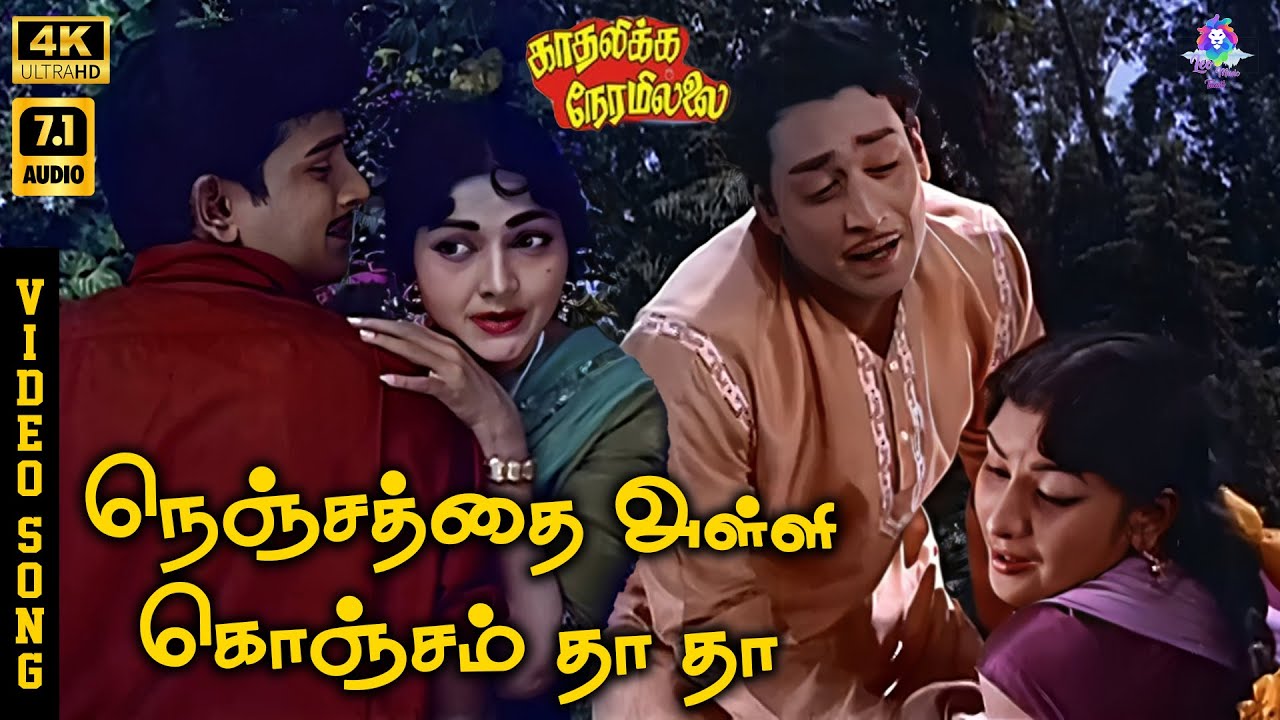
Watch " Nenjathai Alli Konjam Thaa Thaa " Video Song with 5.1 Audio from the Tamil movie "Kadhalikka Neramillai (1964)" exclusively on @LeoMusicTamizh
Song Details :-
Song Title - Nenjathai Alli Konjam Thaa Thaa
Artists – Muthuraman, Ravichandran, Kanchana, Rajasree
Singers - K. J. Yesudas, P. Susheela, L. R. Eswari
Music - Viswanathan–Ramamoorthy
Lyrics - Kannadasan
Movie - Kadhalikka Neramillai (1964)

Our UK journey comes to an end with one of the most emotional and unforgettable vlogs we've ever filmed. ❤️🇬🇧
After 6 long years, we travelled back to Sheffield the city where Deepika studied at Sheffield Hallam University. We revisited her university, the places she stayed, the streets she walked every day, and even the place where she worked part-time as a student. Watching her relive those memories was truly special.
As if that wasn't emotional enough, the next day was our anniversary. ❤️ We celebrated midnight together, and the following morning Deepika surprised me with something I never expected a magical ride on the London Eye. We spent the day exploring London, relaxing in a peaceful park with one of the most beautiful views, walking around London Bridge, and simply soaking in every moment together.
Just when we thought our trip couldn't get any more memorable, our final night in London turned into something straight out of a movie. Unexpected hotel chaos, emergency moments, and a night we'll never forget! Finally, we packed our bags, said goodbye to London, and headed back home with memories we'll cherish forever.
#londonvlog #ukvlog #sheffield #londoneye #anniversary #couplevlog #travelvlog #deepika #raja #rajavetriprabhu #rvp #rvpdailyvlogs #dailyvlogs #shorts
_________________________________________________________
Follow my pages:
Instagram: https://www.instagram.com/raja_vetri_prabhu_/
Facebook: https://www.facebook.com/rvpvlogs/
Twitter: https://twitter.com/RajaVetriPrabhu
