#spacescience

Vaan Veli
3 意见 · 5 月 前

#k218b #superearth #earth2 | K2-18b is an exoplanet located about 124 light-years away from Earth in the constellation Leo. It's one of the many exoplanets discovered by the Kepler Space Telescope during its K2 mission.

Key Features:
Type: K2-18b is classified as a "mini-Neptune" or "sub-Neptune," which means it's larger than Earth but smaller than Neptune.
Radius and Mass: The planet has a radius about 2.6 times that of Earth and a mass about 8.6 times greater, indicating that it has a substantial atmosphere.
Host Star: The exoplanet orbits a red dwarf star (K2-18) that is smaller and cooler than our Sun. The star's lower temperature allows K2-18b to orbit closer to it while still being in the habitable zone.
Atmosphere and Potential Habitability:
Atmosphere: One of the most intriguing aspects of K2-18b is its atmosphere. Observations using the Hubble Space Telescope have detected water vapor in its atmosphere, making it one of the few exoplanets where water vapor has been confirmed.
Potential for Life: Despite the presence of water vapor, whether K2-18b can support life is still uncertain. The planet's atmosphere is likely rich in hydrogen, which is not ideal for life as we know it. Moreover, the exact surface conditions are unknown, but it's unlikely to be similar to Earth’s, given the difference in size, mass, and atmospheric composition.
Recent Developments:
In 2023, astronomers made further observations using the James Webb Space Telescope (JWST). They found additional details about the atmosphere of K2-18b, including possible indications of other molecules like methane and carbon dioxide, which could suggest some form of chemical processes happening on the planet, although this doesn't necessarily mean life exists there.

Orbit and Year Length:
K2-18b has an orbital period of about 33 days, meaning a year on K2-18b is only 33 Earth days long.
K2-18b's discovery and the subsequent studies have sparked significant interest in the scientific community, especially regarding the search for habitable worlds beyond our solar system.


#k218b #exoplanet #astronomy #spaceexploration #ExoplanetDiscovery
#astrobiology #jameswebbtelescope #HubbleSpaceTelescope
#minineptune #reddwarfstar #watervapor #alienworlds #HabitableZone
#spacescience #cosmos #superearth #planetaryscience #earthlikeplanet #earth2 #earth2point0 #newearth #secondearth #space #universe #cosmos #galaxies #outerspace #interstellar #cosmic #spacetime #theuniverse #kepler #kepler452b

K2-18b Super Earth, K2-18b Exoplanet Discovery, K2-18b Atmosphere Analysis, K2-18b Water Vapor Detection, K2-18b James Webb Telescope, K2-18b Habitable Zone, Life on K2-18b, K2-18b vs Earth, K2-18b Super Earth Explained, K2-18b Alien World, K2-18b Latest Discoveries, K2-18b and Red Dwarf Star, K2-18b Mini Neptune, Exploring K2-18b, K2-18b Astronomy News, K2-18b Super Earth in Tamil, James Webb Telescope in Tamil, Habitable Zone in Tamil, Life on K2-18b in Tamil, K2-18b vs Earth in Tamil, K2-18b Super Earth Explained in Tamil, Astronomy News in Tamil, #superearthintamil #vaanveli பூமியை போன்ற மற்றொரு கோள்


Regards,
Vaan Veli
Santhosh

Follows on Facebook : https://www.facebook.com/vaanveli1
Follows on Instagram : https://www.instagram.com/vaan_veli

Disclaimer:
This channel does not offer financial advice. All information on this channel is offered solely for educational and informational reasons.

Vaan Veli
2 意见 · 5 月 前

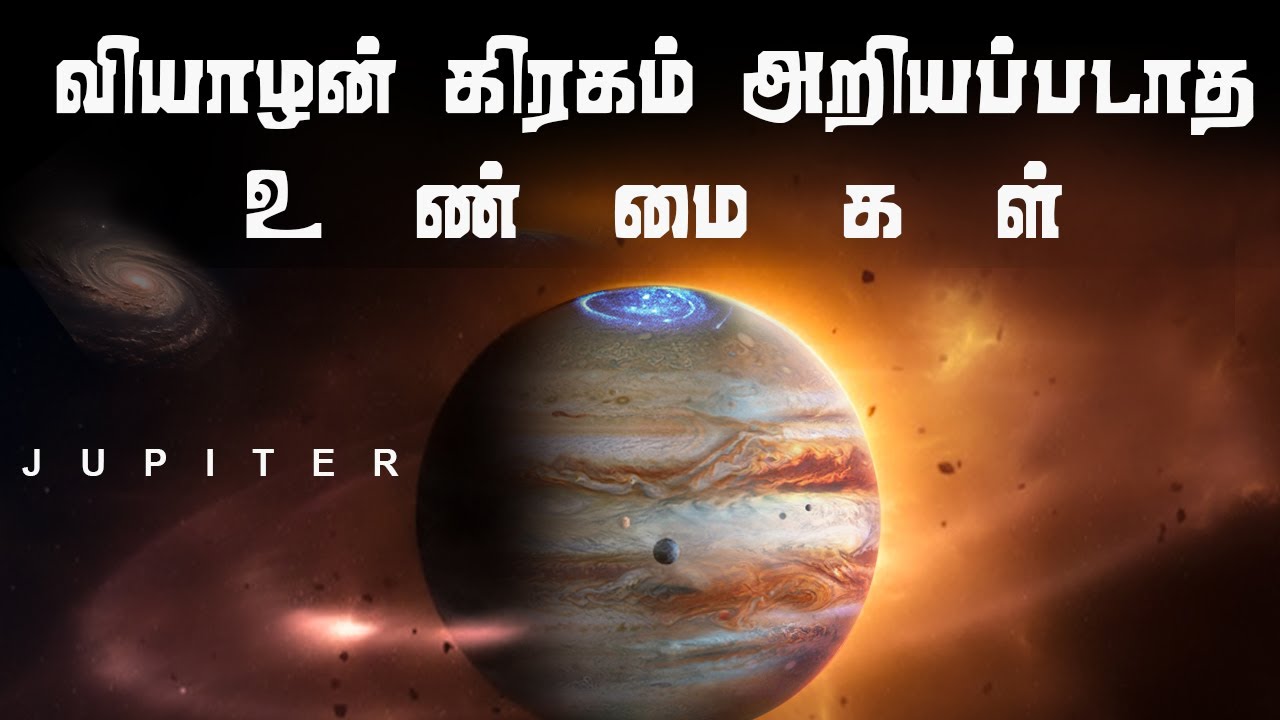
In this video we’re going to see about one of the largest planets in the solar system, The Jupiter (King of the Planet).

Jupiter

Jupiter is fifth planet from the Sun and the largest in the Solar System, the most seasoned and most monstrous world in the nearby solar system. Find out about the planet's history, its Extraordinary Red Spot and maritime moons, and what this antiquated world meant for the development of the solar system's different planets.

The Jupiter ring is divided into three parts. The deepest part is called hello. The middle of the ring is the brightest part. The outermost part of a ring is called a gossamer ring. This ring extends up to 225,000 kilometers from the planet and is 2,000-12.500 kilometers thick.

King of Solar System

The King of the planet, Jupiter, a colossal world that scientists believe can help us better understand the origin of the solar system.

Nine automated rocket have visited the gas planet up until this point, two of which entered into outer space (orbit), permitting us to concentrate on its perplexing, emotional environment more than ever.

The mystery of Jupiter

Yet, Jupiter, actually holds numerous secrets, for example, what lies underneath its strange mists and to jump considerably more profound, what is at its center? Go on an outing within the nearby planet groups biggest planet and figure out researchers' thought process is happening down there, it's very bizarre.


Jupiter is the largest planet in our solar system and one of the most interesting. In this video, we'll explore what Jupiter is, what the Jupiter Red Spot is, and how to learn more about it.

Jupiter is a big planet and you can learn a lot about it by reading articles and watching videos. In this video, we'll provide a basic overview of Jupiter and its many strange and interesting features. Be sure to check out the Jupiter Red Spot for yourself and see for yourself just how amazing this planet is!

Regadrs,
Vaan Veli.


#jupiter #jupiterascending #jupitermoon #lifeonjupiter #nasa #viyalankiragam #jupiterintamil #jupiterfactsintamil #aboutjupiter #jupiterfacts #solarsystem #planetjupiter #biggestplanet #space #cosmology #jupitertamil #whatif #tamil #planets #spacescience #jupiterplanet #planetjupiter #intamil #jupiterplanetexplained #explainjupiter #jupitermass #earthvsjupiter #jupiterstar #iomoon #howmanymoonsinjupiter #europa #ganymede ede #callisto #vaanveli #gk