#shark

Vaan Veli
3 Visninger · 5 måneder siden

The Megalodon lived approximately 23 to 3.6 million years ago during the Miocene to Pliocene epochs. Here are some top facts about this ancient sea monster: பெரும்பல்லன் சுறா, ஓட்டோடஸ் மெகாலோடான்

1. Size and Scale
The Megalodon is estimated to have grown up to 60 feet (18 meters) in length, making it the largest shark to have ever lived. Some estimates suggest it could have been even larger.
Its jaws were so massive that they could open up to 10 feet wide, enough to swallow two adult humans side by side.
2. Teeth
Megalodon had some of the largest teeth of any known species, with individual teeth reaching over 7 inches (18 cm) in length.
It had about 276 teeth arranged in five rows, and it could lose and replace thousands of teeth over its lifetime.
3. Diet
As an apex predator, Megalodon primarily fed on large marine mammals, including whales, dolphins, and large fish.
Its powerful jaws could exert a bite force estimated to be around 40,000 pounds per square inch (psi), strong enough to crush the bones of its prey.
4. Habitat
Megalodon lived in warm, shallow seas around the world. Fossil evidence has been found on every continent except Antarctica.
It is believed to have preferred coastal areas where it could easily hunt large prey.
5. Fossil Evidence
Most of what we know about Megalodon comes from fossilized teeth, which are commonly found in various locations worldwide.
Fossils have been discovered in regions such as North America, South America, Europe, Africa, and Australia.
6. Extinction
Megalodon went extinct around 3.6 million years ago, likely due to a combination of factors such as climate change, declining sea levels, and the disappearance of its primary prey.
The cooling of the oceans during the Pliocene era may have also played a significant role in its extinction, as the species was adapted to warmer waters.
7. Myths and Misconceptions
Despite some sensational claims, there is no scientific evidence that Megalodon still exists today. The idea that it could be lurking in the deep oceans is largely a myth popularized by movies and television shows.
Some mistaken sightings of large sharks have been attributed to the Megalodon, but these are usually cases of misidentification or exaggeration.
8. Cultural Impact
Megalodon has captured the public’s imagination and has been featured in numerous documentaries, movies, and books.
The 2018 movie "The Meg" is one of the most popular representations of this giant shark
9. Scientific Research
Ongoing research into Megalodon’s fossils continues to provide insights into its life, behavior, and reasons for extinction.
The study of Megalodon contributes to our understanding of ancient marine ecosystems and the evolutionary history of sharks.
10. Comparison with Modern Sharks
While the Great White Shark is often compared to the Megalodon, the latter was much larger and more powerful.
Some theories suggest that the evolution of more efficient predators, like the Great White, may have contributed to Megalodon’s extinction by outcompeting it for food sources.

Megalodon in tamil,
மெகாலோடான் Ancient sea monsters,
அழிந்துபோன கடல் அரக்கன் Megalodon,
Megalodon facts in tamil
Prehistoric monster Megalodon,
Megalodon shark history in tamil,
Ancient Megalodon shark,
Prehistoric shark Megalodon in tamil,
Megalodon sea monster,
Megalodon shark facts,
Prehistoric shark documentary,
Megalodon fossil discovery,
Megalodon extinction in tamil,
Megalodon shark size in tamil,
Prehistoric ocean predators in tamil,
Megalodon vs modern sharks in tamil,
Megalodon shark teeth in tamil,
Giant prehistoric shark in tamil,
Megalodon shark attack in tamil,
History of Megalodon in tamil,
Prehistoric marine monsters,
Megalodon shark myths,
Megalodon shark fossils,
Ancient sea monsters in tamil,
Megalodon vs whale,
Megalodon shark sightings,
Megalodon shark research in tamil,
Megalodon shark bite force in tamil,
Megalodon shark evolution in tamil,
Where did Megalodon live,
Megalodon vs Leviathan,
How did Megalodon go extinct,

#shark #megalodonfossils #extinctanimals #deepseacreatures #ancientcreatures #sharkdiscovery #oceanmysteries #SharkHistory
#sharkteeth #megalodonresearch #deepsea #sharkmyth #megalodonhunt #megalodon #seamonster #giantshark #megalodonshark #prehistoricmonster #oceanbeast #MarinePredator
#megalodonfacts #sharkattack #deepseamonster #ExtinctSeaMonster
#megalodonmyth #ancientseamonster #giantseacreature #megalodonlegend #oceanpredator #megalodonvs #MegalodonJaws
#sharkfossils #prehistoricshark #MegalodonDiscovery
#megalodonteeth #megalodonsize #deepseapredator #megalodonextinction #oceanmonsters #sharkweek #AncientOceans
#marinelife #megalodonhistory #ancientshark #ExtinctCreatures
#sharkevolution #marinehistory #deepseamonsters #prehistoricanimals regards,
Vaan Veli
Santhosh

Follows on Facebook : https://www.facebook.com/vaanveli1
Follows on Instagram : https://www.instagram.com/vaan_veli

lionsgate
2 Visninger · 1 måned siden

👉 Watch more movies dubbed in Tamil: youtube.com/channel/UC0ddpkUz6bGf5U_EAWHBjUw?sub_confirmation=1

👋 A group of friends is hunted by a giant shark after an accident on a paradise island.

MANEATER | मेनईटर | Trace Adkins | Nicky Whelan | Hollywood Movie Hindi Dubbed | Action Movie

🎬 ABOUT MANEATER 🎬

After an accident during their vacation on a paradisiac island, a group of friends is stalked by a large shark.

⦿ Director: Justin Lee
⦿ Cast: Trace Adkins, Nicky Whelan, Shane West, Porscha Coleman

#maneater #traceadkins #nickywhelan presenting Tamil dubbed full movie Maneater (மேனீட்டர் ), a captivating film — Action, Horror movie — dubbed in Tamil, exclusively on our channel!

Watch More Tamil Movies: https://www.youtube.com/playli....st?list=PLkJW2Rasvdj

Subscribe to watch new movie every week!

MANEATER - Popular Horror Film | Hollywood Horror Movie | Tamil Dubbed Full Movies | Action Movie

#hollywoodtamilmovies #hollywoodtamil #hollywoodtamilmovies #hollywoodpopularmovies #killershark #sharkmovies #animalmovies #creaturemovies #sharkfilm

கொலையாளி சுறா (Man Eater) | Hollywood Shark Movie Tamil Dubbed #shark #tamil

Vaan Veli
2 Visninger · 5 måneder siden

Hi,
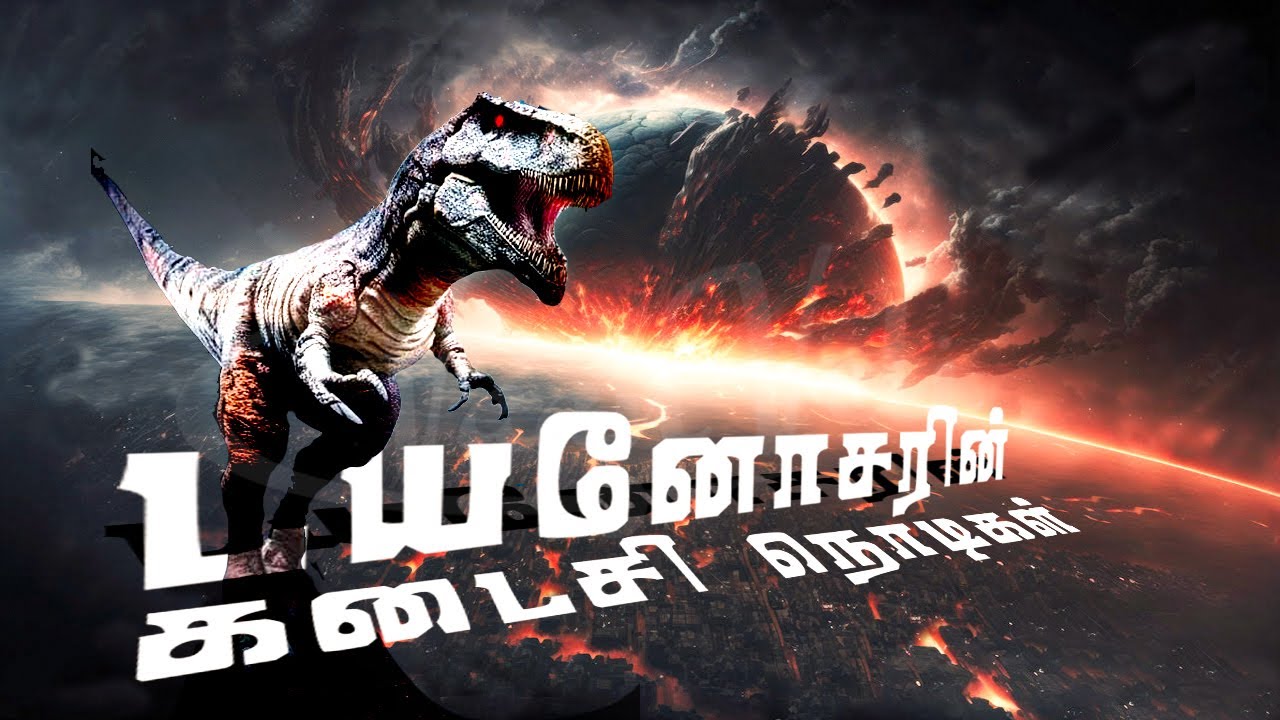
டயனோசர்களின் கடைசி நொடிகள் | Last Moment of Dinosaurs #dinosaur #vaanveli

Impact Event: The most widely accepted theory is that around 66 million years ago, a large asteroid or comet, estimated to be about 6 miles (10 kilometers) in diameter, collided with Earth. This impact event is believed to have occurred in what is now the Yucatán Peninsula in Mexico and created the Chicxulub crater. The energy released in the impact would have caused massive fires, tsunamis, and a "nuclear winter" effect, with debris and soot blocking sunlight for an extended period.

Immediate Consequences: The impact would have caused massive wildfires across the globe, releasing a tremendous amount of soot and gases into the atmosphere. This would have led to a sudden drop in temperatures, making it difficult for many species, including the dinosaurs, to survive.

Climate Change: The impact and subsequent environmental changes caused by the impact led to a drastic cooling of the Earth's climate. This would have disrupted ecosystems, causing a decline in plant life, which, in turn, would have affected herbivorous dinosaurs and the predators that relied on them.

Mass Extinction: The combination of factors, including extreme temperature fluctuations, lack of sunlight, and ecological disruption, likely resulted in a mass extinction event. Many species, including the non-avian dinosaurs, went extinct during this time.

Surviving Species: While the non-avian dinosaurs went extinct, some groups of animals, such as birds, small mammals, and reptiles, managed to survive and eventually evolve into the diverse life forms we see today. Birds are the only living descendants of the dinosaur lineage.


Regards,
Vaan Veli
Santhosh


Follows on Facebook : https://www.facebook.com/vaanveli1
Follows on Instagram : https://www.instagram.com/vaan_veli


#vaanveli #universe #solarsystem #earth #tamil #dinosaur #dinosaurs #dinasourimpact #asteroidimpact #chicxulubcrater #chicxulub #asteroid #dinosaursextinction #dinosaursintamil #dinosaurmovie #dinosaurvideo #dinosaurfootage #realdinosaur #lastmomentofdinosaurs #6thextinction #cretaceous #5massextinctions #largestcreatureintheworld #snake #crocodile #animals #birds #shark #66millionyearsago #6.6croreyearsago #dinosaurlivingperiod #humanevolution #gk

Vaan Veli
1 Visninger · 5 måneder siden

டயனோசர்களின் தோற்றமும் மறைவும் | Evolution of dinosaurs #dinosaur #vaanveli #extinction

Origins and Early Evolution
Triassic Period (approximately 250-201 million years ago):
Archosaurs: Dinosaurs evolved from a group of reptiles called archosaurs. Early archosaurs appeared in the Triassic period, and from them, the first dinosaurs emerged.
Eoraptor and Herrerasaurus: Among the earliest known dinosaurs are Eoraptor and Herrerasaurus, small bipedal predators from South America, dating back to around 231 million years ago.
Major Dinosaur Clades
Jurassic Period (approximately 201-145 million years ago):

Saurischia: This group includes theropods (bipedal carnivores like Tyrannosaurus rex) and sauropodomorphs (long-necked herbivores like Brachiosaurus).
Ornithischia: This diverse group of herbivorous dinosaurs includes stegosaurs (Stegosaurus), ankylosaurs (Ankylosaurus), and hadrosaurs (duck-billed dinosaurs).
Cretaceous Period (approximately 145-66 million years ago):

Diversification: Dinosaurs reached their peak diversity during the Cretaceous. Major groups like ceratopsians (Triceratops) and theropods, which later gave rise to birds, flourished.
Bird Evolution: Theropod dinosaurs, particularly a group called maniraptorans, evolved into birds. The famous Archaeopteryx is often cited as a transitional fossil between non-avian dinosaurs and birds.
Extinction and Legacy
Cretaceous-Paleogene (K-Pg) Extinction Event (approximately 66 million years ago):
Mass Extinction: A catastrophic event, likely an asteroid impact, led to the extinction of most dinosaur species. However, avian dinosaurs (birds) survived and are their direct descendants.

Climate Change: The impact and subsequent environmental changes caused by the impact led to a drastic cooling of the Earth's climate. This would have disrupted ecosystems, causing a decline in plant life, which, in turn, would have affected herbivorous dinosaurs and the predators that relied on them.

Mass Extinction: The combination of factors, including extreme temperature fluctuations, lack of sunlight, and ecological disruption, likely resulted in a mass extinction event. Many species, including the non-avian dinosaurs, went extinct during this time.

Surviving Species: While the non-avian dinosaurs went extinct, some groups of animals, such as birds, small mammals, and reptiles, managed to survive and eventually evolve into the diverse life forms we see today. Birds are the only living descendants of the dinosaur lineage.

Adaptive Radiation: Dinosaurs adapted to various ecological niches, leading to a wide range of forms and sizes, from tiny, feathered theropods to enormous sauropods.
Feathers and Flight: Many theropods had feathers, initially for insulation or display, which eventually evolved for flight in the ancestors of birds.
Social Behavior: Evidence of social behavior, such as nesting sites and herd movement, suggests complex behaviors among some dinosaur species.


Regards,
Vaan Veli
Santhosh


Follows on Facebook : https://www.facebook.com/vaanveli1
Follows on Instagram : https://www.instagram.com/vaan_veli

#evolutionofdinosaurs #dinosaureolution #volcano
#vaanveli #universe #solarsystem #earth #tamil #dinosaur #dinosaurs #dinasourimpact #asteroidimpact #chicxulubcrater #chicxulub #asteroid #dinosaursextinction #dinosaursintamil #dinosaurmovie #dinosaurvideo #dinosaurfootage #realdinosaur #lastmomentofdinosaurs #6thextinction #cretaceous #5massextinctions #largestcreatureintheworld #snake #crocodile #animals #birds #shark #66millionyearsago #6.6croreyearsago #dinosaurlivingperiod #humanevolution #gk