#outerspace

Historically, there have been theories suggesting that Earth might have had rings in the distant past. These theories propose that such rings could have formed due to massive collisions with other celestial bodies, similar to how other planetary rings are believed to have formed. However, any such rings would have likely been temporary and dissipated over time due to gravitational forces, atmospheric drag, and other factors.
Earth could have rings like Saturn. However, in reality, Earth does not currently have such a ring system.
The concept of Earth having rings like Saturn is an intriguing but entirely hypothetical scenario. Unlike Saturn, Earth does not have a natural ring system. Saturn's rings are made of ice, rock, and dust, and they are maintained by the planet's strong gravitational field.
For Earth to have rings like Saturn, a significant event would have had to occur, such as a massive impact that could have sent debris into orbit around the planet. This debris could then potentially form a ring system. However, Earth's stronger atmosphere and closer proximity to the Sun would likely cause such rings to dissipate quickly due to atmospheric drag and solar radiation pressure.
While Earth currently has no rings, some scientists speculate that in certain catastrophic events, such as the collision that formed the Moon, debris temporarily surrounded Earth before coalescing into the Moon or falling back to the planet. Any rings that did exist in Earth's past would have been short-lived compared to the stable ring systems seen around planets like Saturn.
The Moon was formed about 4.5 billion years ago after a colossal collision between a young Earth and a Mars-sized body often referred to as Theia.
Here’s how the process is thought to have occurred:
The Impact: Theia collided with the early Earth, and the immense energy from the impact caused a significant amount of debris to be ejected into Earth's orbit.
Formation of a Debris Ring: The debris from this collision formed a ring around Earth, composed mainly of molten rock, dust, and vaporized material from both Earth and Theia.
Accretion into the Moon: Over time, this ring of debris began to coalesce due to gravitational forces, eventually forming the Moon. This process of accretion likely took thousands to millions of years, resulting in the Moon that orbits Earth today.
Earth's Ring Dissipation: Unlike the stable rings of Saturn, the debris around Earth was temporary. It eventually either coalesced into the Moon or fell back to Earth, leaving the planet without a permanent ring system.
Thus, while Earth likely had a temporary ring system following the impact, it did not last and was instead converted into the Moon we see today. This is a fascinating example of how dynamic and transformative the early solar system was.
Collision Earth
பூமியில் இருந்த வலயம் | What happened to the Earth Ring | History of earth ring
#earthring #planetaryring #spacejewelry #astronomyart #space #cosmicdesign #earthinspired #SpaceFashion
#solarsystemring #outerspace #galacticstyle
#natureinspired #earth #nature #environment #climatechange #planet #viral #trending #youtube #earthrings #earthhistory #historyofearth #earth #earthscience #earthquake #earthfacts #earthringintamil #earthhistoryintamil #whathappenedtotheearthring #earthcollision #facts #earthfacts #earthfactsintamil #moon #moonlight #moonknight
planetary rings
Earth and space
solar system phenomena
Earth's Rings
saturn ring
saturn ring vs earth ring
what happened to earth ring
Regards,
Vaan Veli
Santhosh
Follows on Facebook : https://www.facebook.com/vaanveli1
Follows on Instagram : https://www.instagram.com/vaan_veli
Disclaimer:
This channel does not offer financial advice. All information on this channel is offered solely for educational and informational reasons.
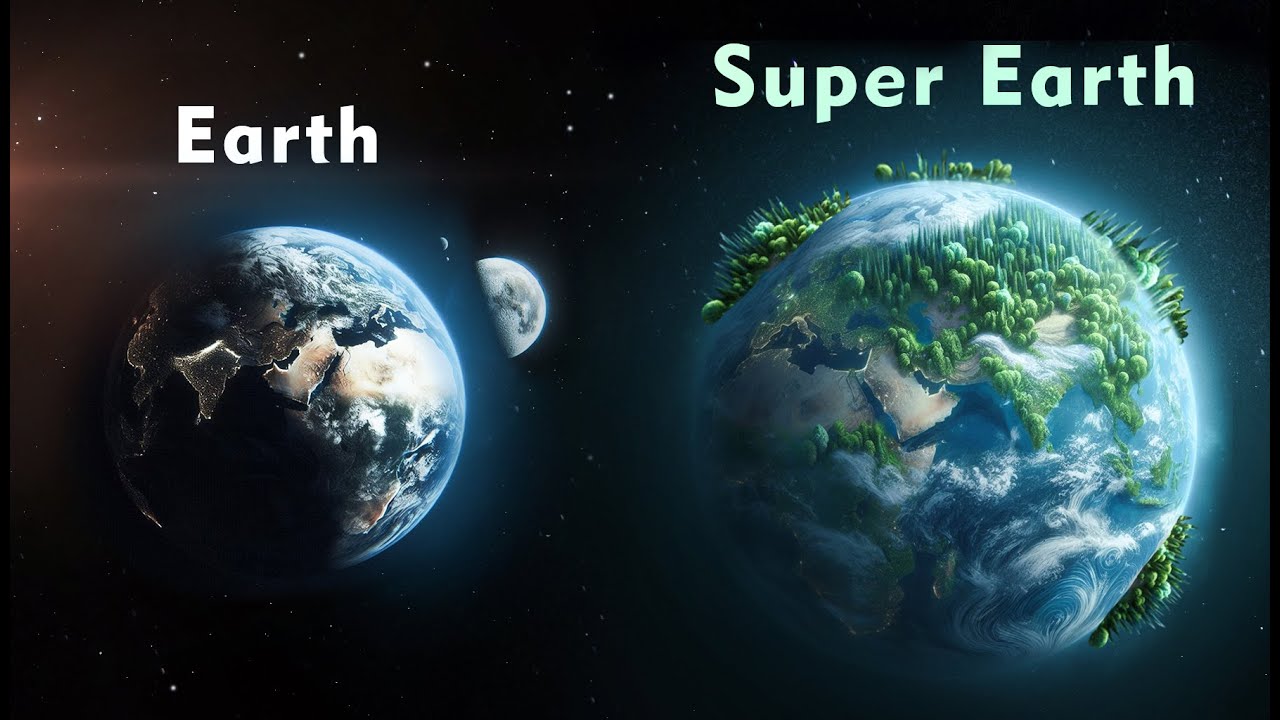
#k218b #superearth #earth2 | K2-18b is an exoplanet located about 124 light-years away from Earth in the constellation Leo. It's one of the many exoplanets discovered by the Kepler Space Telescope during its K2 mission.
Key Features:
Type: K2-18b is classified as a "mini-Neptune" or "sub-Neptune," which means it's larger than Earth but smaller than Neptune.
Radius and Mass: The planet has a radius about 2.6 times that of Earth and a mass about 8.6 times greater, indicating that it has a substantial atmosphere.
Host Star: The exoplanet orbits a red dwarf star (K2-18) that is smaller and cooler than our Sun. The star's lower temperature allows K2-18b to orbit closer to it while still being in the habitable zone.
Atmosphere and Potential Habitability:
Atmosphere: One of the most intriguing aspects of K2-18b is its atmosphere. Observations using the Hubble Space Telescope have detected water vapor in its atmosphere, making it one of the few exoplanets where water vapor has been confirmed.
Potential for Life: Despite the presence of water vapor, whether K2-18b can support life is still uncertain. The planet's atmosphere is likely rich in hydrogen, which is not ideal for life as we know it. Moreover, the exact surface conditions are unknown, but it's unlikely to be similar to Earth’s, given the difference in size, mass, and atmospheric composition.
Recent Developments:
In 2023, astronomers made further observations using the James Webb Space Telescope (JWST). They found additional details about the atmosphere of K2-18b, including possible indications of other molecules like methane and carbon dioxide, which could suggest some form of chemical processes happening on the planet, although this doesn't necessarily mean life exists there.
Orbit and Year Length:
K2-18b has an orbital period of about 33 days, meaning a year on K2-18b is only 33 Earth days long.
K2-18b's discovery and the subsequent studies have sparked significant interest in the scientific community, especially regarding the search for habitable worlds beyond our solar system.
#k218b #exoplanet #astronomy #spaceexploration #ExoplanetDiscovery
#astrobiology #jameswebbtelescope #HubbleSpaceTelescope
#minineptune #reddwarfstar #watervapor #alienworlds #HabitableZone
#spacescience #cosmos #superearth #planetaryscience #earthlikeplanet #earth2 #earth2point0 #newearth #secondearth #space #universe #cosmos #galaxies #outerspace #interstellar #cosmic #spacetime #theuniverse #kepler #kepler452b
K2-18b Super Earth, K2-18b Exoplanet Discovery, K2-18b Atmosphere Analysis, K2-18b Water Vapor Detection, K2-18b James Webb Telescope, K2-18b Habitable Zone, Life on K2-18b, K2-18b vs Earth, K2-18b Super Earth Explained, K2-18b Alien World, K2-18b Latest Discoveries, K2-18b and Red Dwarf Star, K2-18b Mini Neptune, Exploring K2-18b, K2-18b Astronomy News, K2-18b Super Earth in Tamil, James Webb Telescope in Tamil, Habitable Zone in Tamil, Life on K2-18b in Tamil, K2-18b vs Earth in Tamil, K2-18b Super Earth Explained in Tamil, Astronomy News in Tamil, #superearthintamil #vaanveli பூமியை போன்ற மற்றொரு கோள்
Regards,
Vaan Veli
Santhosh
Follows on Facebook : https://www.facebook.com/vaanveli1
Follows on Instagram : https://www.instagram.com/vaan_veli
Disclaimer:
This channel does not offer financial advice. All information on this channel is offered solely for educational and informational reasons.
