#nasa

Hi,
Apophis is an asteroid that gained attention due to initial calculations that suggested a small possibility of it colliding with Earth in the future. Let me provide you with some information about Apophis:
Discovery: Apophis, also known as 99942 Apophis, was discovered on June 19, 2004, by astronomers Roy A. Tucker, David J. Tholen, and Fabrizio Bernardi at the Kitt Peak National Observatory in Arizona, United States.
Size and Composition: Apophis is a near-Earth asteroid with a diameter of approximately 370 meters (1,210 feet). It is classified as a potentially hazardous asteroid (PHA) due to its proximity to Earth and its size.
Close Approach in 2029: The most significant event associated with Apophis is its close approach to Earth on April 13, 2029. At its closest point, Apophis will pass within about 31,000 kilometers (19,000 miles) of Earth's surface, which is closer than the orbit of some satellites. This will be the closest approach of an asteroid of this size on record.
Impact Risk: Initial observations and calculations led to some concern about a potential impact by Apophis in 2029 or subsequent flybys. However, further refined observations and analysis have ruled out any possibility of an impact in 2029. The chances of Apophis colliding with Earth in subsequent close approaches through the year 2100 have been estimated to be extremely low (less than 1 in 100,000).
Scientific Interest: Apophis remains of great scientific interest due to its close approach and potential for studying near-Earth asteroids. Scientists can use radar and other instruments to gather valuable data about its composition, structure, and orbit during the close encounter in 2029.
Mitigation Efforts: Although the risk of impact is extremely low, studying Apophis has led to increased efforts in developing asteroid detection and mitigation techniques. Organizations like NASA and other international space agencies actively monitor and study near-Earth asteroids to refine our understanding of their trajectories and potential risks.
Regards,
Vaan Veli
#asteroid #asteroidhittingearth #nasa #asteroidimpact #asteroidcollision #apophis #apophisasteroid #asteroidapophis2029 #asteroidapophis #apophis2029 #apophisegyptiangod #whatifapophishitsus #willapophishitus #willasteroidapophishitearthin2029 #whatwouldhappenifasteroidapophishitearth #howbigisasteroidapophis #99942apophis #whatifasteroidhitearth #earth #2029 #universe #vaanveli #tamil #whatif #apophisasteroidintamil #apophistamil #gk
Hi,
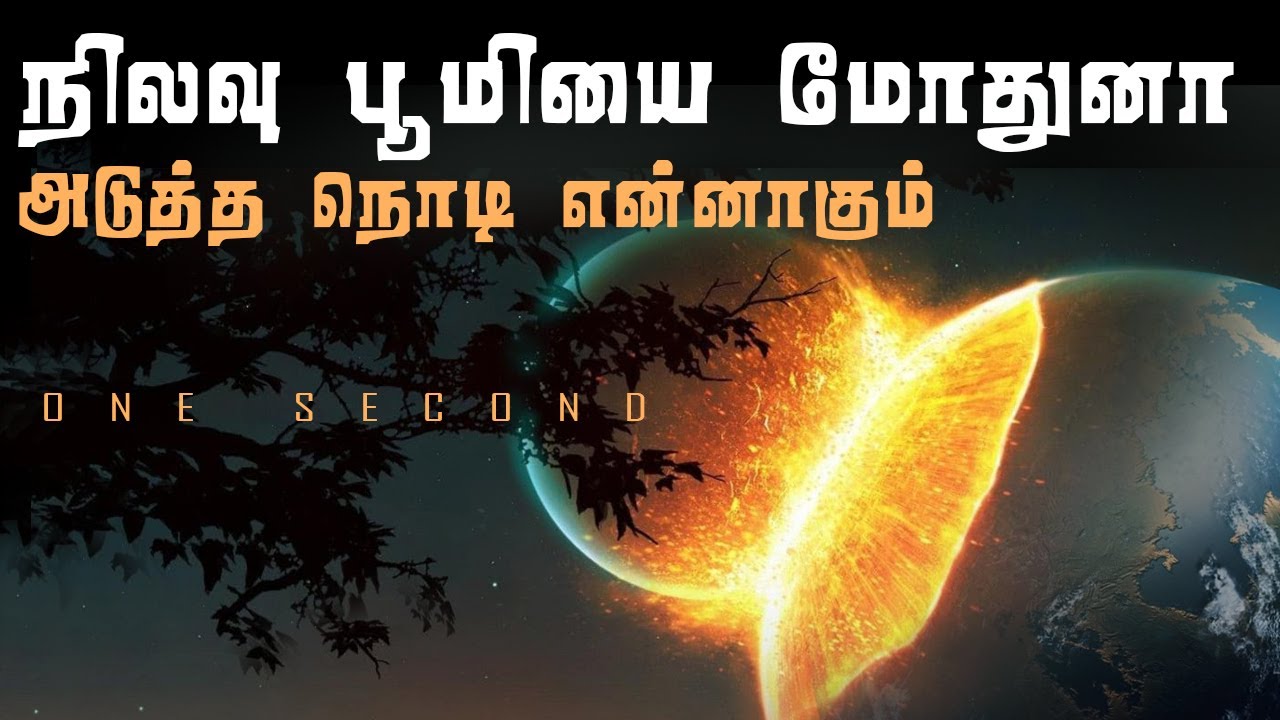
நிலவு பூமியை தாக்கினால் என்னாகும் ? What if Moon Hit us, Moon collide with the Earth
If the Moon were to collide with the Earth, it would have catastrophic consequences for both celestial bodies and life as we know it. Here's an overview of what could happen:
Massive Impact: The collision between the Moon and Earth would release an enormous amount of energy, equivalent to billions of atomic bombs. The impact would vaporize the Moon and cause widespread destruction on Earth.
Global Firestorms: The energy released from the impact would generate intense heat, triggering global firestorms. The Earth's surface would be engulfed in flames, leading to widespread wildfires that could consume entire continents.
Atmospheric Disruption: The impact would also result in a massive release of dust, debris, and molten rock into the atmosphere. This would block sunlight and cause a significant reduction in global temperatures, leading to a phenomenon similar to a nuclear winter.
Tsunamis: The collision would generate colossal tsunamis that would sweep across the oceans, reaching coastal areas and causing devastation. Entire coastal cities would be wiped out, and inland regions might also experience flooding due to the displacement of water.
Extinction-Level Event: The combined effects of the impact, firestorms, atmospheric disruption, and tsunamis would likely result in a global extinction event. The catastrophic changes to the environment would make it extremely difficult for most life forms to survive.
Regards,
VaanVeli
Santhosh
#moon #nasa #moonimpact #mooncollidewithearth #mooncollision #moonhit #moonhitus #moonhitearth #moondestroyed #moondestroyearth #whatif #whatifmoonhitus #whatifmoondestroyed #moongravity #earth #universe #earthcollision #earthandmoon #spacevideo #collisionearth #collisionmoon #tamil #mooncollisionintamil #moontamil #moonhitusintamil #tsunami #earthquake #whatwillhappenifmoonhitus #nilavu #moonfacts #moonfactsintamil #gk #lunar #vaanveli #whatifmoonhitus #nilavu #nilavuboomiyaithaakinal

1000 வருடத்திற்கு மேல் பூமியில் சூரிய ஒளி இல்லாமல் போனால் என்ன நடக்கும் தெரியுமா ? பூமியில் பெரிய எரி கல்லோ அல்லது பெரிய எரிமலையோ வெடித்தால் என்ன நடக்கும் என்பதை காட்டி உள்ளோம், அனைவரும் பார்த்து தங்களின் கருதுக்களை தெரிவிக்கலாம் நன்றி .
What If There was No Sunlight to Earth?
If there was no sunlight reaching Earth, the consequences would be catastrophic for life as we know it. Sunlight is essential for numerous biological and physical processes on our planet. Here are some of the major impacts:
Loss of Photosynthesis: Sunlight is crucial for photosynthesis, the process by which plants and some bacteria convert light energy into chemical energy to produce food. Without sunlight, photosynthetic organisms would be unable to survive, leading to the collapse of the entire food chain.
Ecosystem Disruption: The extinction of plants would result in the extinction of herbivores that rely on them for sustenance. This, in turn, would affect carnivores and other predators in the ecosystem. The disruption would likely cause a mass extinction event.
Temperature Drop: The Sun's energy is responsible for heating the Earth's surface. Without sunlight, the planet would rapidly cool down. The temperature drop would be drastic, leading to extremely cold conditions, especially in areas away from geothermal heat sources.
Loss of Atmospheric Circulation: Sunlight plays a crucial role in driving atmospheric circulation, which includes the formation of weather patterns and wind currents. Without sunlight, the atmosphere would become stagnant, resulting in the loss of weather systems and wind patterns.
Darkness: Obviously, the absence of sunlight would plunge Earth into darkness. The sky would be devoid of the typical blue color, and daylight-dependent activities would become impossible.
Disruption of the Water Cycle: Sunlight provides the energy required for the evaporation of water, which is an essential component of the water cycle. Without sunlight, the water cycle would slow down significantly, affecting rainfall patterns, freshwater availability, and overall climate stability.
Impact on Human Life: Humans, along with other organisms, depend on sunlight for vitamin D synthesis, which is crucial for bone health. The absence of sunlight would lead to widespread vitamin D deficiencies, resulting in health issues. Additionally, agriculture, which heavily relies on sunlight, would be severely affected, leading to food shortages and famine.
Regards,
VaanVeli
#volcano
#earthquake #earth #planets #extinction #clouds #பூமி #volcano #earthquake #planets #extinction #clouds #universe #galaxy #cloud #disaster #vaanveli #animals #explosion #earthattack #climatecrisis #climate #globalwarming #savetheworld #science #dangeredspecies #savetheplanet #sustainability #dinosaurs #environment #extinction #dinosaur #climatechange #wildlife #nature #extinction #supervolvano #yellowstone #asteroid #whatif #earth #whathappensif #nasa #top5 #space #universe #solarsystem #tamil #extinciondinosaurios #shorts

Welcome to VaanVeli,
பிரபஞ்சத்தின் மிகப்பெரிய கருந்துளை | TON 618 Ultra Massive Black Hole
In this video, we'll be talking about the TON 618 Ultra Massive Black Hole, one of the most fascinating things in the universe!
This video is for those of you who want to know everything there is to know about the TON 618 Ultra Massive Black Hole. From its size to its history, this video will tell you everything you need to know about this fascinating object!
If you're curious about the universe and what's out there, Black holes are so mysterious and strange that they've been the subject of many movies and stories over the years. If you're interested in science or just fascinated by the universe,
This amazing object is something you don't want to miss out on!
Not only will we be discussing the black hole itself, but we'll also be giving you a tour of the Supermassive black hole factory. This is an amazing place that will leave you wanting more! So buckle in, because this is one video you don't want to miss!
Regards,
Vaan Veli
[Santhosh]
#supermassiveblackhole #isrotamil #blackhole #கருந்துளை #ton618ultramassiveblackhole #ton618 #ton618blackhole #blackholetamil #blackholeintamil #largestblackhole #biggestblackhole #massiveblackhole #ultramassiveblackhole #blackholecomparison #warmhole #karunthulai #whatisblackhole #blackholeexplained #vaanveli #vaanveli #gk #whatif #universe #earth #ton618tamil #blackholevswhitehole #nasa #space #gravity #sunset #eventhorizon #blackholes #tamil

Hi,
பூமியின் தங்கச்சி விடிவெள்ளி,
Venus is the second planet from the Sun and is commonly referred to as Earth's "sister planet" due to its similar size and composition. It is the closest planet in our solar system to Earth.
Venus is quite comparable to Earth in size, with a diameter of around 12,104 kilometres (7,521 miles), making it the second-largest terrestrial planet after Earth.
Extreme Surface Temperature: The surface of Venus is extremely hot, with temperatures reaching over 900 degrees Fahrenheit (475 degrees Celsius). Despite being further from the Sun, this is hotter than the surface of Mercury.
Venus has a thick and dense atmosphere that is mostly made up of carbon dioxide (approximately 96.5%) with traces of sulphur dioxide and nitrogen. This atmosphere has a high greenhouse effect, trapping heat and contributing to the planet's severe temperatures.
Venus revolves on its axis in the opposite direction as the majority of the planets in our solar system, a phenomenon known as retrograde rotation. It rotates slowly, taking approximately 243 Earth days to complete one rotation, thus its day (one full day-night cycle) is actually shorter than its year (approximately 225 Earth days).
No Moons or Rings: Unlike many other planets in our solar system, Venus has no moons or rings.
Volcanic Activity: It is thought that Venus had a geologically active history with substantial volcanic activity. Its surface is covered in numerous of volcanoes, including the colossal Maxwell Montes, Venus's tallest peak.
Extreme Pressure: The pressure on Venus's surface is approximately 92 times that of Earth's surface, which is similar to the pressure found 900 metres (3,000 feet) underwater on Earth.
Venus has no liquid water on its surface because of its high temperatures and dense atmosphere. Any water that existed in the past is likely to have evaporated and escaped into space.
Exploration of Spacecraft: Several spacecraft have been despatched to Venus to examine its surface and atmosphere. In the 1990s, NASA's Magellan mission utilised radar to map the planet's surface in great detail, revealing features such as volcanoes and enormous highland regions.
Future Exploration: Future missions to Venus were planned as of my last information update in September 2021, including NASA's VERITAS (Venus Emissivity, Radio Science, InSAR, Topography, and Spectroscopy) and ESA's EnVision missions. These missions aim to learn more about Venus and its geology.
Regards,
Vaan Veli
Santhosh
Follows on Facebook : https://www.facebook.com/vaanveli1
Follows on Instagram : https://www.instagram.com/vaan_veli
#vaanveli #vaan_veli #universe #solarsystem #earth #tamil #venus #venustamil #venusfacts #venusplanet #solarsystemplanets #venusfactsintamil #venusplanetintamil #twinsister #hottestplanetinsolarsystem #planetvenus #lifeonvenus #space #venussurface #nasa #science #factsaboutvenus #venusphoto #planet #volcanoes #volcano #volcanoonvenus #venustemperature #venusmission #vidivelli #vidivellinatchathiram #velligraham #whatisvidivelli #வீனஸ் #வீனஸ்கிரகம் #graham #twinsisters #whoisthesisterofourearth #earthsister #brightestplanet #brightestplanetinoursolarsystem

Hi,
In this video, we're going to talk about Super Earth, a planet that's better than Earth. We'll discuss the advantages of living on Super Earth, and why you should want to live on this planet.
If you're looking for a better planet to live on, then you should check out Super Earth. Super Earth has a lot of advantages over Earth, including a much better environment and a much higher standard of living. In this video, we'll discuss these advantages and why you should want to live on Super Earth!
Regards,
Vaan Veli
Santhosh
Follows on Facebook : https://www.facebook.com/vaanveli1
Follows on Instagram : https://www.instagram.com/vaan_veli
#betterthanourearth
#பூமியைபோன்றகோள்கள்
#பூமி
#betterthanearth
#superearthplanet #superearthnewplanetsfound #nasa #earth #superearth #exoplanet #space #whatif #science #keplerplanet #planet #planets #theuniverse #exoplanets #habitableplanets #earthlikeplanets #earthlikeplanet #exoplanetslikeearth #superearth2.0 #superearthtamil #superearthplanettamil #exoplanettamil #howmanyexoplanetsarethere #aliens #habitablezone #tamil #vaanveli #gk #gktamil #top10superearth #kepler454b #earth2 #betterthanearth #earthtamil #blackhole #moon #solarsystem #volcano #earth2.0
![பிரபஞ்சத்தின் ஆபத்தான கிரகங்கள் [ Dangerous Planets in the Universe ]](https://i.ytimg.com/vi/BPJrTX03g4k/maxresdefault.jpg)
பிரபஞ்சத்தின் ஆபத்தான கிரகங்கள் [ Top Dangerous Planets in the Universe ]
In this video, we're going to be talking about some of the most dangerous planets in the universe!
From Venus to Neptune, these planets are full of dangerous elements and hazards that could potentially kill you if you were to visit them. So if you're thinking of traveling to any of these planets, be sure to research them first!
By the end of this video, you'll know everything you need to know about the dangerous planets in the universe!
Regards,
Vaan Veli
#nasa #facts #space #whatif #jupiter #earth #universe #solarsystem #cosmos #stars #planets #planets #exoplanet #dangerousplanetsdocumentary #venus #corot-7b #gliese436b #planetjensen #gianthd1897 #hd80606b #kelt9b #kepler78b #wasp12b #terribleplanets #topplanetslikeearth #earth2 #dangerousplanets #topplanets #planetlikeearthdiscovered #planetsfacts #gk #planetscience #nasadartmission #nasadart #planetstamil #vaanveli #tamil #scienetamil #blackhole
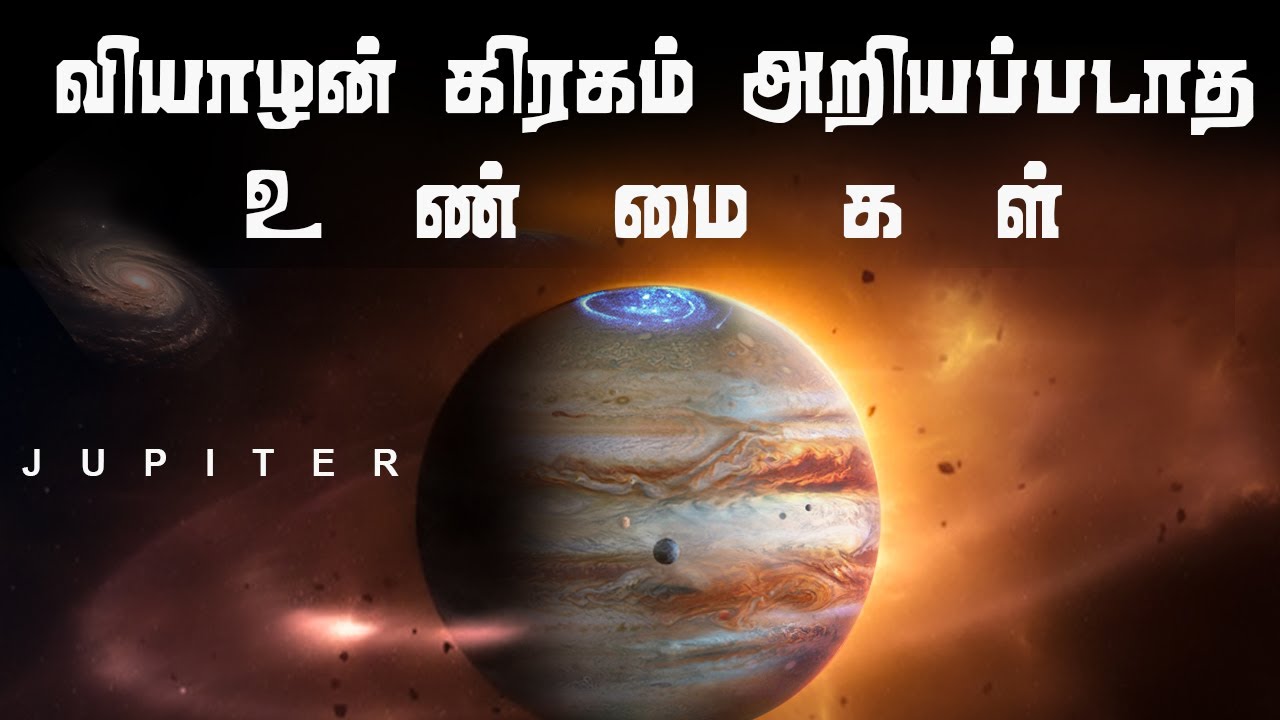
In this video we’re going to see about one of the largest planets in the solar system, The Jupiter (King of the Planet).
Jupiter
Jupiter is fifth planet from the Sun and the largest in the Solar System, the most seasoned and most monstrous world in the nearby solar system. Find out about the planet's history, its Extraordinary Red Spot and maritime moons, and what this antiquated world meant for the development of the solar system's different planets.
The Jupiter ring is divided into three parts. The deepest part is called hello. The middle of the ring is the brightest part. The outermost part of a ring is called a gossamer ring. This ring extends up to 225,000 kilometers from the planet and is 2,000-12.500 kilometers thick.
King of Solar System
The King of the planet, Jupiter, a colossal world that scientists believe can help us better understand the origin of the solar system.
Nine automated rocket have visited the gas planet up until this point, two of which entered into outer space (orbit), permitting us to concentrate on its perplexing, emotional environment more than ever.
The mystery of Jupiter
Yet, Jupiter, actually holds numerous secrets, for example, what lies underneath its strange mists and to jump considerably more profound, what is at its center? Go on an outing within the nearby planet groups biggest planet and figure out researchers' thought process is happening down there, it's very bizarre.
Jupiter is the largest planet in our solar system and one of the most interesting. In this video, we'll explore what Jupiter is, what the Jupiter Red Spot is, and how to learn more about it.
Jupiter is a big planet and you can learn a lot about it by reading articles and watching videos. In this video, we'll provide a basic overview of Jupiter and its many strange and interesting features. Be sure to check out the Jupiter Red Spot for yourself and see for yourself just how amazing this planet is!
Regadrs,
Vaan Veli.
#jupiter #jupiterascending #jupitermoon #lifeonjupiter #nasa #viyalankiragam #jupiterintamil #jupiterfactsintamil #aboutjupiter #jupiterfacts #solarsystem #planetjupiter #biggestplanet #space #cosmology #jupitertamil #whatif #tamil #planets #spacescience #jupiterplanet #planetjupiter #intamil #jupiterplanetexplained #explainjupiter #jupitermass #earthvsjupiter #jupiterstar #iomoon #howmanymoonsinjupiter #europa #ganymede ede #callisto #vaanveli #gk
Subscribe செய்யாமல் வீடியோ பார்ப்பவர்கள் : Not subscribed 96.6%
Subscribe செய்து வீடியோ பார்ப்பவர்கள் : Subscribed 3.4%
நீங்கள் எங்களுக்கு கொடுக்கும் ஆதரவினால் மட்டுமே நாங்கள் உங்களுக்கு தொடர்ந்து இன்னும் சிறந்த விடீயோக்களை உற்சாகத்துடன் பதிவிடமுடியும் நன்றி 🙏
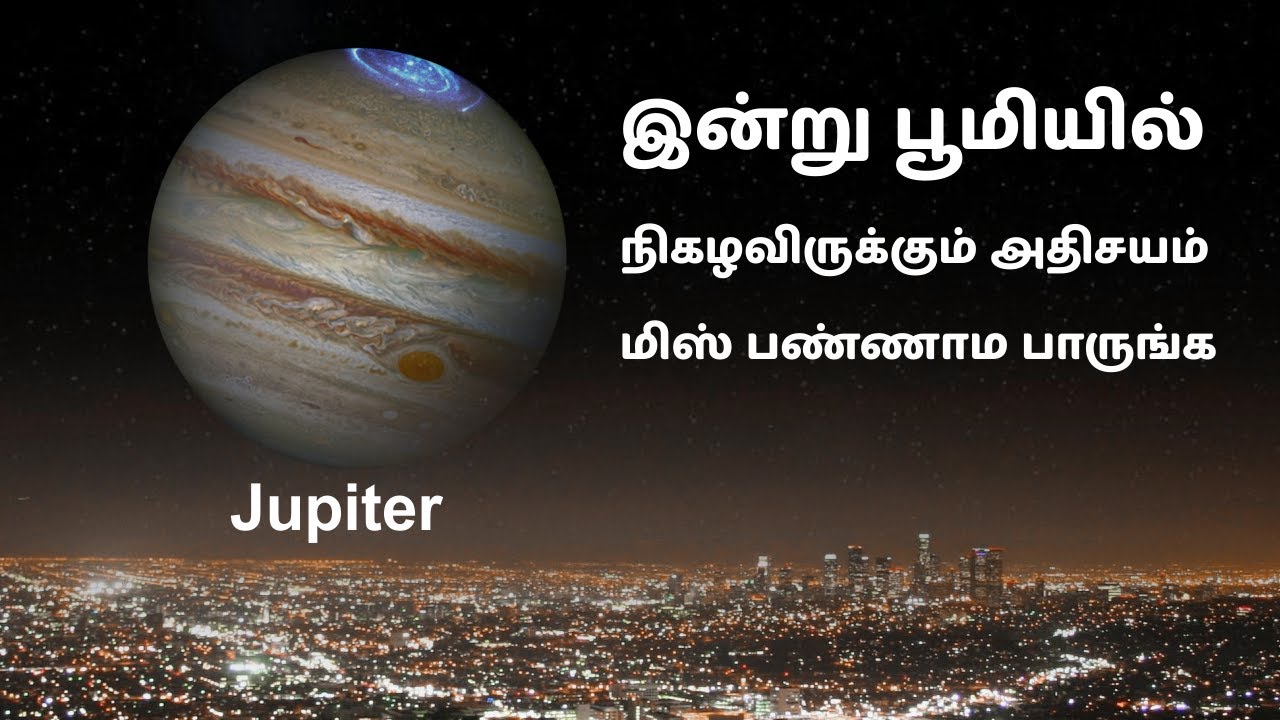
The Solar System’s largest planet Jupiter will hang in the skies later this month as it comes closest to Earth in nearly 70 years.
Jupiter will be closer to Earth than usual on September 26.
According to NASA, this will be the nearest the largest planet in the solar system has been to Earth in nearly six decades.
Scientists say Jupiter will appear bigger and brighter because it will “only” be 367 million miles away. That’s almost half the distance the planet is from the Earth at its farthest.
Experts say the best place to get a view of Jupiter on Monday will be a highly elevated spot in a dark and dry area.
Regards,
Vaanveli.
#jupiter #nasa #solarsystem #earth #whatif #planets #moon #thesun #jupitertomorrow #howclosejupitercomestoearth #todayjupiter #jupitertonightinthesky #jupitertoday #jupitertodaylive #jupitertamil #vyalan #vyalantamil #tamil #veenveli #earthtojupiterdistance #videoofjupiter #photosofjupiter #jupitervideo #gk #live #jupiternews #jupiterandearth #earthandjupiter #distance #howtoseejupiterfromearth #howclosejupiter #wheretoseejupiter #science #earth #news #tamilnews

Hi Everyone,
In this video, we'll explore the life cycle of a neutron star. We'll learn about the power of a neutron star and how it can help us explore the universe!
neutron star life cycle and the power of neutron star
We'll explore the neutron star life cycle and see how the power of a neutron star can influence the evolution of planets and even human beings!
In this video, we'll explore the life cycle of a neutron star. We'll learn about the power of a neutron star and how it can help us explore the universe! We'll see how a neutron star's magnetic field can generate the most powerful bursts of energy in the universe, neutron stars are the smallest and most dense stars in the universe, and they're incredibly strange and mysterious. In this video, we'll explore their life cycle and the power they hold, including their ability to exploded and cause devastating phenomena like supernovae and how this energy can be used to study the origins and evolution of the universe.
we'll explore the life cycle of a neutron star and the incredible power they hold.
Neutron Star Life Cycle | What is Neutron Star? | நியூட்ரான் நட்சத்திரம்
#neutronstar #astronomy #neutronstars #neutronstarintamil #space #neutronstarcollision #nasa #whatif #science #sun #explosion #fusion #universe #blackhole #star #supernova #hydrogen #helium #pulsars #whitedwarf #neutrontamil #redgiantstar #starlifecycyle #neutronstarlifecycle #whatneutronstarmade #howneutronstarbecome #starlifecycleintamil #gk #vaanveli #neutronstartypes #neutronstarweight #neutronstartemperature #tamil #நியூட்ரான்நட்சத்திரம் #starfacts
![விண்வெளியில் சடலங்கள் [ Truth Behind Animals Sent To Space ]](https://i.ytimg.com/vi/pTw015OmDs0/maxresdefault.jpg)
Truth Behind Animals Sent To Space,
Laika was a normal street dog in Russian country, The aim was to find out how long a dog can survive in space. On 3 November 1957 russians launched Laika into space inside a spacecraft named Sputnik-2. It was a one way ticket for laika because there was no way to bring her back to Earth. Space has no boundaries. You must admit that there is something incredibly attractive and mysterious in this dark surrounding our earth, Some of these interesting facts are amazing yet terrifying at the same time. i am really feld bad about the innocent animals that really what happend to them in the history.
Regards,
VaanVeli
#mystery #blackhole #minutesmystery #spacemysteries #spacemysteryintamil #spacemysteriousfacts #spacesnakeintamil #spacedeadbodies #spacedeadbody #விண்வெளியில்சடலங்கள் #spacesnake #nasa #ufo361 #space #aliens #alien #tamil #vaanveli #alientamil #spacenewstamil #spacefactsintamil #spacefacts #animalsinspace #laikaspacedog #doginspace #scaryspacephoto #alienship #moon #moontravel #neilarmstrong #truthbehindanimalssenttospace #gk #whatif #earth #laika #dog #dogs #snake #snakes #snakevideo #space #earth #moon #tamil #milkyway #sciencetamil #astronaut #spaceship #spacex #spacedog #spacesnake #top10 #spacenews #newstamil #tamilnews

In this video, we're going to reveal some unbelievable secrets about Pluto. From its size to its atmosphere, we're going to go over everything you need to know about this fascinating planet!
Don't believe the myths about Pluto, learn the truth about this unusual planet in this amazing video! From its size to its atmosphere, we're going to reveal all of the unbelievable secrets about Pluto! Thanks for watching!
Regards,
VaanVeli
Santhosh
#pluto #solarsystem #nasa #plutoplanet #nasapluto #facts #space #science #universe #planet #galaxy #planets #orbit #dwarfplanet #pluto'sheart #plutoice #moonpluto #plutodwarfplanet #plutoplanetintamil #whatif #vaanveli #plutotamil #planetsintamil #solarsystemplanetsintamil #vaanveli #tamil #isplutoaplanet #photoofpluto2022 #latestphotosofpluto #plutoisaplanet #nasarevealspluto #amazingfactsaboutpluto #plutofacts #plutofactsintamil
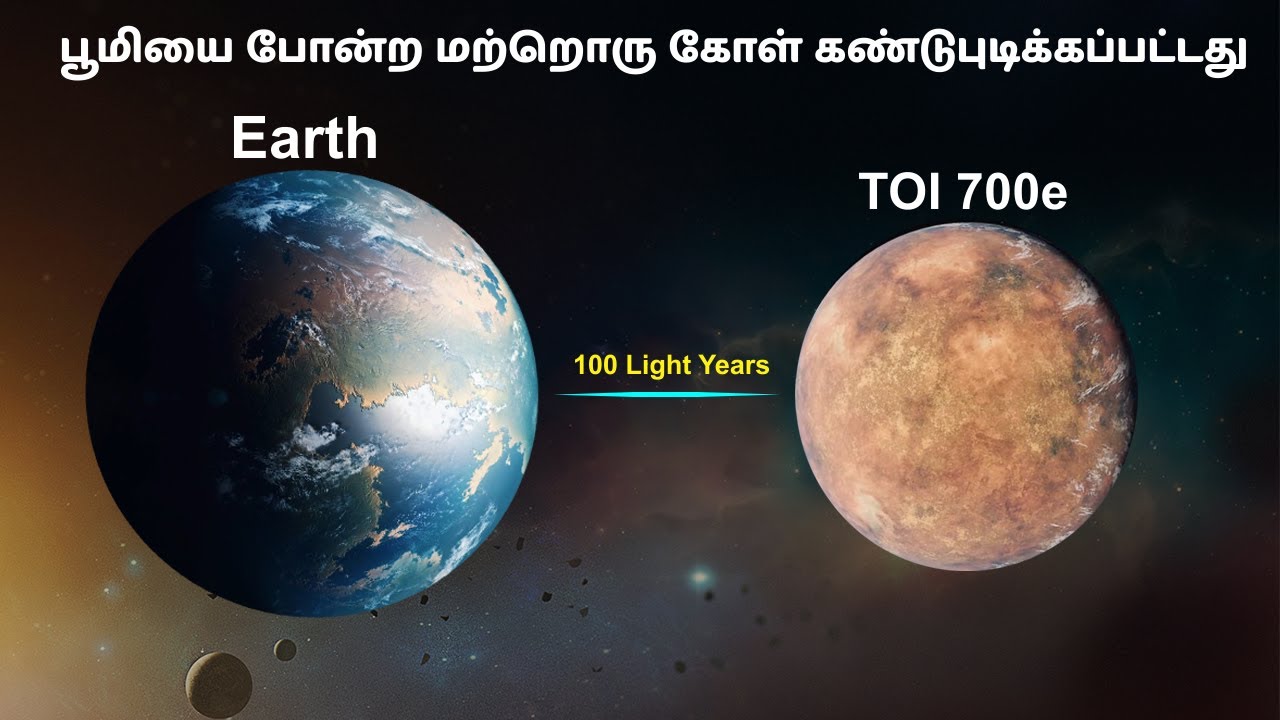
TOI 700 e is the latest planetary discovery in this solar system. In 2020, three other planets were also found orbiting the star TOI 700. Named TOI 700 b, TOI 700 c and TOI 700 d, they too are believed to orbit within the so-called optimistic habitable zone.
TOI 700 is a red dwarf 101.4 light-years away from Earth located in the Dorado constellation that hosts TOI 700 d, the first Earth-sized exoplanet in the habitable zone discovered by the Transiting Exoplanet Survey Satellite.
TOI-700 d is a super Earth exoplanet that orbits an M-type star. Its mass is 1.25 Earths, it takes 37.4 days to complete one orbit of its star, and is 0.1633 AU from its star. Its discovery was announced in 2020.
Regards,
Vaan Veli
#nasa #earth #superearths #space #whatif #science #planets #planets #universe #exoplanets #habitableplanets #earthlikeplanets #superearth2.0 #superearthtamil #superearthplanettamil #exoplanettamil #howmanyexoplanetsarethere #habitablezone #tamil #vaanveli #gk #earth2.0 #betterthanearth #earthtamil #newearth #earth2 #intamil #toi700e #toi-700e #toi700 #toi700esuperearth #toi700eplanet #toi700star #toi700eintamil #toi700esize #toi #vaanveli

Hi Everyone,
What If We Nuke a Volcano ? எரிமலைக்குள் NUCLEAR BOMB வீசினால் என்ன நடக்கும் ?
Are you curious to see what would happen if we nuked a volcano? In this video, we'll see the effects of a hypothetical nuke detonation on a volcano.
This video is a educational tool to help you understand the dangerous consequences of nuking a volcano. By watching, you'll learn about the science behind volcanoes, and the risks associated with detonating a nuclear bomb near one.
Watch this video and find out! This is a fascinating look at the effects of nuking a volcano, and it's definitely worth watching if you're curious about the consequences of human activity on the environment.
it's important to study it to understand how volcanoes work.
don't miss out – watch the video now!
Regards,
Vaan Veli
#whatif #volcano #whathappensif #whatifwenukeavolcano #nukeavolcano #nuclear #nuclearbomb #nuclearbombvideo #volcanoblast #volcanoexplosion #largestvolcano #activevolcano #nukevsvolcano #nuclearbombvsvolcano #volcanovsnuclearcomparison #canwenukeavolcano #whatwillhappenifwenukeavolcano #volcanovsnucleartamil #nucleartamil #volcanotamil #whatifwenukeavolcanointamil #vaanveli #gk #tamil #science #nasa #எரிமலைக்குள்அணுகுண்டுவீசினால்
