#oceanmonsters

Unbelievable Deep Sea Animals You Won’t Believe Are Real | உலகின் மிகவும் வித்தியாசமான கடல் உயிர்கள்
🌊 ஆழ்கடலில் வாழும் விசித்திர உயிரிகள்! 🐙🦈
உலகில் இன்னும் நமக்குத் தெரியாத, நம்ப முடியாத வகை உயிரினங்கள் ஆழ்கடலில் வாழ்ந்துகொண்டிருக்கின்றன. இவைகள் சில, முதன்முறையாக உங்கள் பார்வைக்கு! சில மீன்கள், சில அக்டோப்பஸ்கள், சில ஜெல்லி மீன்கள் — எல்லாம் மிக வித்தியாசமாகவும், சில நேரங்களில் பயமுறுத்தும் தோற்றத்துடனும் இருக்கின்றன.
🦷 Fangtooth
Despite its terrifying teeth and looks, the fangtooth is small and harmless to humans.
🌊 Jellyfish
Jellyfish have floated through oceans for over 500 million years, some even glow in the dark.
🐟 The Sea Toad
Also called the coffinfish, it waddles on the seafloor and inflates like a balloon.
🪱 Siphonophores
These glowing, colony-based creatures can grow over 150 feet long.
Each part of their body has a specialized role like feeding or movement.
🐙 The Flapjack Octopus
This deep-sea octopus flaps through water with ear-like fins and looks cartoonishly cute.
💎 Comb Jelly (Ctenophore)
Comb jellies shine with rainbow light from tiny moving hairs called cilia.
🎣 Anglerfish
The female anglerfish uses a glowing lure to attract prey in total darkness.
👀 Barrel Eye
This fish has a see-through head and eyes that look straight up or forward.
😶 Blobfish
Often called the ugliest fish, it appears saggy only outside its deep-sea home.
☠️ Portuguese Man O’ War
This venomous surface drifter is a colony of organisms, not a true jellyfish.
🪨 The Stonefish
Camouflaged and deadly, it hides among rocks and delivers fatal venom in seconds.
🐘 Dumbo Octopus
This adorable creature swims using flappy ear-like fins deep below the ocean.
🦈 Frilled Shark
With 300 sharp teeth and a serpent-like body, it's a true "living fossil."
🐍 Black Swallower
It can gulp prey 10 times its size using an elastic stomach.
🥒 Sea Cucumber
Found on the ocean floor, it recycles waste and keeps the seafloor clean.
Regards,
Vaan Veli
Santhosh
Strangest Animals in the Ocean Depths,
Real-Life Sea Monsters Discovered,
World's Weirdest Deep Ocean Creatures,
fangtooth fish,
deep sea predator,
deep sea creatures,
terrifying fish,
abyssal fish
jellyfish facts, bioluminescent jellyfish, deep sea jellyfish, jellyfish species, jellyfish sting
sea toad fish, coffinfish, deep sea fish, benthic creatures, deep sea ambush predator
siphonophore colony, deep sea siphonophore, longest sea creature, bioluminescent siphonophore
flapjack octopus, deep sea octopus, cute octopus species, umbrella octopus, deep sea mollusk
comb jelly facts, ctenophore, bioluminescent marine life, deep sea comb jelly, marine invertebrates
anglerfish lure, deep sea anglerfish, bioluminescent fish, anglerfish facts, deep sea predator
barreleye fish, transparent head fish, deep sea fish, barrel eye vision, unique sea creatures
blobfish facts, deep sea blobfish, ugliest fish, blobfish habitat, deep sea creatures
Portuguese Man O’ War, venomous sea creature, siphonophore, jellyfish-like creature, marine stinger
stonefish venom, most venomous fish, reef stonefish, stonefish camouflage, marine toxins
dumbo octopus, deep sea octopus, cute sea creatures, dumbo octopus facts, deep ocean mollusk
frilled shark, living fossil shark, deep sea shark, frilled shark facts, prehistoric sea creatures
black swallower fish, deep sea predator, fish that swallows large prey, deep sea oddities
sea cucumber facts, deep sea invertebrates, ocean floor cleaners, echinoderms, marine detritivores
#ஆழ்கடல் #மர்மஉயிர்கள் #கடலுயிரினங்கள் #deepsea #tamilscience #oceanmystery #seacreatures #தமிழ்வீடியோ #scienceintamil #fangtoothfish #deepseapredator #terrifyingfish #abyssalcreatures #OceanNightmares
#jellyfish #bioluminescentjellyfish #deepseajellyfish #oceanlife #MarineInvertebrates
#seatoad #coffinfish #deepseafish #benthiccreatures #oceanoddities
#siphonophore #deepseacreatures #bioluminescentlife #oceangiants #MarineColonies
#flapjackoctopus #deepseaoctopus #cuteseacreatures #umbrellaoctopus #oceanmollusks
#combjelly #ctenophore #bioluminescentcreatures #deepsealife #MarineInvertebrates
#anglerfishing #deepseapredator #bioluminescentfish #oceanmonsters #marinelife
#barreleyefish #transparentfish #deepseacreatures #oceanmysteries #marinebiology
#blobfish #deepseacreatures #ugliestfish #oceanlife #MarineOddities
#portuguesemanowar #venomousseacreature #siphonophore #oceanhazards #marinelifes
#stonefish #venomousfish #reefhazards #marinetoxins #oceandanger
#dumbooctopus #deepseacreatures #cutesealife #oceanmollusks #marinebiology
#frilledshark #livingfossil #deepseashark #prehistoriccreatures #oceanpredators
#blackswallower #deepseapredator #oceanoddities #marinelifeexploration #seacreatures
#seacucumber #oceancleaners #deepseainvertebrates #marinelifewonders #echinoderms
follows on Facebook : https://www.facebook.com/vaanveli1
Follows on Instagram : https://www.instagram.com/vaan_veli
Disclaimer:
This channel does not offer financial advice. All information on this channel is offered solely for educational and informational reasons.
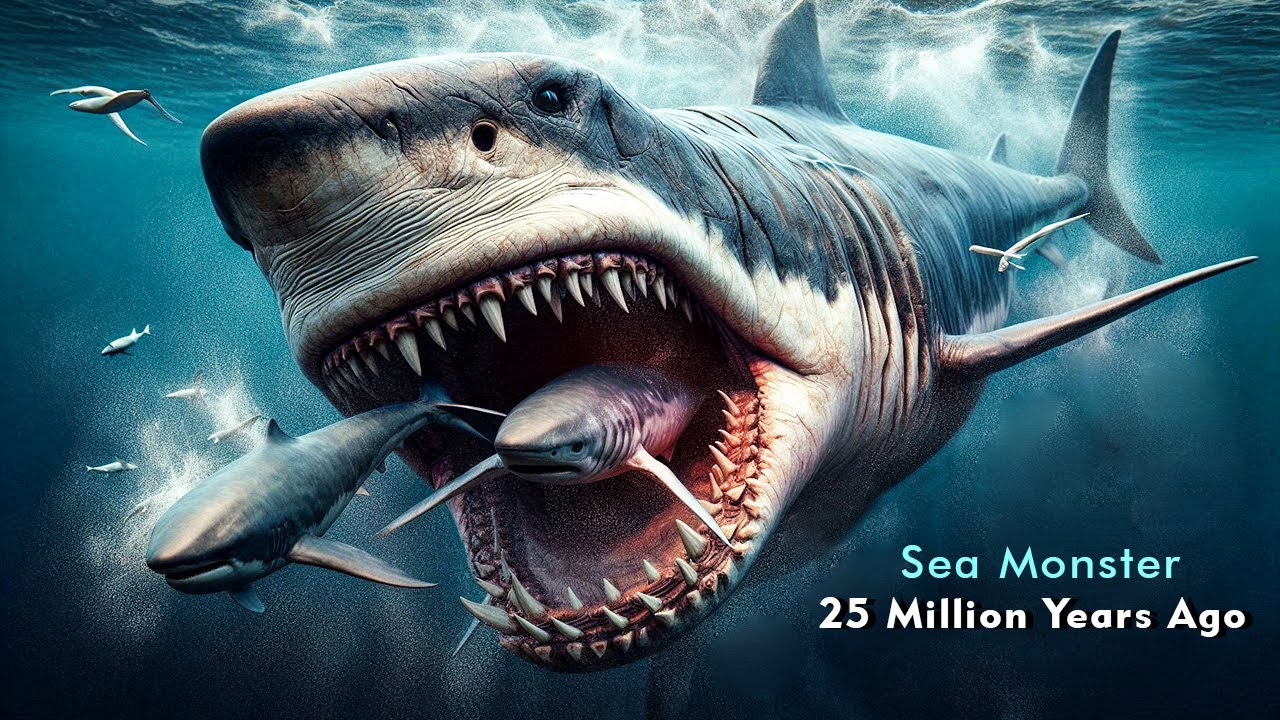
The Megalodon lived approximately 23 to 3.6 million years ago during the Miocene to Pliocene epochs. Here are some top facts about this ancient sea monster: பெரும்பல்லன் சுறா, ஓட்டோடஸ் மெகாலோடான்
1. Size and Scale
The Megalodon is estimated to have grown up to 60 feet (18 meters) in length, making it the largest shark to have ever lived. Some estimates suggest it could have been even larger.
Its jaws were so massive that they could open up to 10 feet wide, enough to swallow two adult humans side by side.
2. Teeth
Megalodon had some of the largest teeth of any known species, with individual teeth reaching over 7 inches (18 cm) in length.
It had about 276 teeth arranged in five rows, and it could lose and replace thousands of teeth over its lifetime.
3. Diet
As an apex predator, Megalodon primarily fed on large marine mammals, including whales, dolphins, and large fish.
Its powerful jaws could exert a bite force estimated to be around 40,000 pounds per square inch (psi), strong enough to crush the bones of its prey.
4. Habitat
Megalodon lived in warm, shallow seas around the world. Fossil evidence has been found on every continent except Antarctica.
It is believed to have preferred coastal areas where it could easily hunt large prey.
5. Fossil Evidence
Most of what we know about Megalodon comes from fossilized teeth, which are commonly found in various locations worldwide.
Fossils have been discovered in regions such as North America, South America, Europe, Africa, and Australia.
6. Extinction
Megalodon went extinct around 3.6 million years ago, likely due to a combination of factors such as climate change, declining sea levels, and the disappearance of its primary prey.
The cooling of the oceans during the Pliocene era may have also played a significant role in its extinction, as the species was adapted to warmer waters.
7. Myths and Misconceptions
Despite some sensational claims, there is no scientific evidence that Megalodon still exists today. The idea that it could be lurking in the deep oceans is largely a myth popularized by movies and television shows.
Some mistaken sightings of large sharks have been attributed to the Megalodon, but these are usually cases of misidentification or exaggeration.
8. Cultural Impact
Megalodon has captured the public’s imagination and has been featured in numerous documentaries, movies, and books.
The 2018 movie "The Meg" is one of the most popular representations of this giant shark
9. Scientific Research
Ongoing research into Megalodon’s fossils continues to provide insights into its life, behavior, and reasons for extinction.
The study of Megalodon contributes to our understanding of ancient marine ecosystems and the evolutionary history of sharks.
10. Comparison with Modern Sharks
While the Great White Shark is often compared to the Megalodon, the latter was much larger and more powerful.
Some theories suggest that the evolution of more efficient predators, like the Great White, may have contributed to Megalodon’s extinction by outcompeting it for food sources.
Megalodon in tamil,
மெகாலோடான் Ancient sea monsters,
அழிந்துபோன கடல் அரக்கன் Megalodon,
Megalodon facts in tamil
Prehistoric monster Megalodon,
Megalodon shark history in tamil,
Ancient Megalodon shark,
Prehistoric shark Megalodon in tamil,
Megalodon sea monster,
Megalodon shark facts,
Prehistoric shark documentary,
Megalodon fossil discovery,
Megalodon extinction in tamil,
Megalodon shark size in tamil,
Prehistoric ocean predators in tamil,
Megalodon vs modern sharks in tamil,
Megalodon shark teeth in tamil,
Giant prehistoric shark in tamil,
Megalodon shark attack in tamil,
History of Megalodon in tamil,
Prehistoric marine monsters,
Megalodon shark myths,
Megalodon shark fossils,
Ancient sea monsters in tamil,
Megalodon vs whale,
Megalodon shark sightings,
Megalodon shark research in tamil,
Megalodon shark bite force in tamil,
Megalodon shark evolution in tamil,
Where did Megalodon live,
Megalodon vs Leviathan,
How did Megalodon go extinct,
#shark #megalodonfossils #extinctanimals #deepseacreatures #ancientcreatures #sharkdiscovery #oceanmysteries #SharkHistory
#sharkteeth #megalodonresearch #deepsea #sharkmyth #megalodonhunt #megalodon #seamonster #giantshark #megalodonshark #prehistoricmonster #oceanbeast #MarinePredator
#megalodonfacts #sharkattack #deepseamonster #ExtinctSeaMonster
#megalodonmyth #ancientseamonster #giantseacreature #megalodonlegend #oceanpredator #megalodonvs #MegalodonJaws
#sharkfossils #prehistoricshark #MegalodonDiscovery
#megalodonteeth #megalodonsize #deepseapredator #megalodonextinction #oceanmonsters #sharkweek #AncientOceans
#marinelife #megalodonhistory #ancientshark #ExtinctCreatures
#sharkevolution #marinehistory #deepseamonsters #prehistoricanimals
regards,
Vaan Veli
Santhosh
Follows on Facebook : https://www.facebook.com/vaanveli1
Follows on Instagram : https://www.instagram.com/vaan_veli
